About Us

Hi, I’m Jeff Rev. Welcome to Jefrev.com.
I want to clear something up right away before you read any further.
I am not a certified botanist or a registered plant expert.
I don’t have a degree in agriculture or plant sciences.
Jefrev.com is not a registered organization or a big corporate media company.
It is just a solo blog. It is owned, written, and managed entirely by me.
What I do have is eight years of hands-on, everyday experience.
I live with, care for, and sometimes accidentally kill philodendrons.
Everything you read here is based entirely on my personal time in the dirt.
I share the good days, the bad days, and the very ugly plant disasters.
I also share the deep research I do when my plants get sick.
I built this site to show you what actually works in my own living room.
But I also want to be very realistic with you.
What works perfectly for my home might not work exactly the same in yours.
Plant care is all about trial and error.
You have to adjust to your own home’s lighting, humidity, and temperature.
I am sharing my personal playbook here on the blog.
But at the end of the day, you are the coach for your own plants.
Where It All Started
If you told me ten years ago I’d own hundreds of tropical plants, I would have laughed.
I didn’t grow up with a green thumb at all.
My house was completely empty of greenery.
My journey into this hobby happened by total accident.
Let’s rewind the clock back to April 2018.
My mother-in-law came over for a visit one afternoon.
She walked through the door holding a plant with really unusual leaves.
They weren’t just standard green. The leaves were a glowing mix of copper and orange.
She told me it was called a Philodendron Prince of Orange.
She handed the pot to me as a gift and left it in my care.
Honestly, my first feeling was pure panic.
I was terrified I was going to kill this beautiful gift within a week.
For the first few days, I just stared at it.
I had no idea when I was supposed to water it.
Should it sit in the window? Should it be in a dark corner? I didn’t know.
So, I opened my laptop and started searching the internet for answers.
That is when I hit my first big problem with plant blogs.
I found dozens of articles, but they all contradicted each other.
One site said to keep the dirt constantly wet.
Another warned to let it dry out completely so it wouldn’t rot.
I felt completely overwhelmed by all the conflicting advice.
But I decided I just had to try something and see what happened.
I made plenty of mistakes early on.
I overwatered it. I underwatered it. I moved it to five different spots.
But slowly, by just watching how the plant reacted, I started to figure it out.
When a new orange leaf finally unrolled, I felt incredible pride.
I was totally hooked on growing plants.
Growing to Over 500 Plants
That single Prince of Orange opened the floodgates for me.
I realized I could actually keep a tropical plant alive indoors.
I immediately wanted to see what else I could grow.
A month later, I went to a nursery and bought a Philodendron Brasil.
Then I picked up a classic Heartleaf Philodendron.
Soon, I discovered the huge online plant community.
I realized there were hundreds of different species out there.
I started buying plant cuttings off the internet.
I traded with other collectors. I spent my weekends hunting for rare finds at local nurseries.
Today, my personal collection has grown massively.
I now care for over 500 different philodendron species and varieties.
Taking care of 500 plants is basically a part-time job.
It takes up a lot of physical space and a lot of patience.
I have tricky velvety plants like the Melanochrysum.
Those types demand high humidity just to survive without getting crispy.
I also have tough climbing varieties like the Florida Green.
Those seem to thrive even when I completely ignore them for weeks.
Owning this many plants forces you to learn things fast.
A pest problem on one plant is a minor annoyance.
A pest problem in a room with 500 tightly packed plants is a massive emergency.
I had to learn how to be highly efficient.
I learned to spot problems before they spread to the whole room.
The Mistakes and Hard Lessons
Many plant blogs try to make things look perfect.
They show flawless leaves and make growing houseplants look effortless.
That is not how I operate this website. I am honest about the bad days.
I have killed plants. I have killed cheap plants, and I have sadly killed very expensive plants.
During my second year of collecting, I lost several beautiful philodendrons to root rot.
I just didn’t understand how soil drainage actually worked.
I wrongly thought that all dirt was basically the same.
I bought the heaviest potting soil and packed it tightly around the fragile roots.
I watered them on a strict schedule.
I ignored the fact that the heavy soil was staying wet for weeks at a time.
The roots suffocated in the mud. They turned to mush, and the plants died.
That massive failure forced me to stop guessing.
I started reading real research about how aroids grow in the wild.
I learned that in the jungle, many philodendrons climb up the sides of trees.
Their roots are exposed to the air. They don’t sit in heavy mud.
So, I started mixing chunky soil with orchid bark and perlite.
Once I changed my soil mix, my root rot problems completely disappeared.
I have also battled almost every indoor plant bug you can imagine.
I fought spider mites that turned my leaves yellow and papery.
I spent weeks treating stubborn thrips infestations.
Some natural home remedies completely failed me.
Other commercial treatments worked perfectly and saved my collection.
You get all this messy history when you read my blog posts.
If I tell you to avoid a certain pot, it is because I used it and it caused a disaster.
Knowing what not to do is just as important as knowing what to do.
The Daily Routine
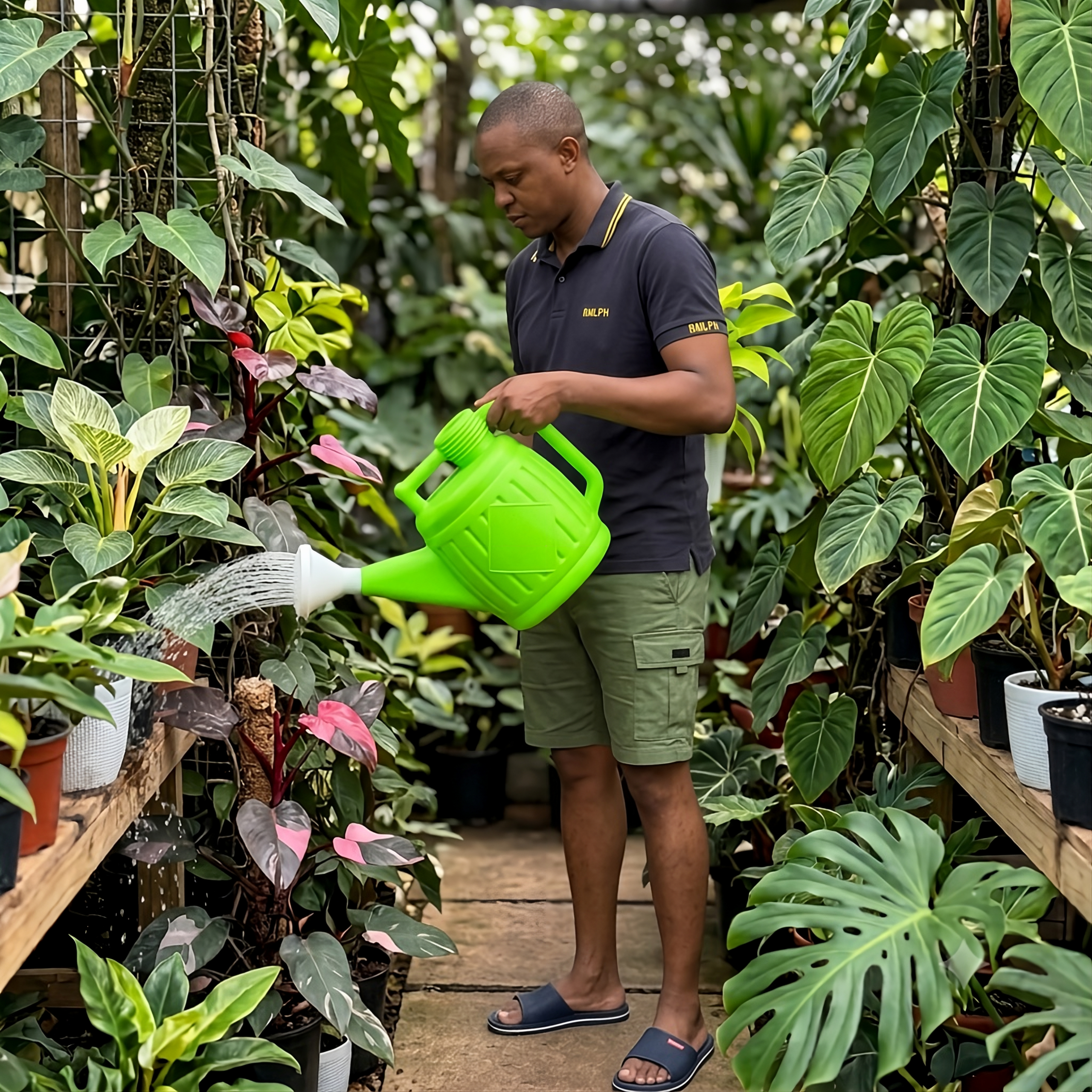
People often ask what my daily routine looks like with 500 plants.
It is not as crazy as it sounds. I don’t water every plant every day.
That would be a massive waste of time. It would also kill most of them.
Instead, I spend about fifteen minutes every morning just walking around with a cup of coffee.
I look at the leaves. I check for any signs of drooping or yellowing.
I touch the top of the soil on a few pots to check the moisture levels.
If a plant feels light when I lift the pot, I know it needs water.
If the pot is heavy, I leave it alone. Overwatering is the biggest killer.
I only do a major watering session once a week.
I take the plants to the sink and flush the soil thoroughly.
I let the water run out the drainage holes to clean the roots.
Finding the Right Light
Lighting was another huge hurdle for me when I first started out.
I thought putting a plant near a window was always enough. I was very wrong.
Some of my philodendrons got badly sunburned because they got direct afternoon sun.
Their leaves turned white and crispy. There was no way to fix that damage.
Other plants just stopped growing completely because they were too far back in a dark corner.
I learned about bright, indirect light the hard way.
Now, I use sheer curtains to protect sensitive leaves from harsh summer rays.
I also use basic LED grow lights during the darker winter months.
You don’t need expensive equipment. A cheap grow bulb in a regular lamp works wonders.
Propagating and Sharing
One of the absolute best parts of this hobby is propagation.
It still amazes me that you can cut off a piece of a plant.
You put that cutting in water, and it grows brand new roots.
It feels a little bit like magic every single time I do it.
Early on, I propagated plants just to have a backup.
If the mother plant died from root rot, I still had a small piece of it.
But eventually, I had way too many cuttings.
My window sills were completely full of glass jars holding baby plants.
That is when I started trading with local people in my city.
I would swap a cutting of a Heartleaf for a piece of a Micans.
It was a great way to grow my collection without spending any extra money.
It also introduced me to some really great friends in the plant community.
Setting Real Expectations
I want to talk about expectations for a minute.
Social media makes plant care look like a constant stream of perfect new leaves.
The reality of growing indoors is much messier than that.
Leaves get ripped by accident when you move pots around.
Sometimes a new leaf gets stuck and comes out looking weird or deformed.
Sometimes you buy a plant and it drops three leaves while adjusting to your home.
This is completely normal behavior. Plants are living things, not plastic decorations.
They go through ugly phases. They drop old leaves to focus energy on new growth.
Do not panic if your plant isn’t perfect all the time. Mine certainly are not.
My goal with Jefrev.com is to help you understand what is normal.
I want you to feel confident enough to handle the bad days without giving up.
Researching The Right Way
I mentioned earlier that I do a lot of research.
When I first started, I blindly trusted random blogs. That was a big mistake.
Now, I try to find the science behind plant behavior.
I look up the natural habitats of the specific philodendrons I own.
If a plant grows on the forest floor in Colombia, it probably likes shade.
If it climbs high up trees in Brazil, it probably needs a moss pole to thrive.
Understanding where a plant comes from changes how you care for it indoors.
I take those facts and translate them into practical advice for your living room.
I won’t tell you to build a specialized greenhouse just to keep a plant alive.
I will tell you how to group plants together to boost the local humidity easily.
If I quote a forum or a website, I will always link out to it.
You can always read the original information for yourself.
I believe in being completely transparent about where I get my information.
Let’s Talk About Pests
We also need to talk about pests. No one likes talking about bugs.
But if you own plants, you will eventually deal with pests. It is totally inevitable.
I used to feel embarrassed when I found spider mites on my plants.
I thought it meant my house was dirty or I was a bad plant parent.
That is completely false. Pests come in on open windows or on your clothes.
I have tried wiping leaves with neem oil. I have tried dish soap mixtures.
Some natural methods work okay for very small issues.
But for big outbreaks, I don’t mess around anymore.
I share exactly which pest sprays have actually worked for me.
I also tell you how often to spray them so the bugs stay away for good.
Why I Built Jefrev.com
For a long time, I just shared plant pictures on social media.
I would answer questions in the comment sections when people asked.
But as my collection grew, more people started asking for advice.
Friends and strangers kept asking how I grew such large leaves.
They asked how to stop root rot before it killed their favorite plant.
I found myself typing out the same long answers every single day.
There was a real need for honest, practical plant care info.
People didn’t want complicated botany terms.
They didn’t want a sales pitch for a miracle fertilizer that doesn’t work.
I decided to put everything I knew into one place online.
That is exactly how Jefrev.com started.
My goal is simple. I want to help you grow healthier philodendrons with less stress.
I want to save you from making the same expensive mistakes I made.
I break plant care down into simple steps.
Anyone can follow them, from eighth graders to adults.
Free Articles vs. Paid Guides
Most of the information on Jefrev.com is completely free.
You can read my articles and get my soil recipes without paying a dime.
But as the site grew, readers started wanting more structured help.
They wanted to see me actually mix the soil on camera.
They wanted structured manuals they could print out and keep near their plants.
Making high-quality videos and detailed manuals takes hundreds of hours of my personal time.
Because of that, I offer these deeper guides as paid products.
My premium videos and manuals are for people who want to skip the trial and error completely.
They pack my eight years of experience into a clear, direct system.
But there are no false promises here. The guides show exactly what I do.
You still have to put in the work yourself.
You must pay close attention to your own home environment.
Buying a guide does not guarantee success if you ignore your plant’s basic needs.
Let’s Grow Together
Growing philodendrons has become one of my most rewarding hobbies.
It has taught me real patience. It forces me to notice the small details.
It has made my home a place I truly love spending time in.
If you are just starting out, don’t be afraid to make mistakes.
Plants are incredibly resilient. They actually want to live and grow.
If you give them basic care, they will forgive a lot of beginner errors.
Take a look around the blog. Find the specific plants you own right now.
Don’t stress out if a leaf turns yellow. It happens to all of us.
It still happens to me after eight years and 500 plants.
Thanks for stopping by. I hope my past mistakes help your future success.
Let’s grow a plant collection you can be really proud of.