How to Care for Philodendron Melanochrysum Indoors: A Complete Grower’s Guide

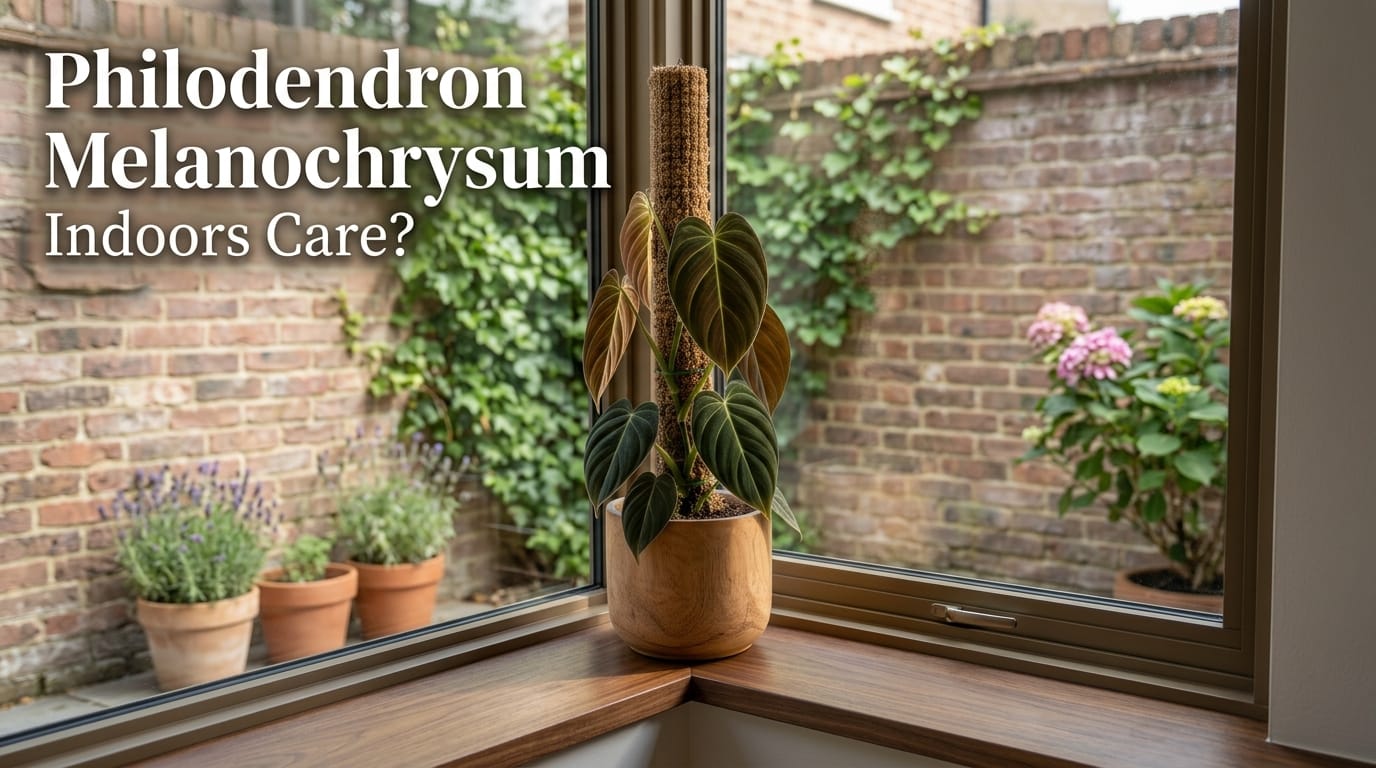
I have spent the last eight years growing and propagating philodendrons in my own home, and Philodendron melanochrysum is still one of the plants I get the most questions about.
People see a photo of its velvet black leaves online, fall in love, buy one, and then panic three weeks later when a leaf turns yellow.
This guide walks through everything you need to know to grow a healthy Philodendron melanochrysum indoors. I will cover its background, its needs, and the small mistakes that trip up even careful plant owners.
What Is Philodendron Melanochrysum?
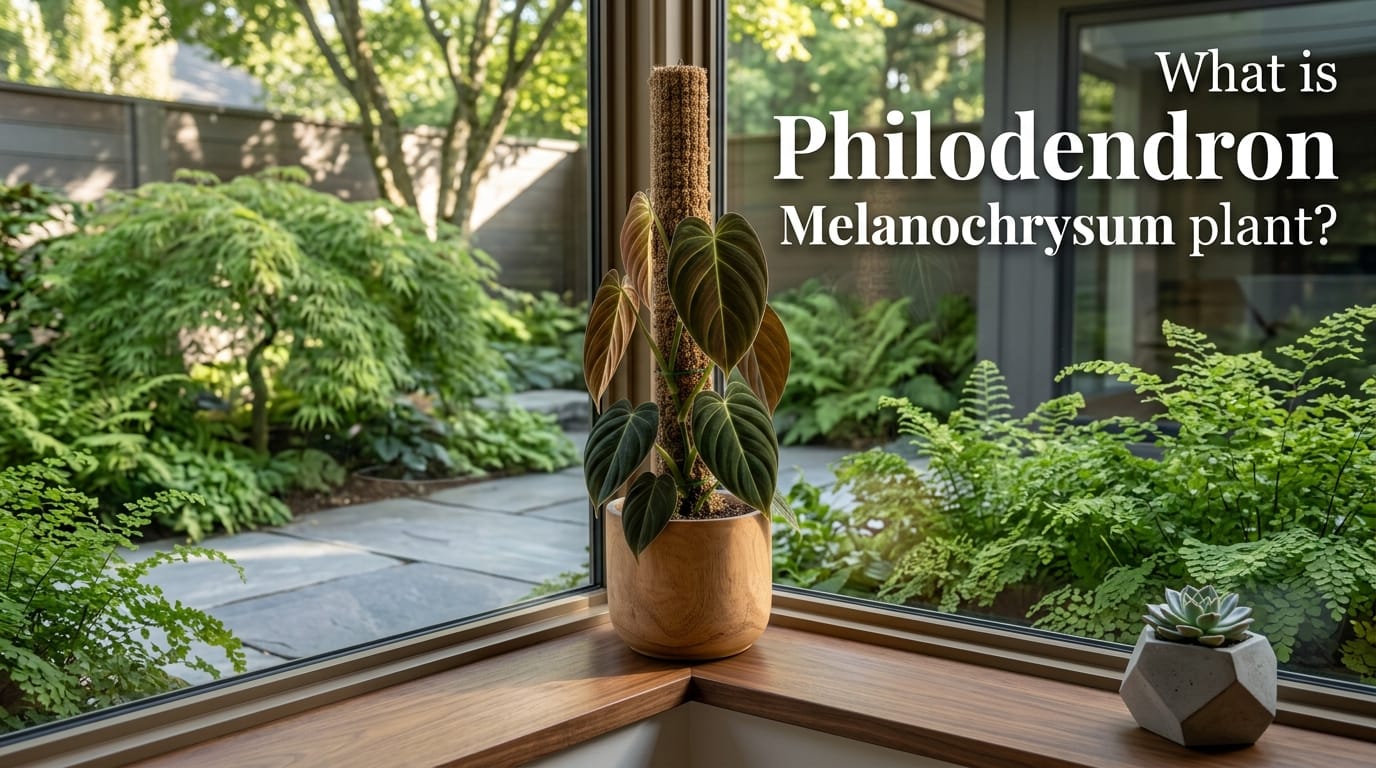
Philodendron melanochrysum is a climbing tropical plant known for its dark, velvety leaves and pale gold veins. Growers often call it the Black Gold Philodendron because of that color combination.
It belongs to the aroid family, the same plant family that gave us pothos, monstera, and anthurium. Unlike some of its cousins, melanochrysum does not develop holes or splits in its leaves as it matures. Its charm comes from texture and color, not shape.
Indoors, it is grown mainly as a foliage plant. Flowering is rare in home conditions, so the leaves do all the work.
Scientific, Botanical, and Common Name
The full botanical name is Philodendron melanochrysum Linden & André. It was first described in the 1800s and was once sold under the older name Philodendron andreanum before botanists settled on melanochrysum.
The word itself comes from Greek. “Melano” means black, and “chrysum” means gold. Put together, the name points to the tiny gold flecks that can appear on mature leaves when light hits them at the right angle.
Common names you will see in nurseries and online shops include:
- Black Gold Philodendron
- Velvet Philodendron (sometimes shared with other velvet-leaved species)
- Melano, a shorthand used often in plant collector groups
Native and Origin
Philodendron melanochrysum grows naturally in the wet Andean foothills of Colombia. According to Wikipedia’s entry on the species, it is endemic to this region, found mainly in the Chocó and Antioquia departments at around 500 meters above sea level.
In the wild, it is a hemiepiphyte. That means it starts life rooted in the ground and then climbs tree trunks as it grows, sending down aerial roots along the way. This climbing habit is the reason your plant will always look better and grow faster with something to climb than left to trail on its own.
One grower on the Garden.org forum described the wild setting well, noting that in the hills of Colombia these plants grow right along roadsides in leaf litter and rocky forest debris, something locals barely notice because it grows so commonly there. You can read the full discussion on the Garden.org Philodendron Melanochrysum forum thread.
That native setting tells you almost everything about care. Warm air, filtered light under a forest canopy, high humidity, and rich but loose, well draining soil. Your job indoors is to copy that as closely as you can.
Characteristics and Features
A few traits set melanochrysum apart from other philodendrons:
- Thick, upright stems that can support the plant on their own once mature
- Velvety leaf texture that feels almost like suede
- New leaves that emerge in a coppery red or bronze shade before darkening
- Slow to moderate growth speed compared to fast growing pothos types
- A climbing growth habit that benefits from a support pole
It is also a plant that rewards patience. The first few leaves on a young plant are small and unremarkable. The dramatic, oversized leaves people show off online usually come from plants that are a few years old and have been allowed to climb.
Appearance
Mature leaves are heart shaped, elongated, and can reach 10 to 30 inches long in ideal growing conditions, according to plant reference site Gardenia.net. Most indoor plants in average homes stay on the smaller end of that range, closer to 12 to 18 inches, since light and humidity indoors rarely match the rainforest.
The leaf surface is dark green, almost black under low light, with pale, silvery gold veins running from the base to the tip. This is where the “gold” part of its name comes from. In bright light, you can sometimes catch a faint metallic shimmer across the leaf surface.
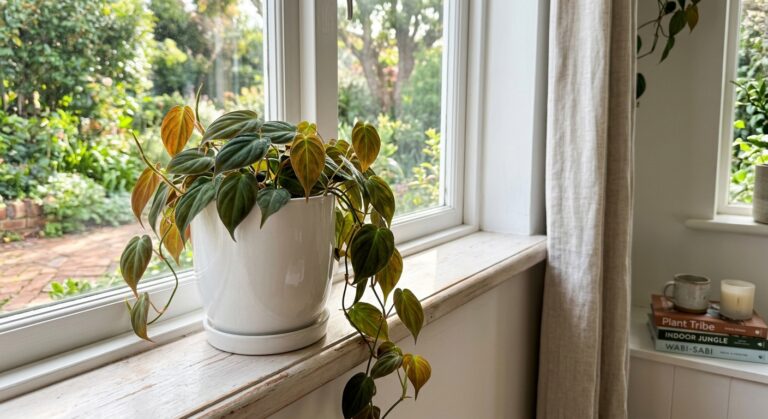
Juvenile leaves look nothing like the adult form. They are smaller, more rounded, and often a plain green or reddish bronze. If you compare a young plant to photos of a mature one, you might think they are different species. This is common in aroids and is also seen in relatives like Philodendron micans, which I cover in more depth in my Philodendron micans care guide.
Growth Pattern
Melanochrysum grows in a single, upright direction along its main stem, producing one leaf at a time from the growth point. As it climbs, older leaves lower on the stem may yellow and drop naturally, which is normal aging rather than a sign of poor care.
Growth speed depends heavily on light, humidity, and whether the plant has something to climb. A plant left to sprawl in a pot without support will often stay small and produce smaller leaves. A plant given a moss pole or similar support and placed in bright indirect light can push out a new leaf every few weeks during the warmer months.
Expect slower, smaller growth during the first year after you bring a small plant home. It needs time to build a strong root system before it puts energy into big leaves.
Dormancy
Philodendron melanochrysum does not go through a true dormancy period the way a tulip bulb or a deciduous tree does. It is a tropical plant, and in its native range there is no cold season that forces it to shut down.
That said, indoor growers in the United States usually see a noticeable slowdown from late fall through winter. Shorter days, weaker light, and cooler indoor temperatures all reduce the plant’s energy. New leaves take longer to unfurl, and the plant may pause entirely for a few weeks.
During this slower period, cut back on watering frequency and skip fertilizer. The plant is not using resources at the same rate, and feeding it during this time can lead to salt buildup in the soil rather than growth.
Benefits
Beyond looking good on a shelf, Philodendron melanochrysum offers a few practical upsides for indoor growers.
Like most leafy houseplants, it contributes in a small way to indoor humidity through natural transpiration, and having greenery in a living space is often linked to lower stress and a general sense of calm, though the effect of a single plant in a normal sized room is modest rather than dramatic.
It is also a satisfying plant to propagate and share. Once established, healthy stem cuttings root fairly reliably, which makes it a good plant for trading with other collectors or gifting to a friend who is getting into houseplants.
Care Guides
Sunlight
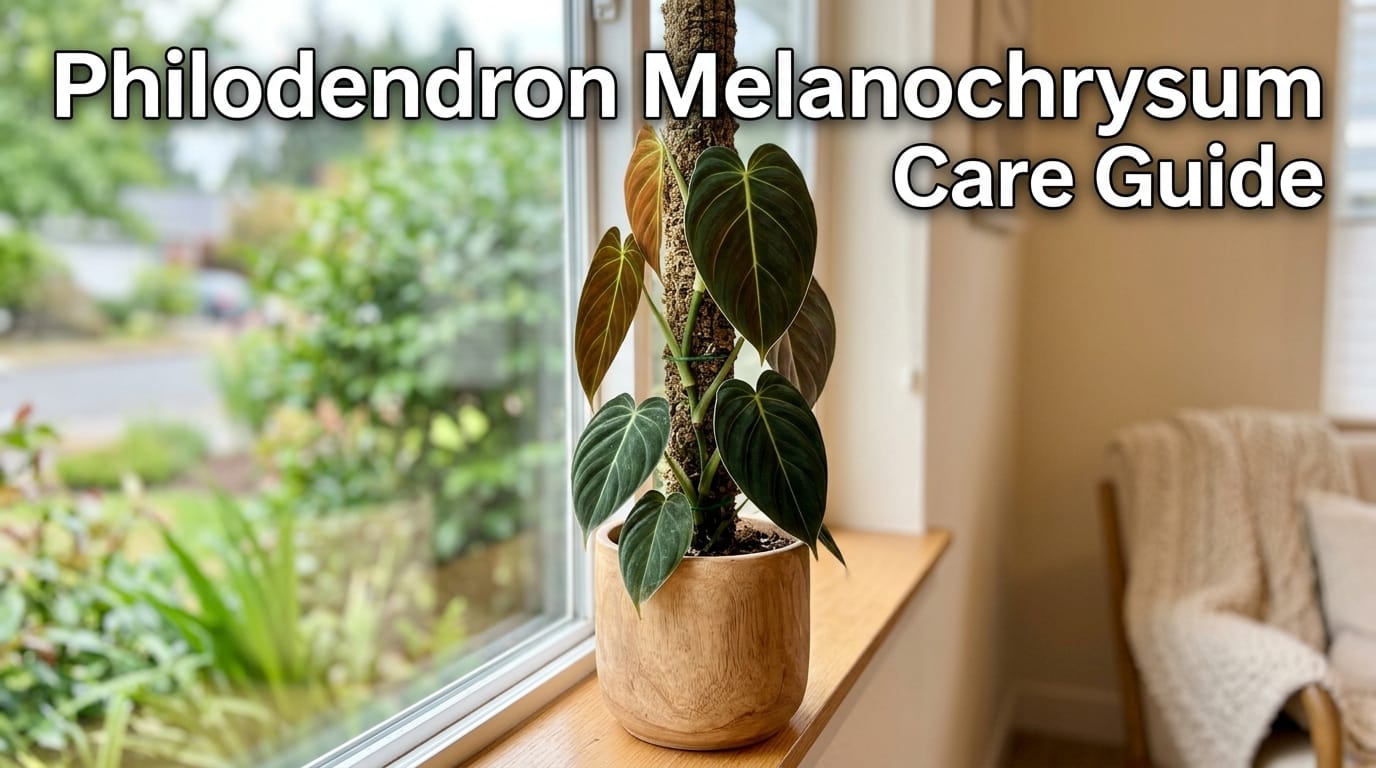
Bright, indirect light is the target. In the wild, this plant grows under a forest canopy, filtered by taller trees above it, so direct sun is not something it is built to handle.
A spot a few feet back from an east or west facing window usually works well. South facing windows can work too, but only if the plant is set back from the glass or the light is softened by a sheer curtain.
Watch the leaves for feedback. Pale, washed out color usually means too much direct sun. Small leaves, long gaps between leaves, and slow growth usually mean not enough light.
Watering
Water when the top one to two inches of soil feel dry to the touch. Stick a finger into the pot before watering rather than sticking to a fixed schedule, since factors like pot size, humidity, and season all change how fast soil dries out.
When you do water, water thoroughly until it runs out the drainage holes, then let the pot drain fully. Never let the pot sit in a saucer full of standing water.
This plant is more forgiving of slight underwatering than overwatering. Soggy soil that stays wet for days is the fastest way to cause root rot in this species.
Fertilizers
Feed with a balanced, water soluble houseplant fertilizer during the active growing months, roughly spring through early fall. Once a month is usually enough. Diluting the fertilizer to half strength is a safer starting point than using the full label dose, since aroid roots can be sensitive to salt buildup.
Skip fertilizing in the winter months when growth naturally slows. Feeding a plant that is not actively growing does not help it and can lead to burned root tips or crusty white buildup on the soil surface.
Soil Mix
This is one of the most important parts of Philodendron melanochrysum care, and also one of the most commonly ignored. Regular potting soil straight from the bag is usually too dense and holds too much water for this plant’s roots.
A good mix includes:
- Standard potting soil as the base
- Orchid bark or fir bark chunks for airflow around the roots
- Perlite for drainage
- A small amount of sphagnum moss or coco coir to hold some moisture without waterlogging
I go into ratios and specific brands in my best soil mix for aroids guide, but the short version is that you want a chunky, fast draining mix that still holds a little moisture, similar to the leaf litter this plant grows in naturally.
Humidity
Aim for 60 percent humidity or higher if you can manage it. This is a rainforest plant, and dry indoor air, especially during winter when heaters are running, is one of the most common reasons melanochrysum struggles indoors.
Ways to raise humidity around the plant include:
- A small room humidifier placed nearby
- Grouping it with other plants to create a shared humid microclimate
- Placing it in a naturally humid room like a bathroom with a window, if light allows
- Avoiding placement near heating or cooling vents that dry out the air
Misting alone is not a reliable fix. It raises humidity for only a few minutes and does little for the plant over the course of a day.
Temperature
Keep the plant between 65 and 85 degrees Fahrenheit. Most homes fall comfortably within this range already, but be careful about placement near drafty windows, exterior doors, or air conditioning units.
Sudden temperature swings and cold drafts below 60 degrees Fahrenheit can cause stress, leaf drop, or slowed growth. If you move your plant outdoors for the summer, as some growers do, bring it back in well before nighttime temperatures start dipping into the 50s.
Climbing Stake
Because Philodendron melanochrysum is a natural climber, giving it something to climb is one of the simplest ways to improve its growth and leaf size. A moss pole is the most common choice because it holds moisture and gives the plant’s aerial roots something to grip and absorb nutrients from.
Coco coir poles and bark poles work as alternatives if moss is not available locally. Whatever you choose, secure the main stem loosely to the pole with soft plant ties or velcro strips as it grows, rather than letting it flop over.
If you want a step by step walkthrough, I wrote a full DIY moss pole guide covering materials and setup.
Toxicity
Philodendron melanochrysum is toxic to humans, cats, and dogs if chewed or eaten. Like other philodendrons, it contains insoluble calcium oxalate crystals in its leaves and stems.
According to the ASPCA, these crystals cause pain and irritation when a pet bites into the plant, along with drooling, vomiting, and difficulty swallowing in some cases. The reaction happens because the crystals physically embed in the mouth and throat tissue when chewed.
Keep the plant out of reach of curious pets and small children, and if you suspect a pet has chewed on it, contact your veterinarian or the ASPCA Poison Control hotline. I cover pet proofing your plant collection in more detail in my philodendron toxicity and pet safety guide.
Repotting Guide
Repot roughly every one to two years, or sooner if you notice roots circling the bottom of the pot or growing out of the drainage holes. Spring or early summer is the best time, since the plant has the most energy available to recover.
Steps to repot:
- Choose a new pot only one to two inches larger in diameter than the current one. Going too large too fast can lead to excess soil staying wet longer than the roots can use.
- Gently loosen the plant from its old pot and shake off loose soil without scrubbing the roots clean.
- Set the plant in the new pot with fresh, well draining mix, keeping the base of the stem at the same soil depth as before.
- Water thoroughly and keep the plant out of direct sun for a week or two while it settles in.
A grower on the Garden.org forum thread mentioned earlier also pointed out that you should avoid washing all the old soil off the roots during a repot, since a gentle transition into fresh mix is easier on the plant than a total root exposure. That lines up with what I have found in my own repotting over the years.
Pruning Guide
Melanochrysum does not need heavy pruning the way a bushy plant might. Most pruning here is maintenance rather than shaping.
Remove yellow, brown, or damaged leaves at the base of the petiole using clean, sharp scissors or pruning snips. Wipe your blades with rubbing alcohol between cuts, especially if you are pruning multiple plants, to avoid spreading disease.
If a stem becomes leggy or bare near the base, you can cut it back above a healthy node to encourage a fresh growth point lower down. Any healthy stem section you remove during pruning can usually be propagated instead of thrown away.
Propagation Guide
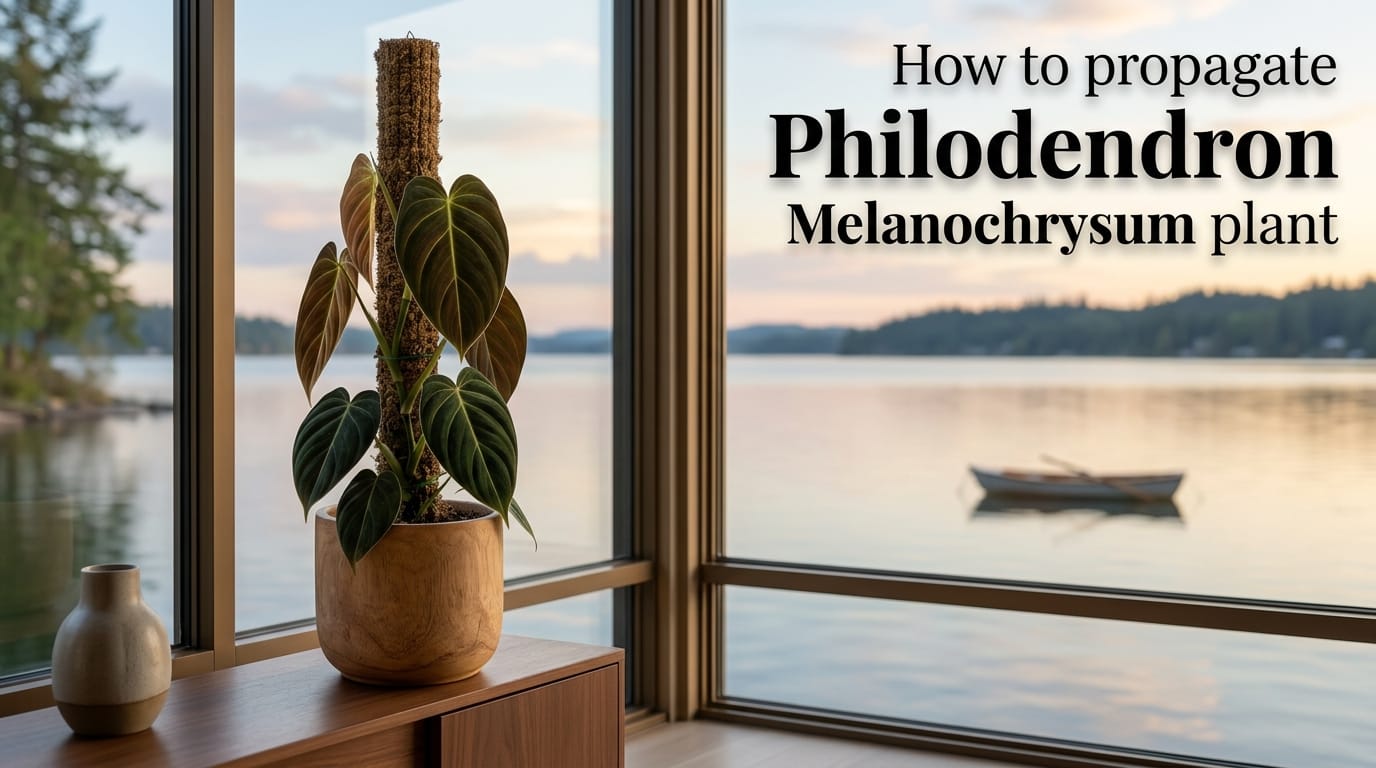
Stem cuttings are the most reliable way to propagate Philodendron melanochrysum at home.
- Choose a healthy stem section with at least one node and, ideally, one visible aerial root.
- Cut just below the node using clean, sharp shears.
- Root the cutting in water, moist sphagnum moss, or a light perlite mix.
- Keep the cutting warm, in indirect light, and consistently moist while it develops roots.
- Once roots are a couple of inches long, pot the cutting into your regular soil mix.
Rooting typically takes three to six weeks depending on temperature and humidity. Warmer, more humid conditions speed things up noticeably, which is why many growers use a propagation box or a covered container to hold moisture in around the cutting.
Common Pests and Diseases: Problems and Solutions
Spider mites Fine webbing and tiny yellow speckles on the leaves are the giveaway. They thrive in dry air, so raising humidity helps prevent them. Treat an active infestation with insecticidal soap or neem oil, applied every seven to ten days until they are gone.
Mealybugs Look for small white, cottony clusters, usually tucked in leaf joints. Dab them directly with a cotton swab dipped in rubbing alcohol, then follow up with insecticidal soap to catch anything you missed.
Scale insects These show up as small brown or tan bumps stuck to stems and the undersides of leaves. They can be scraped off gently by hand, followed by a neem oil treatment to prevent new ones from establishing.
Fungus gnats Small flies hovering around the soil surface almost always point to soil that is staying too wet. Let the top layer of soil dry out more between waterings and consider a layer of sand or gnat sticky traps to break the cycle.
Root rot Mushy, dark stems near the soil line and a sour smell from the pot are signs of root rot, usually caused by overwatering or soil that does not drain well. Remove the plant from its pot, trim away any soft, brown roots with clean scissors, and repot into fresh, fast draining mix. Cut back watering significantly while the plant recovers.
Bacterial leaf spot Small, water soaked spots that spread and turn brown or black point to bacterial issues, often made worse by wetting the leaves during watering. Avoid overhead watering, remove affected leaves, and improve airflow around the plant.
Pricing Guide
Prices for Philodendron melanochrysum vary quite a bit depending on size, maturity, and whether you are buying a rooted cutting or an established plant.
Based on recent market data from plant pricing tracker Plantslip, small starter plants and cuttings typically sell in the range of roughly 15 to 35 dollars, with prices shifting slightly by season and seller. Larger, more mature plants in bigger pots with multiple leaves cost noticeably more, sometimes well over 100 dollars from specialty aroid nurseries.
A few things that push the price up:
- Larger pot size and more established root systems
- Multiple healthy leaves already unfurled
- Rare variegated forms, which are significantly harder to find and cost far more than standard green leaved plants
- Buying from a specialty aroid nursery rather than a general garden center, since they often carry harder to source stock
Buying Guide
When shopping for a Philodendron melanochrysum, whether online or in person, check the following before you buy:
- Root health. If buying in person, gently check that roots are not mushy or foul smelling. A reputable online seller should be willing to answer questions about root condition.
- Leaf condition. Look for firm, unblemished leaves without heavy yellowing, black spots, or holes.
- Signs of pests. Check leaf undersides and stem joints for webbing, cottony spots, or small bumps before bringing a new plant home.
- Seller reputation. Specialty aroid nurseries and established sellers with reviews are generally safer bets than unverified marketplace listings, especially for a plant that still commands a real price.
- Shipping conditions. If ordering online during colder months, check whether the seller offers heat packs or winter shipping protection, since this species is sensitive to cold during transit.
New plants should be quarantined away from your existing collection for one to two weeks. This gives any hidden pests time to show themselves before they can spread.
Common Mistakes to Avoid
- Overwatering. This is the single biggest killer of this species indoors. Always check soil moisture before watering rather than watering on a fixed schedule.
- Low humidity. Placing the plant in a dry room without any humidity support usually leads to crispy leaf edges and slow growth over time.
- Direct sun exposure. A few hours of harsh afternoon sun through unfiltered glass can scorch the leaves quickly.
- No climbing support. Letting the plant sprawl without a pole or trellis often results in smaller leaves and weaker growth than the plant is capable of.
- Repotting too often. Moving the plant into a new pot every few months disturbs the roots more than it helps and can slow growth rather than speed it up.
- Fertilizing during dormancy. Feeding the plant heavily in winter when it is not actively growing can burn the roots instead of encouraging growth.
- Ignoring early pest signs. Small infestations are much easier to treat than established ones, so check leaves regularly rather than waiting until damage is obvious.
FAQ
Is Philodendron melanochrysum hard to grow? Not especially, though it is not usually recommended as a first houseplant. If you already have experience with a tropical plant like pothos or a heartleaf philodendron, melanochrysum is a reasonable step up.
How fast does it grow indoors? Growth speed depends on light, humidity, and climbing support. With good conditions and a moss pole, expect a new leaf every few weeks during the growing season. Growth slows considerably in winter.
Why are my leaves turning yellow? Yellowing is most often linked to overwatering, though it can also happen naturally as older, lower leaves age and are shed. Check soil moisture first before assuming disease or pest damage.
Can it grow in low light? It will survive in medium light for a while, but growth slows and leaves may become smaller and less vibrant. Bright indirect light gives the best results.
Is Philodendron melanochrysum rare? It is less common than everyday houseplants like pothos, but it is not considered extremely rare either. Specialty aroid sellers carry it fairly regularly, though prices are higher than mass produced houseplants.
What is the difference between melanochrysum and micans? Micans has smaller, softer, more rounded leaves with a purplish sheen and a more relaxed, trailing habit. Melanochrysum has larger, more elongated leaves, a sturdier upright stem, and a stronger climbing tendency once mature.
Conclusion
Philodendron melanochrysum is not a difficult plant once you understand what it wants: bright indirect light, humidity, a chunky well draining mix, and something to climb. Most of the problems people run into come down to overwatering or dry indoor air rather than anything mysterious.
Give it time. The dramatic, oversized leaves that make this plant so popular online usually show up after a year or two of steady, unspectacular growth. If you want to compare notes on care for other velvet leaved philodendrons, my Philodendron micans care guide covers a close relative with a similar look but a different growth habit.