Philodendron Florida Ghost Care: White New Leaves, Light, and Climbing Growth

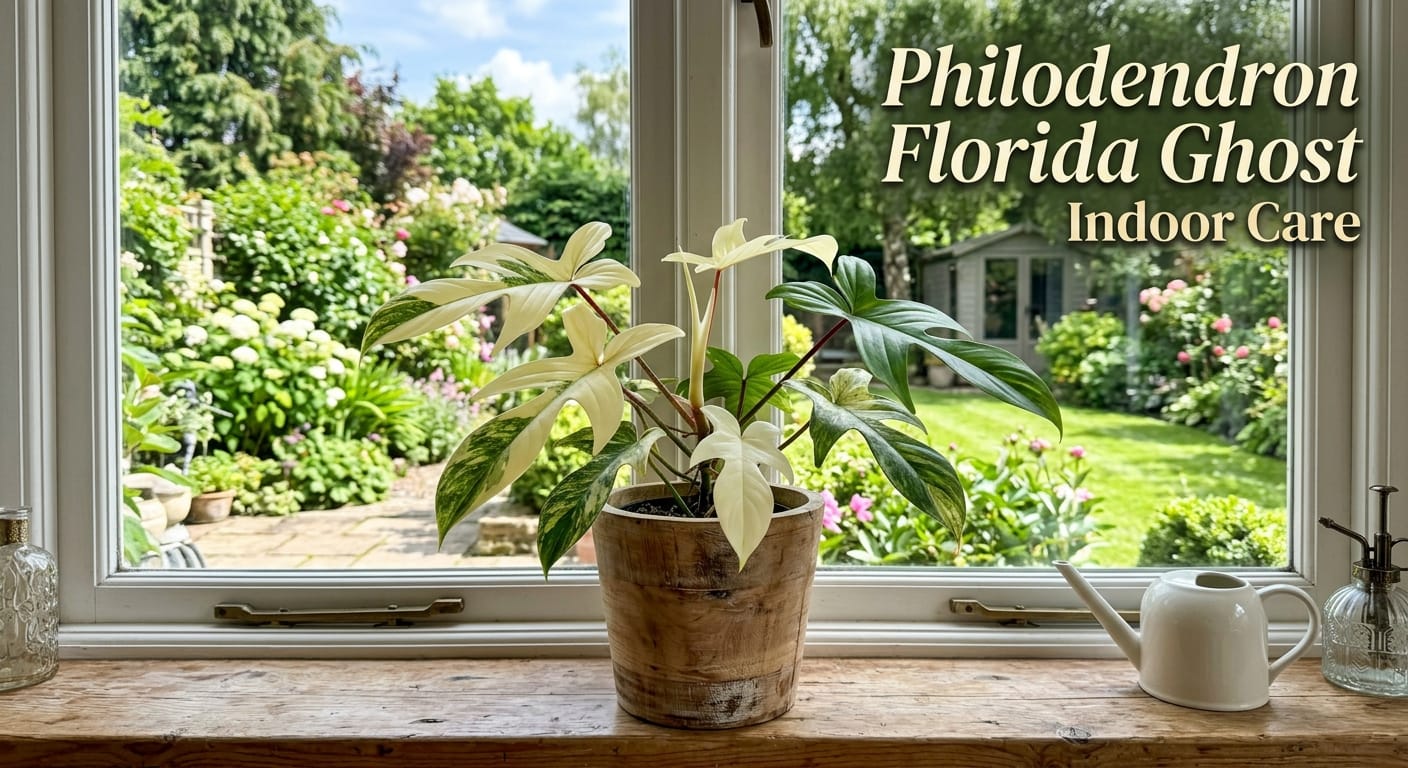
Philodendron ‘Florida Ghost’ is a climbing houseplant best known for its striking white new leaves. As each leaf develops, its colour usually changes from white to lime green and eventually to darker green. This change is a normal part of the plant’s growth, not a sign that something is wrong.
Good indoor care starts with providing bright, indirect light, an open potting mix, careful watering, and a stable support for the climbing stem. Light also influences the appearance of new foliage, but exposing the plant to harsh sunlight is not a safe way to preserve its pale colour.
One detail worth understanding before buying this plant is its identity. Florida Ghost is commonly sold as a cultivated form of the Florida hybrid, but its horticultural naming is not fully settled. It is best to understand it as a named cultivated Philodendron rather than a separate botanical species.
This guide covers its changing leaf colour, growing conditions, climbing habit, propagation, and the problems most likely to affect its foliage.
Philodendron Florida Ghost Care at a Glance
| Care requirement | Practical recommendation |
|---|---|
| Botanical or trade name | Philodendron ‘Florida Ghost’ |
| Growth habit | Climbing |
| Light | Medium to bright, indirect light |
| Water | Allow the upper growing medium to begin drying before watering thoroughly |
| Potting mix | Open, moisture-retentive and well-draining |
| Humidity | Average to above-average indoor humidity |
| Temperature | Warm, stable indoor conditions |
| Support | Moss pole, textured plank or another stable climbing surface |
| Fertilizer | Balanced houseplant fertilizer used according to its label during active growth |
| Propagation | Stem-tip or leaf-bud cuttings with viable growth points |
These are practical indoor recommendations, not a fixed formula for every home. Pot size, growing medium, light, temperature, and the condition of the roots all affect how the plant responds.
What Exactly Is Philodendron Florida Ghost?
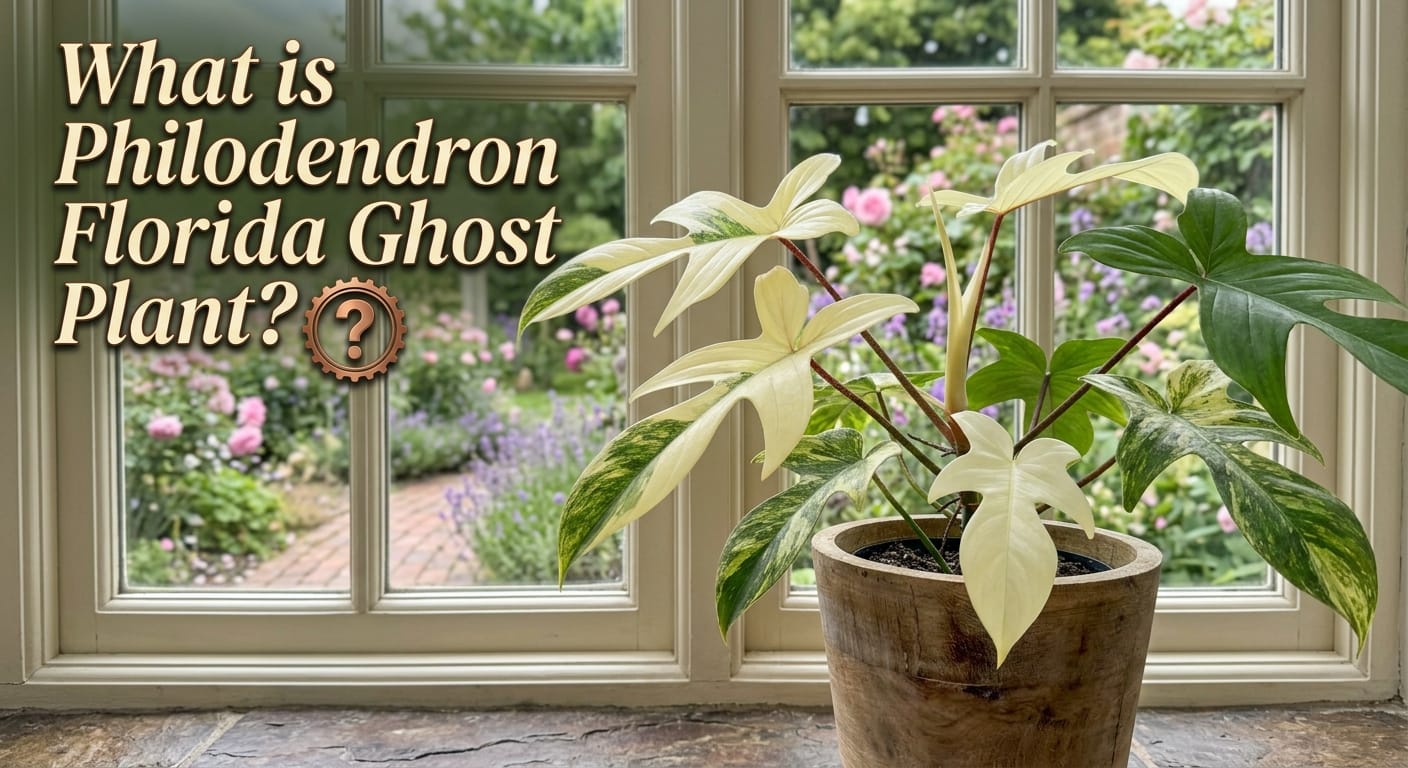
Florida Ghost is a cultivated Philodendron known for its pale new foliage and climbing growth. It belongs to the Florida hybrid group, which is associated with two parent species: Philodendron pedatum and Philodendron squamiferum.
The Royal Horticultural Society (RHS) describes Philodendron ‘Florida Ghost’ as a hybrid of these two species. Costa Farms describes Florida Ghost as a mutation found on the Florida hybrid, whose parent plants are P. pedatum and P. squamiferum.
These descriptions give useful information about its horticultural background, but the naming needs care. The RHS lists the plant’s name status as unresolved. It is therefore more accurate to use the cultivated name Philodendron ‘Florida Ghost’ than to present Florida Ghost as a formally accepted botanical species.
You can read the RHS description of Philodendron ‘Florida Ghost’ for its recorded parentage, foliage, size and growing requirements.
How to recognize Florida Ghost
The easiest feature to notice is the colour of its emerging leaves. New foliage can be almost completely white, creamy white or very pale before changing as it matures.
Its leaves also develop a more complex shape as the plant grows. Juvenile foliage can be relatively simple and spear-shaped. Mature leaves become more lobed, with deeper divisions along either side of the central vein.
The petioles, which are the stalks connecting the leaves to the main stem, are another useful feature. They often have a reddish colour and a bumpy or textured surface.
These features help distinguish the plant, although one characteristic alone is not enough to confirm its identity. A seller’s label or photograph should not be treated as proof of a plant’s origin.
Why Florida Ghost Leaves Start White and Turn Green
The white new foliage is the main reason people buy this plant. However, the pale colour is not meant to remain unchanged throughout the life of each leaf.
The RHS records a progression from pure white when young to lime green and then darker green as the leaves age. Costa Farms similarly describes creamy-white new growth that gradually matures to dark green.
Costa Farms also notes that new growth emerges with little chlorophyll, which helps explain why it looks so pale compared with mature green foliage.
You may see several stages of development on the same plant:
- White or creamy white: The newly emerging leaf has very little visible green colour.
- Pale lime green: The leaf begins developing its green colour as it expands and matures.
- Darker green: The older, more developed leaf has a stronger green appearance.
This is normal. A mature green leaf is not a failed white leaf, and there is no need to remove healthy green foliage simply because it no longer has the appearance of new growth.
Green leaves contribute to photosynthesis and help the plant produce the energy it needs to maintain its roots, stems and developing foliage. Removing them unnecessarily can reduce the plant’s ability to support further growth.
Does brighter light keep new leaves white?
Light does influence the appearance of new growth. Costa Farms reports that leaves can appear brighter and retain their pale appearance longer in brighter locations. It also notes that plants grown in lower light may produce less colourful new foliage.
That does not mean direct sunlight will keep the leaves white. Strong sunlight can scorch foliage, particularly when a plant that has been growing in indirect light is suddenly moved into a much brighter position.
The best approach is to provide consistent medium to bright, indirect light. Allow each leaf to change colour naturally rather than trying to stop its development.
It is also worth remembering that the pale growth has less chlorophyll than mature green foliage. Costa Farms notes that this contributes to slower growth compared with the parent plants. Do not expect every new leaf to develop at the same speed.
Give It Bright, Indirect Light
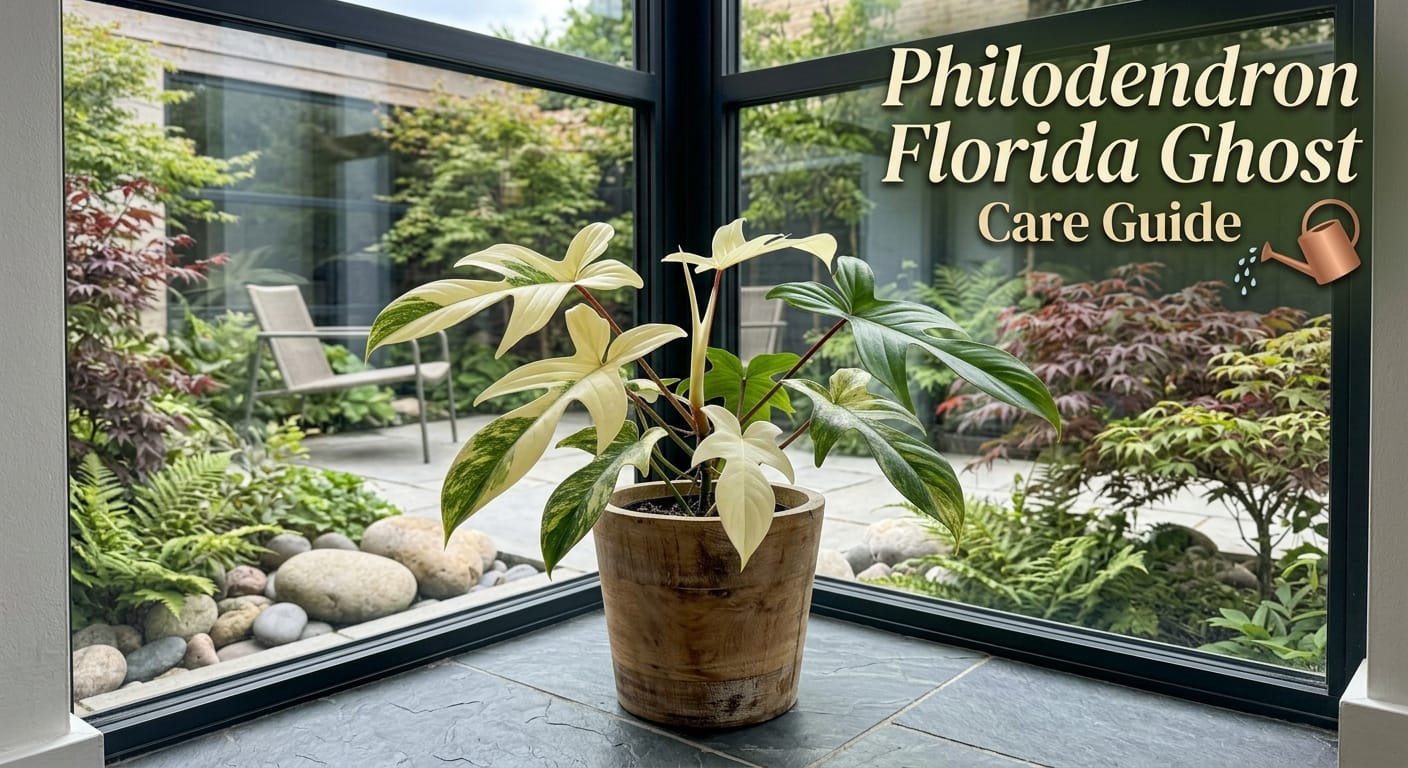
Florida Ghost needs enough light to support steady growth and the development of its foliage.
A bright position near a window is usually a good starting point. The plant should receive plenty of natural light without being exposed to prolonged, intense direct sunlight.
An east-facing window can provide useful morning light. A west-facing window may also work when the strongest afternoon sunlight is filtered or the plant is positioned away from direct exposure.
Window direction alone does not determine whether a spot is suitable. Glass, curtains, nearby buildings, trees, the season and the distance between the plant and the window all affect the amount of light it receives.
Costa Farms recommends medium to bright light and gives an east- or west-facing window as a practical example. The RHS describes a bright but diffused position for growing the plant.
What happens when light is too weak?
Low light can slow growth and affect the appearance of new leaves. You may notice:
- Longer spaces between leaves along the stem.
- Smaller new leaves than the plant previously produced.
- Slow growth during otherwise favourable conditions.
- New foliage with less noticeable pale colouring.
These signs do not prove that the plant needs more light. Poor roots, recent repotting, pests and other growing conditions can also affect leaf development.
Look at the plant as a whole before moving it. If you decide to increase its light, do so gradually and watch for signs of leaf damage.
Protect the foliage from direct sun
Strong sunlight through a window can cause pale, dry or scorched patches. Damage is more likely when the plant is moved suddenly from a sheltered position into intense sunlight.
Move it back to a position with filtered light if you notice scorch marks. Existing damaged patches will not become healthy again, but preventing further exposure can protect the remaining foliage.
A suitable grow light can help when natural light is limited. Follow the manufacturer’s placement guidance and check how the plant responds rather than assuming one fixed distance works with every lamp.
Water Without Keeping the Roots Saturated
Florida Ghost prefers a growing medium that holds some moisture while still allowing air to reach the roots. The aim is to avoid both prolonged saturation and severe, extended dryness.
A fixed weekly watering schedule is not reliable. A plant in a warm, bright room may use water faster than one in a cooler location with less light. Pot size, substrate and root development also make a difference.
How to decide when to water
Check the surface of the potting mix before watering. Allow the upper layer to become slightly dry, but do not leave the entire root ball dry for extended periods.
The RHS recommends allowing the surface of the growing medium to become just dry before watering thoroughly. Costa Farms also advises letting the upper part of the mix begin to dry.
For a more reliable check, look below the surface as well. The top can feel dry while the lower portion of a large pot remains wet. A finger or wooden skewer can help you judge moisture deeper in the container.
When the plant needs water:
- Apply water evenly over the growing medium.
- Continue until excess water drains from the bottom.
- Allow the pot to drain completely.
- Empty any water collected in the saucer or decorative outer container.
Do not leave the plant standing in drainage water. A pot that remains saturated for too long can deprive roots of the air they need.
Why watering needs change
Water use is affected by several conditions:
- Light: A plant receiving more suitable light may use water faster.
- Temperature: Warmer conditions can increase water loss from the growing medium.
- Pot size: Large containers may take longer to dry.
- Growing medium: Fine, dense mixes often retain water longer than open mixes.
- Root development: A larger, actively growing root system can use more water than a small or damaged one.
When growth slows, water use may decrease. Do not automatically stop watering at a particular time of year. Check the growing medium and respond to the plant’s actual conditions.
Choose a Potting Mix That Holds Moisture Without Becoming Heavy
Florida Ghost needs an open, well-draining growing medium that retains enough moisture for the roots.
A dense mix that stays wet for too long can cause problems. On the other hand, a very coarse mix may dry out too quickly, leaving the roots without enough moisture between waterings.
A practical homemade aroid mix can include:
| Ingredient | What it contributes |
|---|---|
| Quality indoor potting mix | Provides a moisture-retaining base |
| Orchid bark | Adds structure and larger air spaces |
| Perlite or pumice | Helps improve aeration and drainage |
| Coconut coir | Adds moisture retention and helps balance coarser ingredients |
You do not need every ingredient. A good commercial aroid mix can also work if it drains freely while retaining some moisture.
The best mix is one that suits your watering habits and indoor conditions. Check how it behaves after several watering cycles. If it becomes compacted or remains wet for an unusually long time, consider whether it contains too much fine material.
Choosing a pot
Use a container with drainage holes. It should accommodate the root system without leaving a large amount of unused growing medium around it.
An oversized pot can take longer to dry because the roots may not use the moisture throughout the entire container. This can create unsuitable conditions around the root zone.
There is no need to choose a much larger pot just because the leaves have become bigger. Select the container according to the roots.
Provide a Stable Support for Its Climbing Stem
Florida Ghost is a climbing Philodendron. Its growth habit comes from its parentage, and the RHS lists it as a climbing plant.
Without support, the stem may lean or trail as it grows. A vertical structure makes it easier to guide the plant and manage its developing foliage.
A moss pole is one option, but it is not compulsory. A textured plank or another stable climbing surface can also work.
Moss pole or plank?
A moss pole can provide a surface for aerial roots to attach to. Some poles retain moisture, which may help roots establish against the support.
A textured plank gives the stem a firm surface to grow against. It can be useful when you want a simple, structured arrangement.
A smooth stake can hold the stem upright, but it may not provide the same opportunities for aerial root attachment.
Whatever you choose, make sure the support is stable enough for the plant as it becomes larger.
Attach the stem carefully
Position the support near the main stem. Use soft plant ties to hold the stem in place, leaving enough room for it to thicken.
Avoid tying around the petioles. These leaf stalks need room to move as the foliage develops.
As the plant grows, guide the newer stem sections toward the support. Extend or replace the structure when necessary rather than forcing a long, established stem into a new position.
Climbing may help the plant develop larger mature foliage under suitable conditions. Costa Farms notes that older plants allowed to climb in warm, bright conditions can produce noticeably larger leaves. This is not a guarantee of a particular leaf size, since maturity and overall growing conditions also matter.
The RHS lists a potential height of about 1.5 to 2.5 metres and a spread of 0.5 to 1 metre. These are published growing estimates, not a promise that every indoor plant will reach those dimensions.
Maintain Suitable Humidity and Warm Conditions
Florida Ghost can adapt to normal indoor conditions, but very dry air may affect developing leaves.
Costa Farms recommends average to above-average humidity and suggests levels above about 45% as a practical growing target. Treat this as general grower guidance rather than a strict minimum that every plant must meet.
When the air is particularly dry, you may notice new leaves struggling to unfurl or emerging with distorted areas. However, these symptoms can also be linked to inconsistent watering, root stress or pests.
A small humidifier can help improve the surrounding air. Grouping plants together may also help create a slightly more humid area.
Regular misting is not a reliable substitute for maintaining suitable humidity. It does not correct dry air for long, and it will not solve problems caused by unhealthy roots.
Keep the plant in a warm, stable indoor location. Avoid cold drafts, sudden temperature changes and strong airflow directly from heating or cooling equipment.
Good air movement around the foliage is helpful, especially in a humid growing area. The goal is to avoid stagnant conditions, not to place the plant directly in front of a fan.
Fertilize During Active Growth
Florida Ghost does not need heavy feeding. Fertilizer should support healthy growth rather than compensate for inadequate light or damaged roots.
Use a balanced liquid fertilizer intended for houseplants. Follow the product label for the dilution and application instructions.
The RHS recommends liquid houseplant fertilizer during the growing season. Costa Farms also advises following the fertilizer packaging and warns that excessive feeding can damage roots.
Avoid increasing the concentration because the plant appears to be growing slowly. Low light, root problems, and other unsuitable conditions can all limit growth. Additional fertilizer will not correct them.
If you suspect fertilizer salts have accumulated in the growing medium, check the drainage and root condition. Thorough watering that allows excess water to drain through may help remove some buildup, provided the pot drains freely.
Know When to Repot
Repotting is useful when the roots have filled the container, the growing medium has broken down, or drainage has become poor.
Do not repot simply because a certain amount of time has passed.
Signs that repotting may be needed include:
- Roots densely filling the container.
- Growing medium that has become compacted.
- Water that no longer drains properly through the mix.
- A root ball that dries unusually quickly because it has filled the pot.
- Root damage that requires inspection and removal of unhealthy tissue.
Choose a container only moderately larger than the existing root system. Use fresh, suitable growing medium and handle the roots carefully.
After repotting, return the plant to bright, indirect light. Monitor moisture because a fresh mix may dry differently from the previous one.
A short period of slower growth after repotting is not necessarily a sign of failure. Avoid making several more changes at once while the plant adjusts.
Recognize Common Florida Ghost Problems
The colour changes in healthy Florida Ghost foliage can sometimes be mistaken for symptoms of a problem. The important difference is whether the leaf is following its normal development or showing signs of damage.
| What you notice | Possible explanation | What to check |
|---|---|---|
| White leaves gradually turn green | Normal leaf maturation | Observe the leaf as it develops |
| New growth is less pale | Light conditions or natural variation | Review its light position and recent changes |
| Brown, dry patches | Sun scorch or other environmental stress | Check direct sunlight and watering |
| Several leaves turn yellow | Root or watering problems, among other causes | Check moisture deeper in the pot |
| New leaves struggle to unfurl | Very dry air, inconsistent moisture or pests | Inspect the growing conditions and new growth |
| Smaller leaves and longer stem gaps | Low light, immature growth or other stress | Check light, roots and climbing support |
Yellow leaves
An older leaf turning yellow and eventually dying can be part of normal leaf aging. Several leaves yellowing over a short period need closer attention.
Check whether the growing medium remains wet, whether the pot drains properly and whether the roots appear healthy.
Do not assume that every yellow leaf is caused by overwatering. Changes in light, root damage and other forms of stress can produce similar symptoms.
Brown or scorched areas
Brown patches on the side of the plant facing a bright window may indicate sun scorch. Move the plant away from intense direct sunlight and give it time to adjust to the new position.
Brown edges can also develop when roots are damaged, watering is inconsistent or fertilizer salts accumulate. Check the whole growing environment before choosing a treatment.
Leaves that do not unfurl properly
If a new leaf remains rolled for an unusually long time, check humidity, moisture and temperature. Also examine the developing leaf for signs of pest activity.
Do not pull the leaf open with your fingers. The tissue is delicate, and forcing it can tear or damage the new foliage.
Improve any unsuitable conditions and allow the leaf time to develop.
Pests to watch for
The RHS lists scale insects, glasshouse red spider mites and mealybugs among the pests that may affect Florida Ghost.
Inspect the undersides of leaves, petiole joints and areas around the stem.
Look for:
- Cotton-like deposits that may indicate mealybugs.
- Small, attached insects that may be scale.
- Fine webbing and tiny pale feeding marks that may indicate spider mites.
Separate an infested plant from nearby houseplants where practical. Identify the pest before choosing a treatment. Use only products labeled for the pest and intended plant use, and follow all directions on the label.
Not every damaged leaf needs an insecticide or fungicide. Environmental stress and root problems can cause symptoms that look similar to pest damage.
How to Propagate Philodendron Florida Ghost
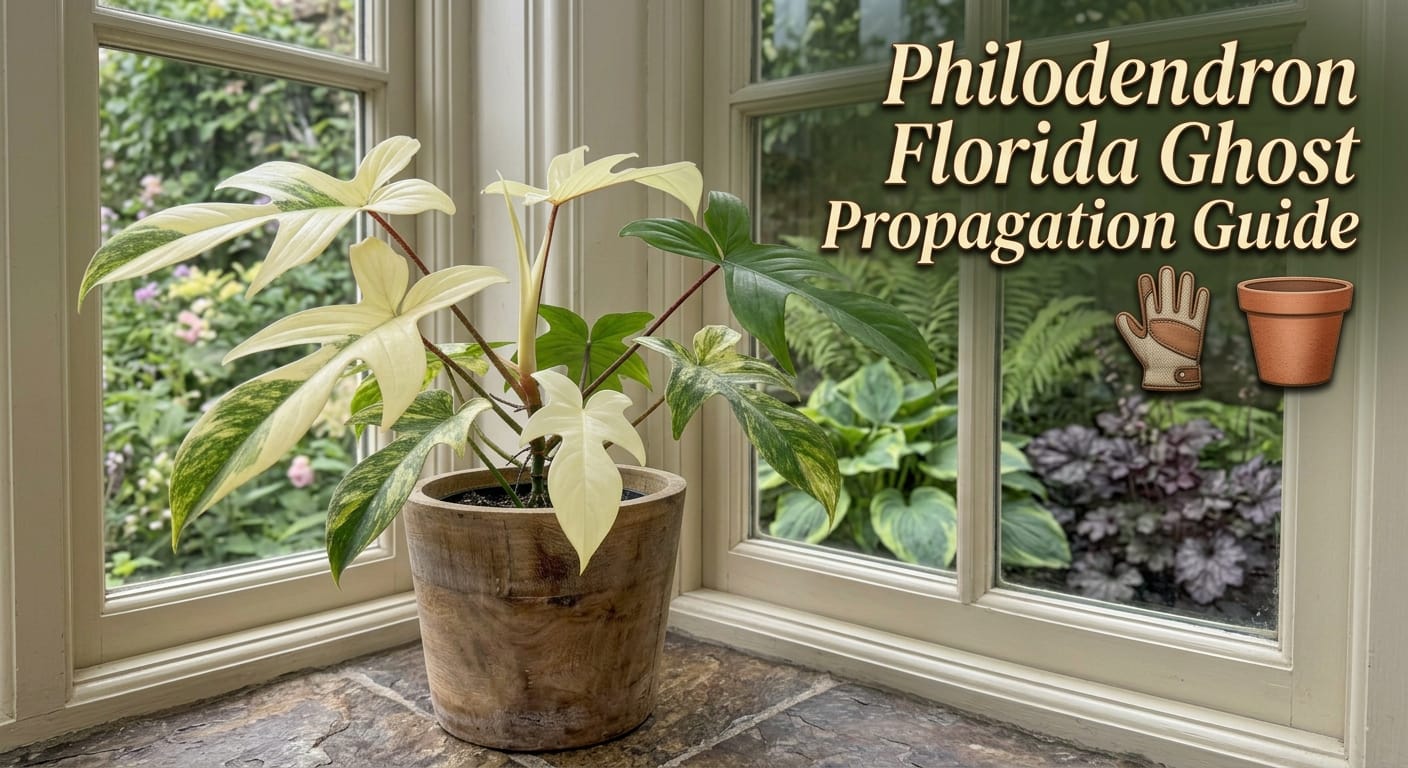
Florida Ghost can be propagated using stem-tip or leaf-bud cuttings. The RHS lists these as propagation methods for the plant.
A suitable cutting needs a viable section of stem with a node and a growth point capable of producing a new shoot. A detached leaf without the necessary stem tissue will not develop into a new climbing plant.
Prepare a suitable cutting
Choose a healthy section of stem with at least one viable node. A node is the part of the stem where a leaf attaches and where buds or aerial roots may develop.
Use a clean, sharp cutting tool. Make the cut carefully without crushing the stem.
If the cutting has a leaf attached, keep the leaf above the propagation medium. Avoid burying the petiole or leaving the foliage submerged in water.
Choose a rooting method
There are several methods used for climbing Philodendron cuttings. No single method needs to be treated as the guaranteed best option for Florida Ghost.
Water propagation
Place the node in clean water while keeping the leaf above the waterline. Use a clean container and replace the water when it becomes dirty.
Water allows you to observe root development, but the cutting will eventually need to adjust to a solid growing medium if you intend to grow it in a pot.
Sphagnum moss
Moisten the moss and remove excess water. It should be damp rather than saturated.
Position the node in contact with the moss and keep the container in bright, indirect light. Maintain enough moisture to prevent the moss from drying completely, while allowing air around the cutting.
Perlite or an airy propagation mix
Place the node in lightly moist perlite or another suitable rooting medium. Keep it in contact with the medium without leaving the cutting in a waterlogged environment.
Whichever approach you use, avoid repeatedly removing the cutting to check for roots. Disturbing it can damage developing root tissue.
These are general propagation methods used for climbing Philodendrons. Results depend on the health of the cutting, the presence of a viable growth point, moisture, warmth and airflow. The RHS confirms stem-tip and leaf-bud propagation for Florida Ghost but does not establish one of these rooting media as superior.
For a broader comparison of the methods, read Jefrev’s guide to Philodendron water propagation versus soil propagation.
Keep Florida Ghost Away from Children and Pets
The RHS lists Florida Ghost as harmful if eaten and identifies it as a potential skin and eye irritant or allergen.
Keep the plant and its cuttings away from children and pets that may chew the foliage. Wear gloves when pruning if your skin is sensitive, avoid getting plant sap in your eyes, and wash your hands after handling the plant.
If someone eats part of the plant or develops a reaction after contact, seek advice from an appropriate medical professional or poison control service. Contact a veterinarian if a pet chews or swallows any part of it.
Frequently Asked Questions
Is Philodendron Florida Ghost a separate species?
No. It is grown and sold as a cultivated Philodendron. The RHS describes it as a hybrid of Philodendron pedatum and Philodendron squamiferum, while Costa Farms describes it as a mutation found on the Florida hybrid. The RHS currently lists its name status as unresolved.
Why are my Florida Ghost leaves turning green?
That is normally part of the plant’s development. New leaves emerge white or creamy white, then change through lime green before becoming darker green as they mature.
Can I keep Florida Ghost leaves white permanently?
You should not expect each leaf to remain white. Brighter indirect light may improve the appearance of new foliage, according to Costa Farms, but it cannot prevent normal leaf maturation. Do not expose the plant to harsh direct sunlight in an attempt to preserve its colour.
Does Florida Ghost need a moss pole?
It needs suitable support because it is a climbing plant, but a moss pole is not compulsory. A textured plank or another stable climbing surface can also work.
Can Florida Ghost grow in normal indoor humidity?
It can adapt to average indoor conditions. However, very dry air may make it harder for new leaves to unfurl properly. Costa Farms suggests above-average humidity, with about 45% or higher as a practical target, but this should not be treated as an exact requirement for every home.
How large can Florida Ghost grow?
The RHS lists a potential height of 1.5 to 2.5 metres and a spread of 0.5 to 1 metre. These are growing estimates. The size of an indoor plant depends on its age, growing conditions, available support and the space you give it.
Is Florida Ghost difficult to grow indoors?
Its care is manageable when the plant receives enough indirect light, an airy potting mix, suitable watering and climbing support. The main thing new owners need to understand is that white leaves naturally become greener as they mature.
Final Thoughts
The most important thing to understand about Philodendron Florida Ghost is that its white new leaves are temporary. They naturally become greener as they develop, and that change is not a sign that the plant is losing its characteristic appearance.
Give it bright, indirect light, water when the upper growing medium begins to dry, and use a mix that holds some moisture without staying saturated. As the stem grows, guide it onto a stable support.
Pay attention to the roots and the newest growth rather than trying to keep every leaf white. Healthy development matters more than preserving one stage of the plant’s foliage.