Philodendron Paraiso Verde Indoor Care – 2026 Ultimate Guide

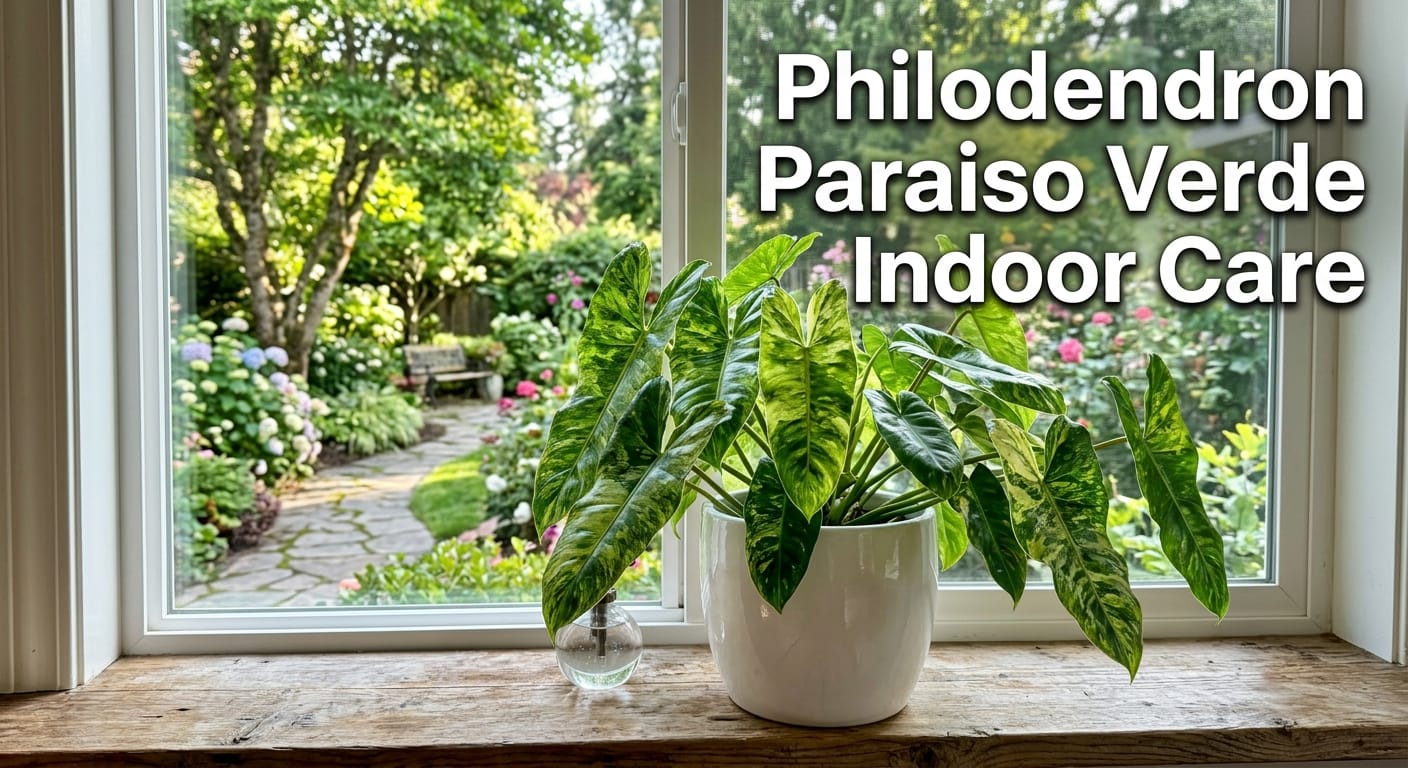
Have you ever seen a houseplant that looks like a real piece of art? That is exactly what you get with the Philodendron Paraiso Verde.
Its leaves look like someone splashed every shade of green onto them. Because of this, no two leaves ever look exactly the same.
That alone is a great reason to love this stunning houseplant.
But loving a plant and actually knowing how to care for a Philodendron Paraiso Verde are two very different things.
I have spent 8 years growing, propagating, and studying philodendrons right here in the US.
And the Paraiso Verde is one of the most interesting plants I have ever worked with.
This guide covers everything you need to know about Philodendron Paraiso Verde care indoors.
From lighting to soil, from pests to pricing, you will find clear and simple answers right here.
Let’s get into it.
What Is Philodendron Paraiso Verde?
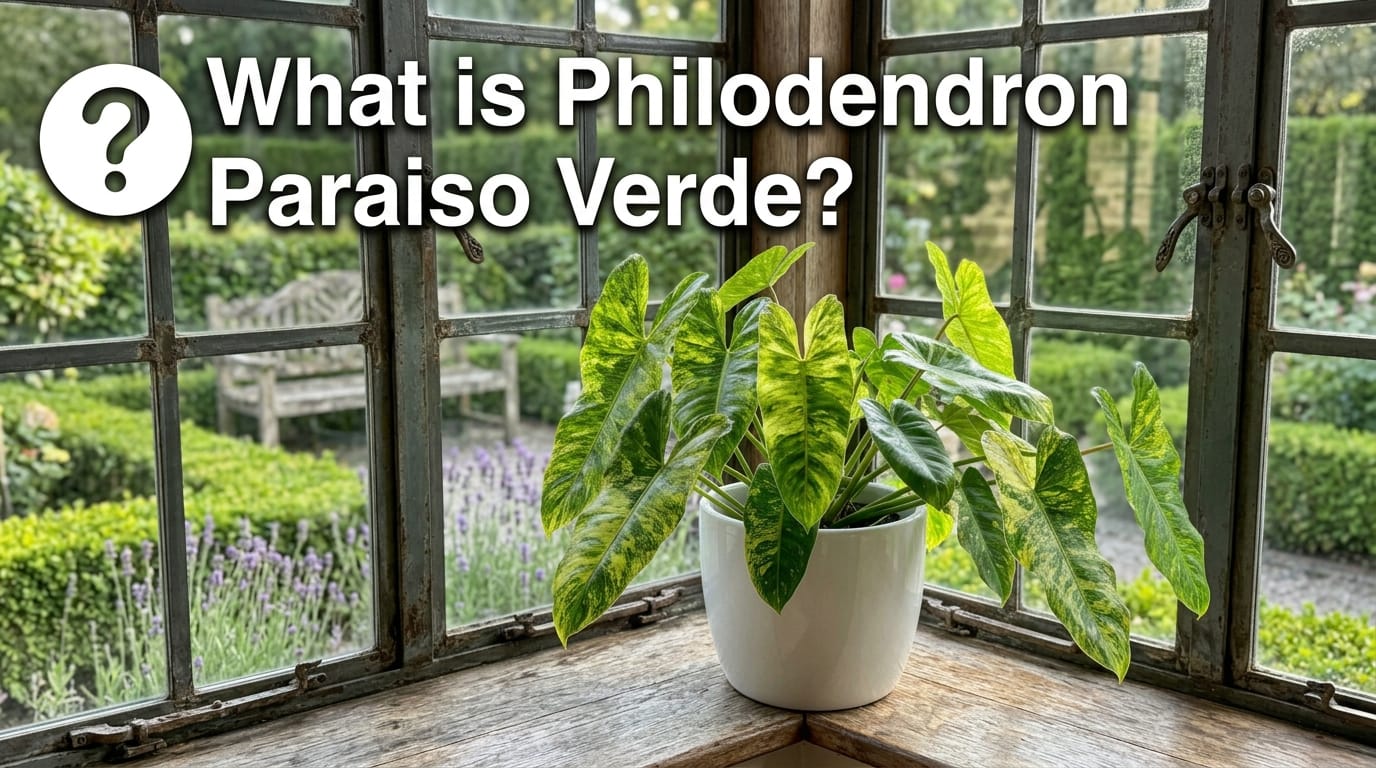
Philodendron Paraiso Verde is a rare and stunning indoor plant.
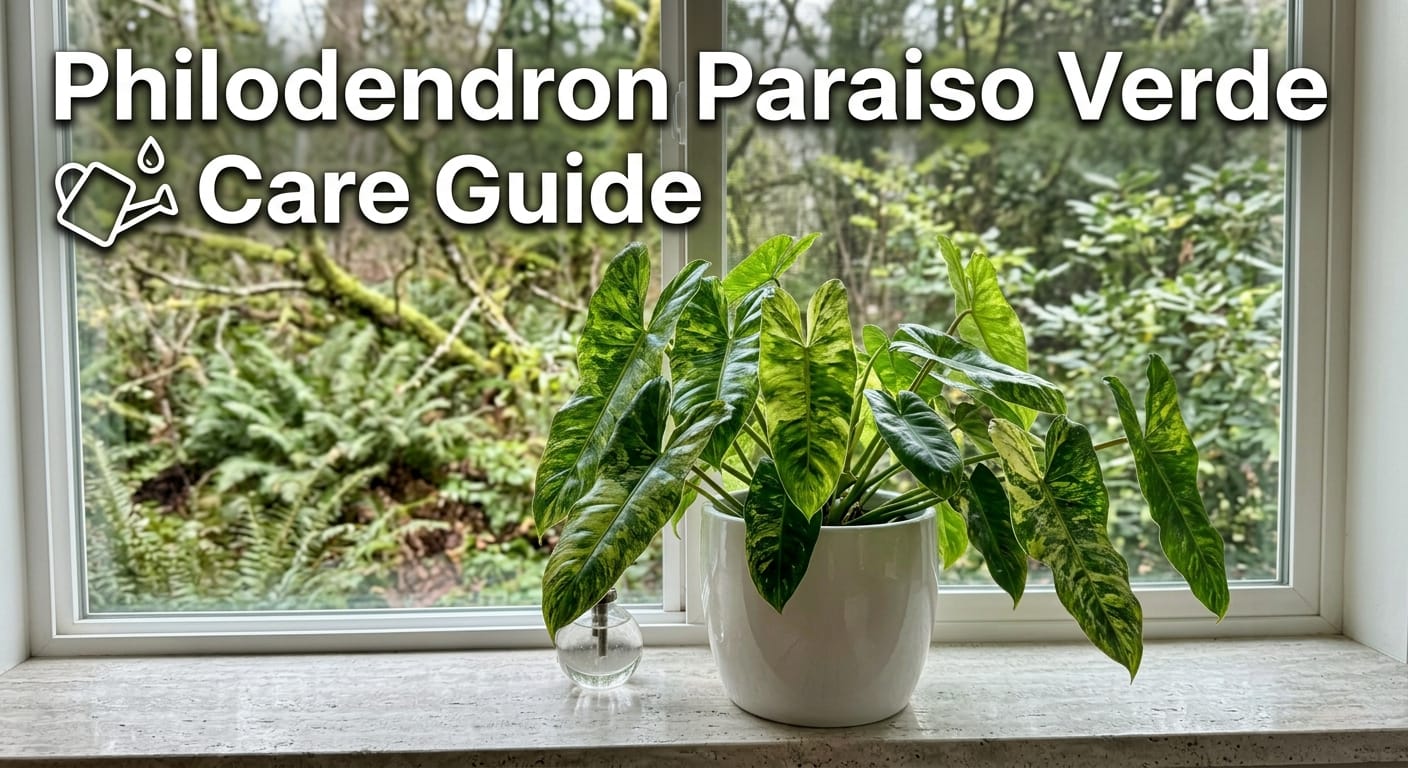
It is known for its long, glossy leaves covered in different shades of green.
The leaves have a speckled or marbled look, almost like someone painted them by hand.
This plant belongs to the large Araceae family, which includes many popular houseplants.
It is a climbing plant, which means it loves to grow upward with support.
Many plant collectors in the US call it one of the most beautiful philodendrons available today.
It is not the easiest plant to find at your local garden center.
But when you do find one, it is absolutely worth adding to your collection.
Scientific, Botanical, and Common Name
| Category | Name |
|---|---|
| Scientific Name | Philodendron ‘Paraiso Verde’ |
| Family | Araceae |
| Genus | Philodendron |
| Common Names | Green Paradise Philodendron, Paraiso Verde, Marina Ruy Barbosa |
| Cultivar | ‘Paraiso Verde’ (meaning “Green Paradise” in Spanish) |
The name “Philodendron” comes from the Greek words philos (loving) and dendron (tree).
So it literally means “tree lover,” which makes sense because this plant naturally climbs trees in the wild.
The cultivar name ‘Paraiso Verde’ translates to “Green Paradise” in Spanish.
That name is a perfect match for this stunning plant.
Some collectors also know it by the name ‘Marina Ruy Barbosa,’ which refers to the same cultivar.
It is not a naturally occurring species found in the wild.
Instead, it is a cultivar that was developed through selective plant breeding.
Native Habitat and Origin
Philodendrons as a genus are native to the tropical Americas.
They grow naturally in warm, humid rainforests in Central and South America.
The genus thrives in environments with filtered light, high humidity, and rich soil.
The Paraiso Verde specifically is a cultivar, meaning it was created by human plant breeders.
It was developed through selective breeding from naturally occurring philodendron plants.
Its closest parent plants originate from the tropical forests of South America.
In its natural environment, philodendrons cling to tree trunks and climb upward toward the light.
This climbing behavior is key to understanding how to care for this plant indoors.
Characteristics and Features
Here is a quick overview of what makes this plant special:
| Feature | Details |
|---|---|
| Leaf Type | Long, narrow, and glossy |
| Variegation | Speckled, marbled green and yellow-cream patterns |
| Growth Habit | Hemi-epiphytic climber |
| Mature Height (Indoors) | Up to 5-8 feet with support |
| Leaf Size (Mature) | Up to 20+ inches long |
| Toxicity | Toxic to humans, cats, and dogs |
| USDA Hardiness Zone | 10-12 (outdoor); houseplant everywhere else |
One of its most unique features is the variegation.
The leaves look different depending on how much light the plant gets.
More light usually means more color contrast in the leaves.
This makes every new leaf a little surprise.
Appearance
The Philodendron Paraiso Verde has a very distinctive look.
Its leaves are long and slightly narrow compared to many other philodendrons.
Each leaf shows a unique mix of deep green, light green, and creamy yellow.
Some leaves lean more green, while others have heavy speckled patterns.
The leaf surface is glossy and smooth, which gives it an elegant look.
New leaves emerge rolled up and are usually more green at first.
As they mature and get enough light, the variegation becomes more pronounced.
The stems are thick and sturdy, often turning a pale green or ivory color.
Aerial roots grow along the stem nodes.
These roots help the plant attach itself to a support structure as it climbs.
Growth Pattern
This plant is a climber at heart.
In the wild, it wraps its aerial roots around tree trunks and grows upward.
Indoors, it will do the same thing if you give it a moss pole or a support stake.
Without support, it will trail downward like a hanging vine.
Both growing styles work, but climbing produces larger and more beautiful leaves.
During spring and summer, the plant pushes out new leaves fairly quickly.
Growth slows down during fall and winter as temperatures drop.
A healthy, well-fed Paraiso Verde can produce a new leaf every 3-5 weeks in summer.
Dormancy
Does the Philodendron Paraiso Verde go fully dormant?
Not exactly in the same way a deciduous plant does.
But it does slow down significantly during fall and winter months.
During this time, new growth may pause completely or move very slowly.
The plant is resting, not dying.
This is completely normal and expected.
During dormancy, you should reduce watering and stop fertilizing.
Do not repot during this time either.
Just let the plant rest and it will bounce back beautifully in spring.
Benefits
Growing a Philodendron Paraiso Verde indoors comes with real benefits:
1. Air Quality Philodendrons are known to help filter indoor air.
They can absorb certain toxins from their environment over time.
2. Mental Wellness Studies show that indoor plants can reduce stress and improve mood.
Looking at a beautiful plant every day has real calming effects.
3. Aesthetic Appeal The Paraiso Verde is a showstopper.
It adds a tropical, lush feeling to any room it is placed in.
4. A Fun Growing Challenge This plant is not the hardest to keep alive, but it is not a beginner plant either.
Learning how to maintain its variegation is a genuinely rewarding challenge.
Care Guide
Sunlight
Getting the light right is the single most important thing for this plant.
Best choice: Bright, indirect light.
Place it near an east or west-facing window where it gets filtered morning or late afternoon sun.
Avoid putting it in direct harsh afternoon sun.
Direct sunlight will scorch the leaves and leave brown, crispy edges.
But here is the key thing most people miss:
Light directly affects variegation.
If your Paraiso Verde does not get enough light, the leaves will turn more solid green.
The beautiful speckled patterns fade when the plant is starved of light.
On the flip side, too much direct sun burns those same patterns away.
Aim for about 6-8 hours of bright, filtered light each day.
A grow light set on a 12-hour timer works great if you do not have a bright window.
Pro tip: Rotate your plant every couple of weeks so all sides get equal light.
Watering
Watering this plant is not complicated, but it does require attention.
Golden rule: Let the top 1-2 inches of soil dry out before you water again.
Stick your finger into the soil.
If it feels dry at the second knuckle, it is time to water.
If it still feels moist, wait a few more days.
When you water, water thoroughly until it drains out the bottom of the pot.
Never let the plant sit in standing water.
That leads directly to root rot, which is one of the fastest ways to kill this plant.
Signs you are overwatering:
- Yellow leaves
- Mushy stems near the base
- Soil stays wet for more than 10 days
Signs you are underwatering:
- Drooping, sad-looking leaves
- Dry, crispy leaf edges
- Soil pulling away from the pot edges
In summer, you may need to water every 5-7 days.
In winter, watering every 10-14 days may be enough.
Always check the soil, not a schedule.
Fertilizers
During spring and summer, your Paraiso Verde is actively growing.
This is the time to feed it.
Use a balanced liquid fertilizer with an NPK ratio like 10-10-10 or 20-20-20.
Dilute it to half strength.
Feed the plant every 4-6 weeks during the growing season.
Stop fertilizing in fall and winter when the plant rests.
Why half strength?
Full-strength fertilizer can burn the roots.
Burned roots show up as brown leaf tips and stunted growth.
Less is always more with fertilizer.
An occasional dose of a fertilizer high in nitrogen can help boost leaf size and color.
Soil Mix
The Paraiso Verde needs soil that drains fast and stays airy.
It should never sit in dense, waterlogged potting mix.
Recommended aroid mix:
- 40% potting soil
- 30% perlite
- 20% orchid bark
- 10% worm castings or compost
This mix holds just enough moisture while letting excess water drain away.
You can also use ready-made aroid mixes available online.
Good drainage is non-negotiable for this plant.
A heavy, compact soil will trap moisture and cause root rot over time.
Humidity
This plant comes from the tropical rainforest.
It loves high humidity.
Ideal range: 60-80% relative humidity.
Most homes in the US sit between 30-50% humidity.
That range works okay for survival, but the plant will not thrive at its best.
Here are practical ways to boost humidity:
1. Pebble tray: Fill a tray with pebbles and water. Set the pot on top.
2. Humidifier: The most reliable option. Keeps humidity consistent.
3. Group plants together: Plants release moisture, which raises local humidity.
4. Misting: Less effective and can promote fungal issues, so use it sparingly.
If your home has central heating in winter, humidity drops fast.
A small humidifier near your plant makes a huge difference during those dry months.
Temperature
The Paraiso Verde is a tropical plant and prefers warm conditions.
Ideal temperature range: 65-85°F (18-29°C).
Keep it away from cold drafts, air conditioners, and heating vents.
Minimum temperature: 55°F (13°C).
Below that, the plant will suffer, and growth will stop completely.
Never let it experience frost.
Consistent, warm temperatures are what this plant needs to thrive.
If you live in a colder climate, keep the plant away from windows during winter nights.
Cold glass can stress the plant even if the room temperature seems fine.
Climbing Stake / Moss Pole
If you want bigger, more beautiful leaves, give this plant something to climb.
A moss pole is the best option.
Moss poles stay moist, which encourages aerial roots to attach naturally.
When the aerial roots grab hold, the plant sends signals to produce larger, more mature leaves.
This is one of the most impactful things you can do for your Paraiso Verde.
Secure the stem to the pole gently with soft plant ties.
As the plant grows, guide new growth toward the pole.
A coir pole or bamboo stake also works if a moss pole is not available.
Re-wet the moss pole every time you water the plant to keep roots happy.
For a deeper look at supporting climbing philodendrons, check out the guide on Philodendron Silver Sword Care where I cover pole setups in detail.
Toxicity
This is very important if you have pets or small children.
The Philodendron Paraiso Verde is toxic to cats, dogs, and humans.
It contains insoluble calcium oxalate crystals in all parts of the plant.
According to the ASPCA, ingesting philodendron can cause:
- Intense burning in the mouth, lips, and tongue
- Excessive drooling
- Vomiting
- Difficulty swallowing
Never let children or pets chew on any part of this plant.
Keep it on a high shelf or in a room that is not accessible to animals.
If you suspect your pet ate any part of this plant, call your vet right away.
You can also call the ASPCA Animal Poison Control at (888) 426-4435.
Repotting Guide
Repotting gives your plant fresh soil and more room to grow.
When to repot:
- Roots are growing out of the drainage holes
- The plant dries out much faster than usual
- The plant looks too big for its pot
Best time to repot: Spring, right at the start of the growing season.
How to repot:
- Choose a new pot that is 1-2 inches larger in diameter than the current one.
- Always pick a pot with drainage holes.
- Gently remove the plant from its current pot.
- Shake off old soil and inspect the roots.
- Trim any black, mushy, or rotten roots with clean scissors.
- Place a layer of fresh aroid mix at the bottom of the new pot.
- Set the plant in the center and fill around it with fresh soil.
- Water lightly and place it in its usual spot.
Do not repot more than once a year unless the plant is severely root-bound.
Repotting too often stresses the plant and slows down growth.
Pruning Guide
Pruning keeps your Paraiso Verde looking neat and healthy.
But there is one extra reason this plant needs pruning that most philodendrons do not.
All-green shoots must be removed.
Sometimes this plant produces stems with leaves that have no variegation at all.
These all-green stems are called reverted shoots.
If you leave them on the plant, they will grow faster than the variegated parts.
Over time, the entire plant can become solid green.
To keep the beautiful speckled patterns, cut reverted shoots off as soon as you see them.
General pruning tips:
- Use clean, sharp scissors or pruning shears.
- Wipe your tools with rubbing alcohol before and after.
- Cut just above a node (the small bump on the stem).
- Remove dead, yellowing, or damaged leaves whenever you see them.
- Prune in spring for the best results.
For more on philodendron pruning techniques, check out my guide on Philodendron Micans Care.
Propagation Guide
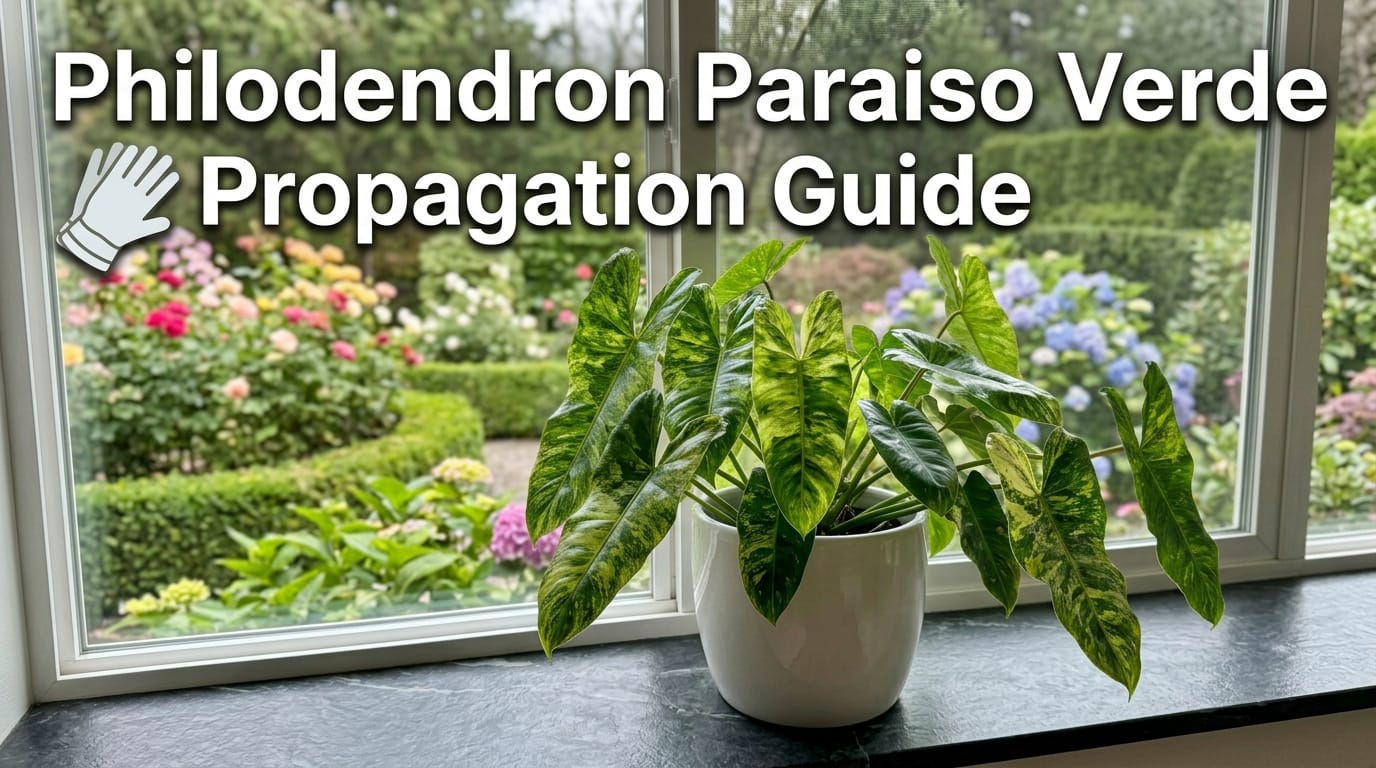
Propagating your Paraiso Verde is easier than you might think.
Best method: Stem cutting in water or sphagnum moss.
What you will need:
- Clean pruning shears
- A jar of water or a cup of damp sphagnum moss
- A healthy stem with at least one node
Step-by-step:
- Choose a healthy stem with at least one node and one or two leaves attached.
- Make a clean cut just below the node using sterilized shears.
- Remove any leaves that would sit below the waterline or in the moss.
- Place the cutting in water or pack it in damp sphagnum moss.
- Set it in a warm, bright spot out of direct sun.
- Change the water every 5-7 days to keep it fresh.
- Roots should appear within 3-5 weeks.
- Once roots are 1-2 inches long, pot the cutting into fresh aroid soil.
Important note on variegation:
Not all cuttings from a variegated plant will produce variegated offspring.
Always choose cuttings from stems that already show good variegation.
This gives you the best chance of maintaining those beautiful leaf patterns.
For a detailed step-by-step propagation walkthrough, visit our Propagation Guides section.
Real Talk from the Plant Community
Here is what Gina1960, a 40-year tropical plant collector from Florida, shared on the National Gardening Association forum when discussing a reverted Philodendron Paraiso Verde:
“Variegation is a genetic trait. It comes from a mutation in the plant’s meristem tissue. It can either be stable, or unstable… I have a friend who is fond of saying, ‘Reversion of variegation is only a mutation away.’ And he’s right. Its been my experience that even reverted plants can produce variegation again…often when you least expect it.”
Source: Garden.org Forum – Reverted Philodendron Paraiso Verde (April 2021)
This is so encouraging for anyone growing a Paraiso Verde that has gone fully green.
There is always hope for the variegation to return.
Common Pests and Diseases: Problems and Solutions
Spider Mites
What they look like: Tiny dots on the undersides of leaves with fine webbing.
Damage: Yellow stippling on leaves, dry and papery texture.
Solution: Spray the plant with neem oil or insecticidal soap.
Increase humidity, because spider mites thrive in dry conditions.
Repeat treatment every 5-7 days for 3 weeks.
Mealybugs
What they look like: Small white fluffy blobs in leaf joints and stem crevices.
Damage: They suck sap from the plant, causing yellowing and weak growth.
Solution: Dab individual bugs with a cotton swab dipped in rubbing alcohol.
For heavier infestations, spray the entire plant with neem oil solution.
Thrips
What they look like: Tiny, thin insects (sometimes with wings) that move fast.
Damage: Silver or bronze streaks on leaves, distorted new growth.
Solution: Isolate the plant immediately.
Spray with insecticidal soap or spinosad-based pesticide every 5 days.
Thrips are stubborn and may require several rounds of treatment.
Fungus Gnats
What they look like: Tiny black flies hovering around your soil.
Damage: Larvae eat roots, causing slow growth and wilting.
Solution: Let the soil dry out more between waterings.
Yellow sticky traps help catch the flying adults.
Apply beneficial nematodes or hydrogen peroxide solution (1 part H2O2 to 4 parts water) to the soil.
Root Rot
Signs: Yellowing leaves, mushy stems, foul smell from the soil.
Cause: Overwatering or poor drainage.
Solution: Remove the plant from its pot immediately.
Cut away all black or mushy roots.
Let the remaining healthy roots air out for a few hours.
Repot into fresh, dry, well-draining aroid mix.
Do not water for 3-4 days after repotting.
For a full breakdown of philodendron disease problems, visit our Pest and Diseases Diagnosis section.
Pricing Guide
The Philodendron Paraiso Verde is not a budget plant.
Its rarity and beautiful variegation make it more expensive than common houseplants.
Here is a general price range you can expect in the US as of 2026:
| Size / Type | Estimated Price Range |
|---|---|
| Small cutting (unrooted) | $15 – $40 |
| Rooted cutting (1-2 leaves) | $40 – $80 |
| Small potted plant (4-6 inch pot) | $60 – $120 |
| Medium potted plant (well-established) | $100 – $200 |
| Large specimen (climbing, heavily variegated) | $200 – $400+ |
Prices vary based on the seller, the level of variegation, and the plant’s size.
Heavily variegated specimens command higher prices because variegation is less predictable.
Prices have also shifted on platforms like Etsy and Facebook Marketplace as the plant becomes more available.
Buying Guide
Knowing where to buy and what to look for will save you money and disappointment.
Where to Buy
Online Marketplaces:
- Etsy (search for reputable plant sellers with good reviews)
- Facebook Marketplace (local sellers, can see the plant before buying)
- eBay (exercise caution; check seller ratings carefully)
Specialty Plant Shops:
- Local rare plant nurseries often carry them
- Aroid specialty sellers online
Plant Swaps:
- Local plant swap events are a great way to get cuttings at low or no cost
What to Look for When Buying
- Check for visible variegation. A plant with solid green leaves might have reverted.
- Inspect for pests. Look under leaves for spots, webbing, or tiny insects.
- Check the stems. They should be firm and green, not soft or mushy.
- Look at the roots. If buying in person, healthy roots are white or light tan.
- Ask about the care history. A seller who knows their plant is a good sign.
- Avoid buying during extreme weather. Cold or very hot shipping conditions stress plants.
Common Mistakes to Avoid
These are the mistakes I see most often with Paraiso Verde growers:
Mistake 1: Not Giving It Enough Light
This is the top mistake.
Without bright, indirect light, the variegation will fade and leaves will go solid green.
Always prioritize a bright spot or invest in a quality grow light.
Mistake 2: Overwatering
Too much water kills this plant faster than almost anything else.
Always check the soil before watering.
When in doubt, wait one more day.
Mistake 3: Ignoring All-Green Shoots
If you do not prune reverted shoots, they will take over the plant.
Cut them off as soon as you spot them.
Mistake 4: No Support Structure
Leaving this plant without a moss pole results in smaller, less impressive leaves.
Always provide climbing support for best results.
Mistake 5: Fertilizing in Winter
The plant is resting in winter.
Adding fertilizer during this period can build up salts in the soil and burn the roots.
Stop feeding between October and February.
Mistake 6: Using the Wrong Soil
Dense, heavy potting soil holds too much moisture for this plant.
Always use a chunky, well-draining aroid mix.
Mistake 7: Placing It Near Cold Drafts
A window that lets in cold air at night can stress the plant even if daytime temps are fine.
Keep it away from drafty spots in winter.
FAQ
Q: Is Philodendron Paraiso Verde easy to care for?
It is an intermediate-level plant.
It is not as forgiving as a pothos, but it is not as demanding as a Philodendron Spiritus Sancti either.
With the right light and watering routine, it thrives well.
Q: Why are my Paraiso Verde leaves turning yellow?
Yellow leaves are usually caused by overwatering.
Check the soil and make sure it is not staying wet for too long.
It could also be a sign of root rot or a nutrient deficiency.
Q: Why is my Paraiso Verde losing its variegation?
The most common cause is not enough light.
Move it to a brighter spot and give it time.
Also remove any fully green reverted shoots promptly.
Q: How fast does Philodendron Paraiso Verde grow?
In ideal conditions, it can push out a new leaf every 3-5 weeks during the growing season.
In winter, growth slows down or stops completely.
Q: Can I grow Paraiso Verde in water (hydroponics)?
Yes, it is possible.
Many growers have success with semi-hydroponic methods like LECA.
Make sure to add diluted liquid fertilizer to the water.
Q: Is Philodendron Paraiso Verde the same as Florida Beauty?
No, they are different cultivars.
The Florida Beauty has different leaf shapes and variegation patterns.
They are both members of the Araceae family and require similar care, though.
Q: How do I make the leaves bigger?
Give the plant a moss pole to climb.
When the aerial roots attach and the plant climbs, it will produce significantly larger leaves.
Consistent fertilizing during spring and summer also helps.
Q: How do I propagate Paraiso Verde without losing variegation?
Choose cuttings from stems that are already showing strong variegated patterns.
Cuttings from all-green stems are more likely to produce less-variegated offspring.
Conclusion
The Philodendron Paraiso Verde is one of those plants that earns its place in any home.
Its speckled, marbled leaves are unlike anything else in the philodendron world.
And with the right care, it will reward you with lush, dramatic growth season after season.
The key things to remember:
- Bright, indirect light keeps the variegation alive
- Let the soil dry slightly between waterings
- Give it a moss pole for bigger, bolder leaves
- Remove all-green shoots to protect variegation
- Keep humidity up and temperatures warm
Growing this plant is not just about keeping it alive.
It is about understanding what it needs and watching it respond.
That back-and-forth is what makes growing plants genuinely fun.
If you found this guide helpful, explore more of our philodendron guides on Jefrev:
- Philodendron Melanochrysum Care Indoors
- Philodendron Florida Ghost Care
- Philodendron Brandtianum Care Indoors
- Philodendron Whipple Way Indoor Care
Happy growing, and as always, keep those leaves shining.