Why Is My Philodendron White Knight Reverting? (6 Real Causes + Honest Fixes)

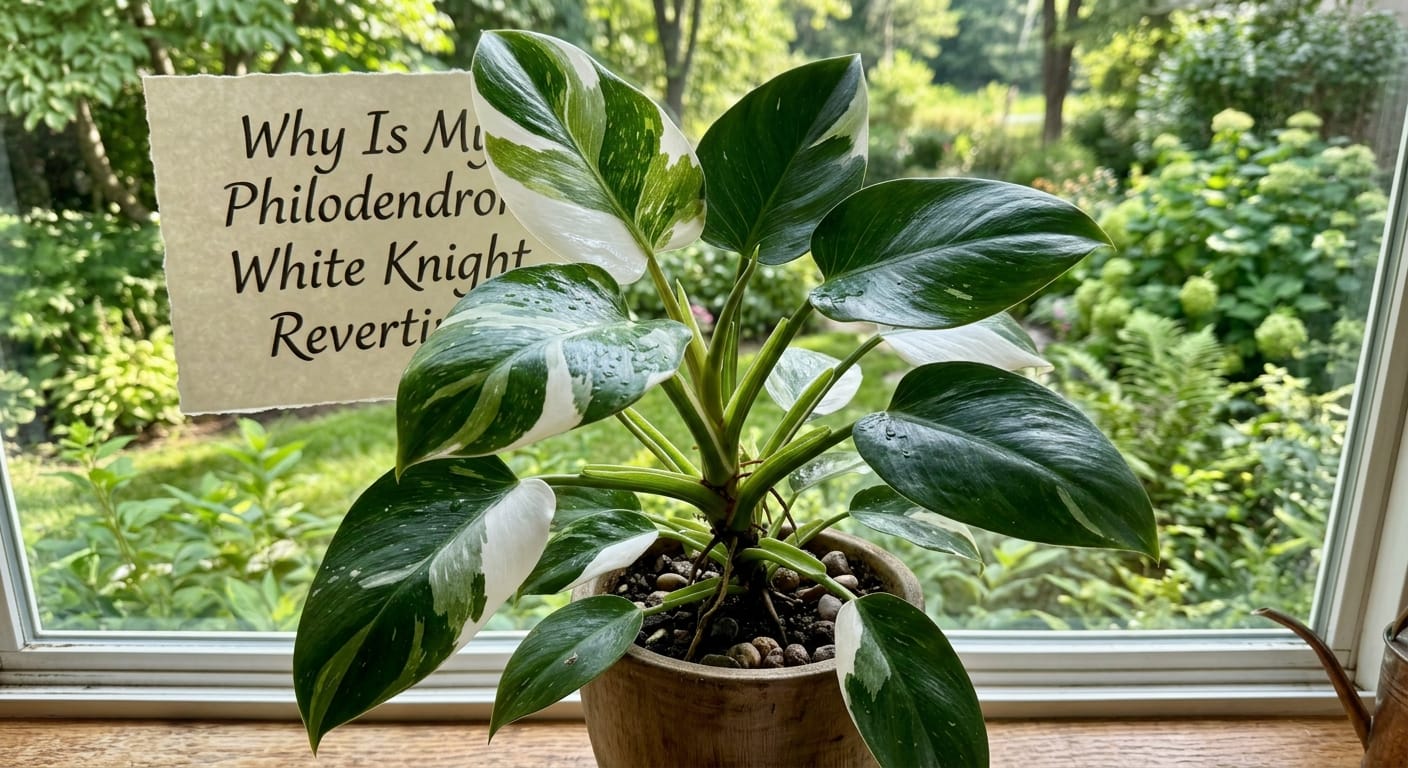
The White Knight is the kind of plant that stops a conversation cold when someone sees it for the first time.
Those burgundy stems. The creamy white and green patches on every leaf. The way no two leaves ever look identical.
So when the newest leaf on mine unfurled completely green last spring, I genuinely panicked.
No white. No cream. Just solid, flat green.
My White Knight was reverting — and I had no idea which of the dozens of things I’d read about was actually causing it.
I spent days digging through plant science forums, grower communities, and published research to find real answers.
Here’s exactly what I found.
What Does “Reverting” Actually Mean?
Let’s define this clearly before anything else.
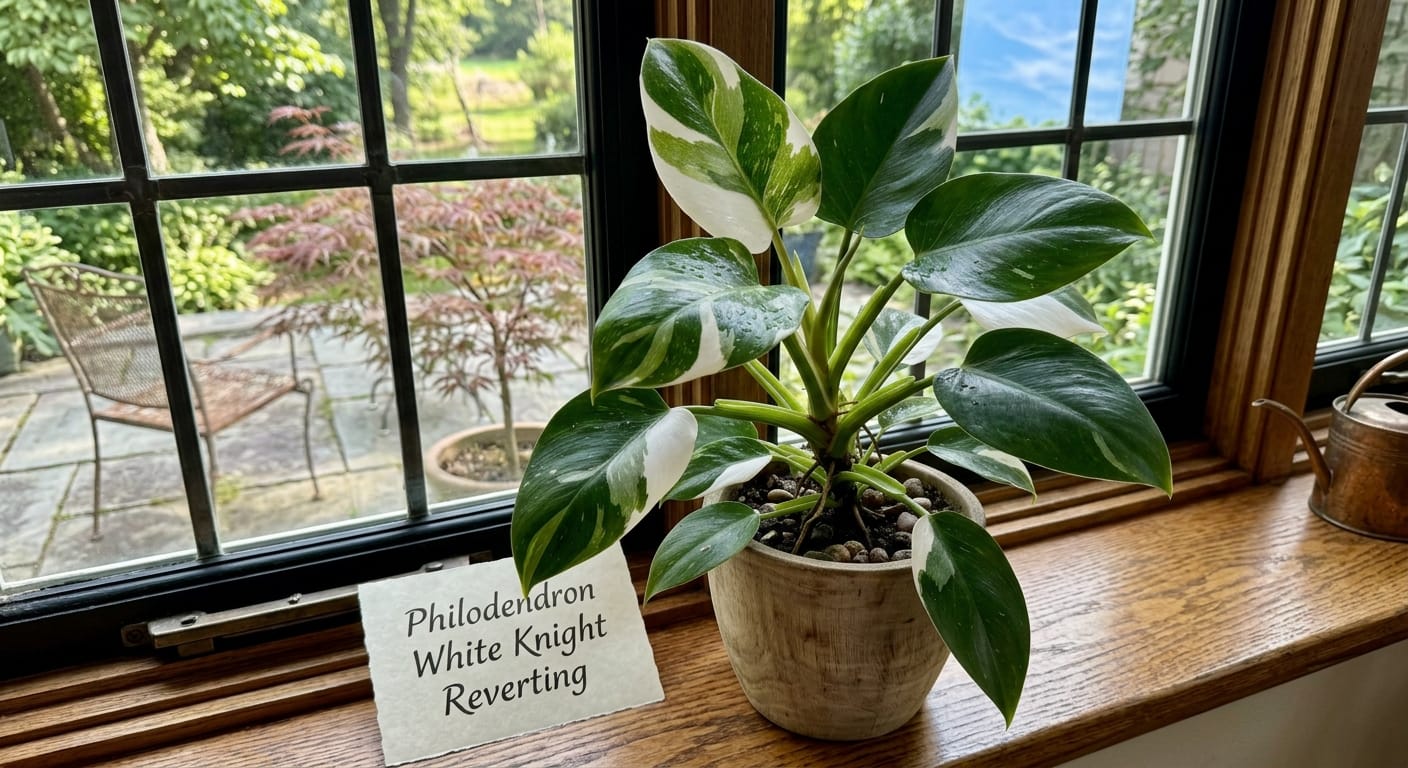
Reversion is when a variegated plant starts producing solid green leaves.
Instead of seeing white-and-green patterned foliage, you only get green.
It looks like your expensive, rare White Knight is becoming a plain philodendron.
This can happen slowly over several leaf cycles.
Or it can seem to happen almost overnight.
Either way, it is frustrating and confusing when you first notice it.
The Science Behind White Knight Variegation
To fix reversion, you must first understand how this plant gets its white coloring.
The white sections on White Knight leaves have no functioning chlorophyll at all.
Chlorophyll is the pigment that makes leaves green and powers photosynthesis.
Without it, those leaf sections appear bright white or creamy.
The White Knight’s variegation is called chimeric variegation.
According to the Garden Professors, chimeric variegation happens when a genetic mutation affects certain plant cells.
Some cells produce chlorophyll normally, creating green tissue.
Other cells cannot produce chlorophyll at all, creating white tissue.
These two cell types exist side by side in the same plant.
This is what makes chimeric variegation either stable or unstable depending on the species.
In the White Knight, this mutation is unstable.
That means the green cells can take over the white cells at any point.
Green cells have a massive biological advantage over white cells.
They generate energy via photosynthesis. White cells simply cannot do this.
So the plant is always, biologically, trying to shift back toward pure green.
It is not personal. It is pure survival instinct working at the cellular level.
A 2025 micropropagation study from Michigan State University highlighted the White Knight’s chimeric complexity.
Researchers found its tissue multiplication challenging precisely because of this genetic instability.
That validates what experienced collectors have known practically for years.
The White Knight’s variegation is always in a kind of internal biological competition.
6 Real Reasons Your Philodendron White Knight Is Reverting
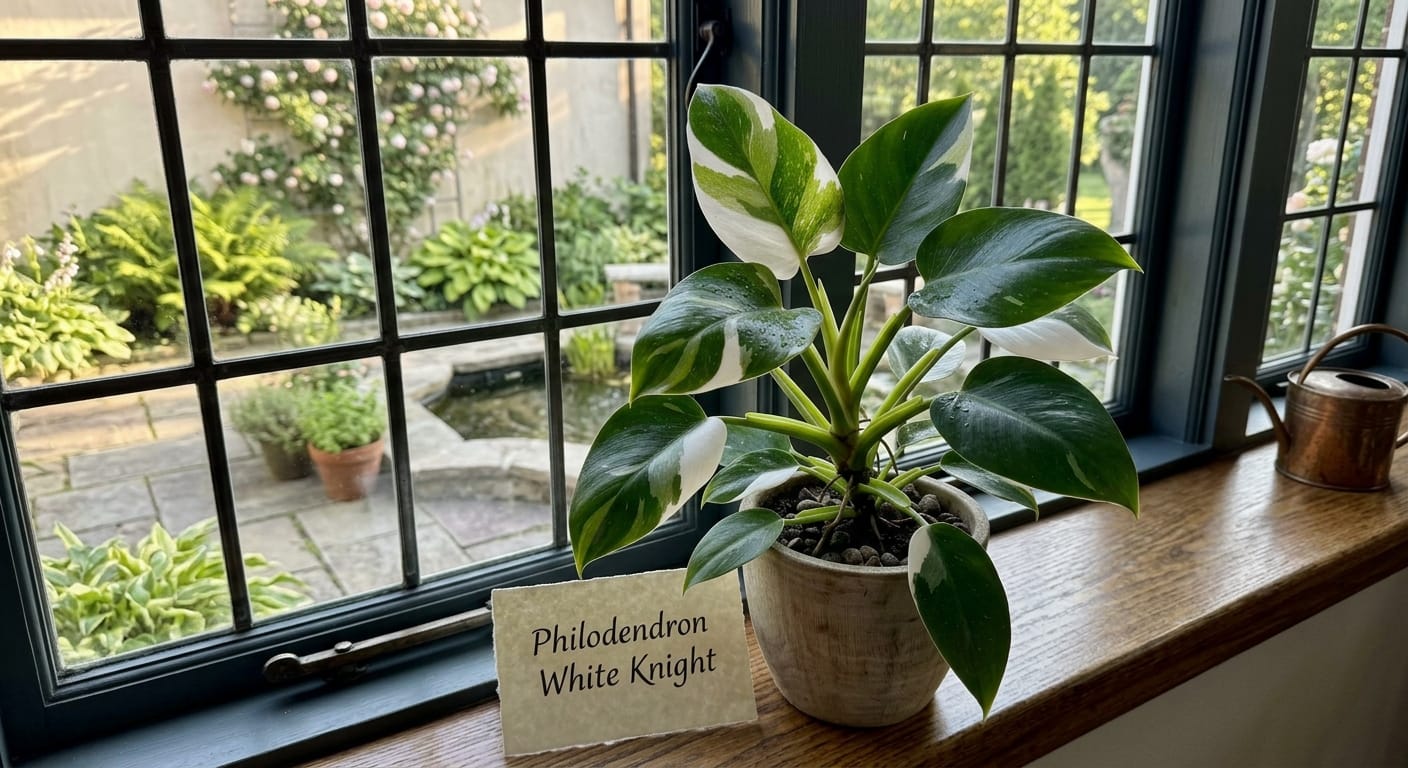
Now let’s get into the actual causes. Here is what I know from eight years of growing.
1. Not Enough Light (The Number-One Cause)
This is the most common reason White Knights revert. Period.
Low light gives green cells an enormous competitive advantage over white cells.
White cells produce no energy through photosynthesis. They depend entirely on green cells.
When light is scarce, the plant pushes aggressively toward producing more green tissue.
It is doing what it must to survive and keep growing.
Your White Knight needs bright, indirect light for at least 6 to 8 hours daily.
A spot three feet back from a north-facing window will not cut it.
That is simply not enough light intensity to maintain chimeric stability.
I learned this painfully with one of my early White Knight cuttings in 2022.
I placed it in a corner that looked bright to my eyes.
But “bright to human eyes” and “adequate light for a variegated aroid” are very different things.
Three consecutive green leaves later, I understood the problem.
A sheer-curtained east-facing or south-facing window works much better for this plant.
If your home has limited natural light, a grow light becomes necessary, not optional.
I run LED grow lights during winter months here, and they genuinely preserve variegation.
2. Temperature Stress
This one surprised me when I first dug into the research.
Temperature swings are a serious reversion trigger for chimeric plants like the White Knight.
Foliage Factory’s plant science guide explains this clearly and precisely.
Extreme heat or cold disrupts the chimeric cell layers inside the meristem tissue.
When those layers are destabilized, green cells often take permanent control of new growth points.
The safe indoor range for this plant is 65°F to 80°F.
Anything below 55°F can stress the plant badly enough to trigger a reversion event.
Anything above 85°F sustained over weeks creates the same kind of cellular instability.
Keep your White Knight away from air conditioning vents during summer months.
Also keep it away from cold drafts near windows and exterior doors in winter.
I moved my White Knight three times in one apartment before finding its sweet spot.
It now lives near an east-facing window, completely away from the AC unit.
It hasn’t produced a fully green leaf since I made that change.
3. Over-Fertilizing With Too Much Nitrogen
This cause is not discussed nearly enough in White Knight care guides online.
Too much nitrogen is a direct reversion accelerator.
Excess nitrogen pushes aggressive, rapid vegetative growth.
Rapid growth favors green tissue because green cells divide and replicate faster under nitrogen overload.
White, chlorophyll-deficient cells cannot keep pace with that growth speed.
The result is a flush of lush, fully green new leaves with no white at all.
Many growers make this mistake in early spring.
They see slow winter growth, then overcompensate with heavy fertilizer doses in March.
The plant responds by pushing out rapid green shoots with zero variegation.
I made this exact mistake in year three of my growing journey.
I used a high-nitrogen liquid fertilizer at full strength every two weeks.
My White Knight and my Birkin both started reverting within 60 days of that change.
Once I dropped back to a balanced fertilizer at quarter strength, used monthly, things stabilized.
Keep nitrogen moderate and consistent during the growing season. That is the real key.
Never fertilize in fall or winter. The plant is slowing down, not growing.
Pushing nutrients into slow-growing tissue creates salt buildup and cellular stress.
4. Taking a Cutting From the Wrong Node
This cause specifically applies if you recently propagated your White Knight yourself.
Or if the plant you purchased was propagated from an already-reverted stem section.
If a cutting comes from a stem segment that had already lost its variegation, it stays green.
It will not magically produce white leaves just because it is now rooted and growing.
The chimeric cell information lives inside each specific node on the stem.
A node that came from a reverted stem section has lost that information permanently.
Always take cuttings from sections of the stem that show active variegation.
At least one or two nodes in your cutting should have produced a variegated leaf recently.
I cover this same principle in my guide on how to propagate Philodendron Pink Princess in water.
The Pink Princess and White Knight share the same chimeric propagation rules.
Choosing the wrong node is one of the sneakiest causes of what looks like reversion.
Your plant never actually had the variegation capacity from that section to begin with.
This also means: be skeptical when buying cheap White Knight cuttings online.
Look at the photos carefully. If every leaf in the cutting photos is fully green, move on.
5. Repotting Stress
Repotting is more traumatic for chimeric plants than most growers realize.
When roots are disturbed, the plant enters an immediate stress response.
During that stress phase, growth hormones shift toward rapid tissue production.
The plant prioritizes survival over producing complex, energetically costly white tissue.
Green leaves are faster and cheaper to produce under stress.
I almost always see two to three solid green leaves immediately after repotting my White Knight.
This is often temporary if you correct other care factors at the same time.
Wait until your White Knight is genuinely root-bound before repotting it.
Go up only one pot size at a time. Never jump two sizes.
Use a chunky, well-draining substrate. My personal mix is orchid bark, perlite, and coco coir.
This mix mimics the loose, airy root environment these plants have in their native habitat.
Give the plant at least six to eight weeks to fully recover after repotting.
Do not adjust light, temperature, or fertilizer during that recovery window.
Let it stabilize first, then fine-tune conditions once new growth appears.
6. True Genetic Reversion (The Hardest Truth)
This is the scenario nobody in the plant community wants to discuss openly.
In some cases, reversion is permanent and cannot be reversed by any care change.
This happens when the growing meristem of the plant completely loses its chimeric cell layer.
Once that meristematic tissue reverts to full green, every leaf from that point forward will be green.
No amount of better light, careful feeding, or strategic pruning brings it back.
You can identify permanent reversion when the plant produces five or more consecutive all-green leaves.
And when those leaves appear even after you have corrected every care factor listed above.
At that stage, the growing tip has permanently reverted at the genetic level.
Your options are to remove the reverted section entirely or keep the plant as a solid green philodendron.
Permanent reversion is uncommon in a well-cared-for White Knight with stable conditions.
But it does happen, and knowing this ahead of time sets realistic expectations.
How to Fix a Reverting White Knight
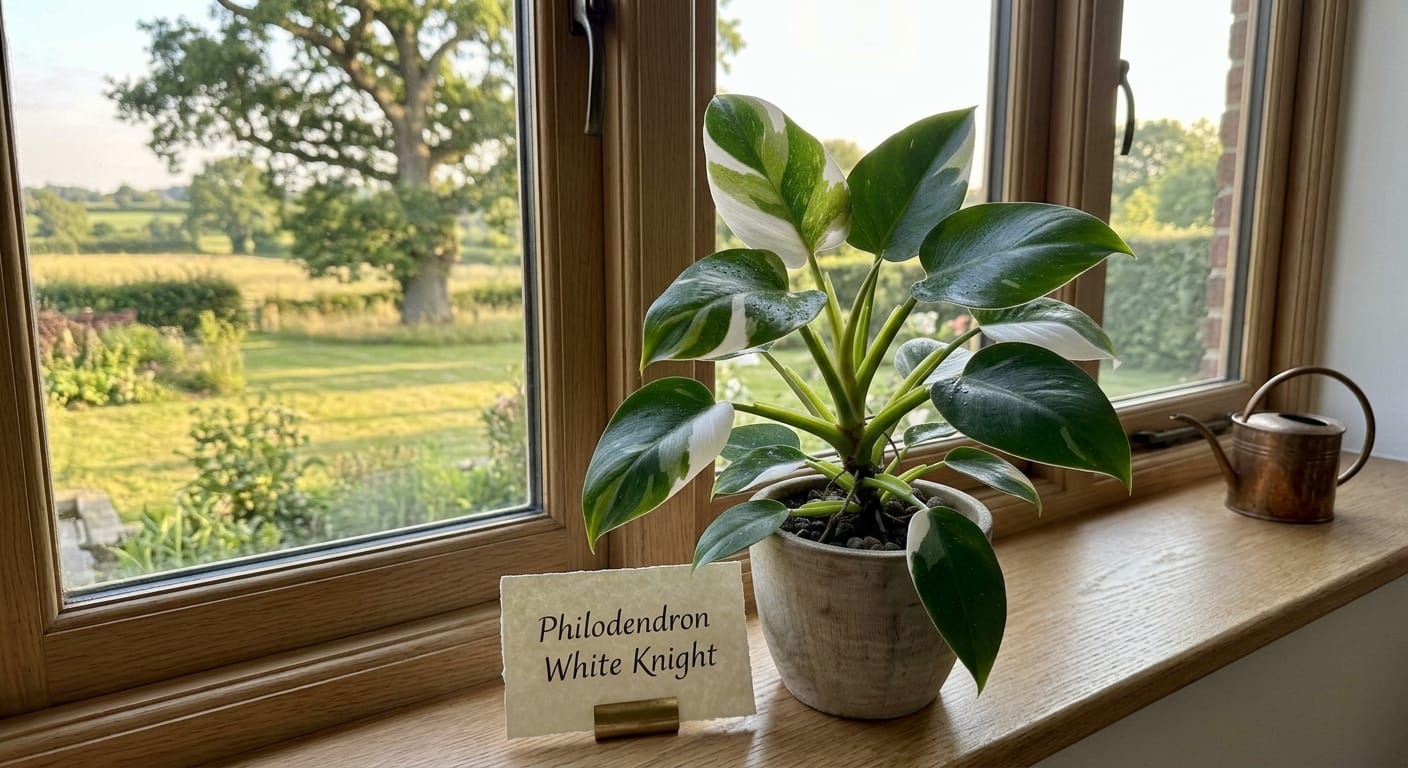
Here is the exact action plan I follow whenever I catch reversion happening in my collection.
Step 1: Identify where the reversion began.
Walk the stem from the soil upward with your eyes.
Find the last leaf or node that produced visible white variegation.
That is your reference point. Everything above it that is green gets assessed carefully.
Step 2: Move the plant to better light first.
Before touching the pruning shears, fix the light situation immediately.
Place the plant in front of a sheer-curtained east or south-facing window.
Or position a basic LED grow light 12 to 16 inches above the foliage canopy.
Give this adjustment at least two full weeks before making any other changes.
Step 3: Prune back to the last variegated node.
If better light alone does not produce a variegated new leaf within three to four weeks, prune.
Cut the stem back to just above the last node that produced a variegated leaf.
Use clean, sterilized pruning shears. Dirty tools spread bacteria and fungal disease between cuts.
New growth from a variegated node has the best chance of carrying chimeric tissue forward.
Do not prune so aggressively that you remove every active leaf.
You need at least one healthy green or semi-variegated leaf remaining to fuel the plant.
Step 4: Stop heavy fertilizing for at least eight weeks.
Give the plant a complete break from feeding.
Let the chimeric cell layers restabilize without the pressure of excessive nitrogen.
After eight weeks, resume with a balanced fertilizer at quarter strength only.
Step 5: Watch the next two to three leaves carefully.
If the new leaves show even a small sliver of white, that is a genuinely encouraging sign.
Variegation often builds back up progressively over several leaf cycles once conditions improve.
Be patient. This is not a one-week fix.
The Moss Pole Connection Most Growers Miss
This is something I observed in my own growing space well before I read it anywhere.
My climbing philodendrons consistently produce more dramatic variegation when given vertical support.
When a White Knight actively climbs a moist moss pole, it grows more vigorously overall.
More vigorous, healthy growth tends to produce more stable and striking variegation patterns.
The aerial roots cling to moist moss, which mimics the plant’s natural jungle habitat.
In the wild, these plants climb rainforest trees in tropical South America.
Supporting that climbing behavior indoors appears to reduce reversion frequency in my experience.
I now keep all of my climbing aroids on moss poles as a default practice.
My guide on caring for Philodendron Melanochrysum indoors covers how I manage large climbing aroids.
The same moss pole principles I use for the Melanochrysum apply directly to the White Knight.
A Critical Mistake People Make With Reverting Plants
Many growers react to reversion by stripping off every green leaf they can find.
The idea is to “force” the plant into producing white growth.
This is one of the most damaging things you can do to a reverting White Knight.
White sections of the leaves contribute almost nothing to the plant’s photosynthesis.
Green leaves, even on a variegated plant, are what keep the whole thing alive.
Remove all the green at once and the plant has no energy source.
Remove only fully reverted stem sections. Keep any mixed or partially variegated leaves.
Even a leaf that is 90% green with a small white edge is producing chimeric tissue.
That leaf is more valuable than it appears. Do not sacrifice it prematurely.
White Knight vs. White Princess vs. White Wizard
People often ask me to clarify which white philodendron is which.
The easiest distinguishing feature is the stem color.
White Knight: Dark reddish-brown, almost burgundy-colored stems and petioles.
White Princess: Green stems with pink or reddish coloring near the petiole base.
White Wizard: Fully green stems with no red or pink coloring at all.
All three share chimeric variegation. All three can revert under the same stress conditions.
The White Knight is generally considered the most visually dramatic of the three varieties.
It is also typically the most expensive due to its relative rarity and reversion instability.
If you enjoy growing rare and demanding climbing philodendrons, my Philodendron Spiritus Sancti care guide covers another extraordinary specimen.
The Spiritus Sancti demands similar environmental precision to what the White Knight requires.
What to Look For When Buying a White Knight
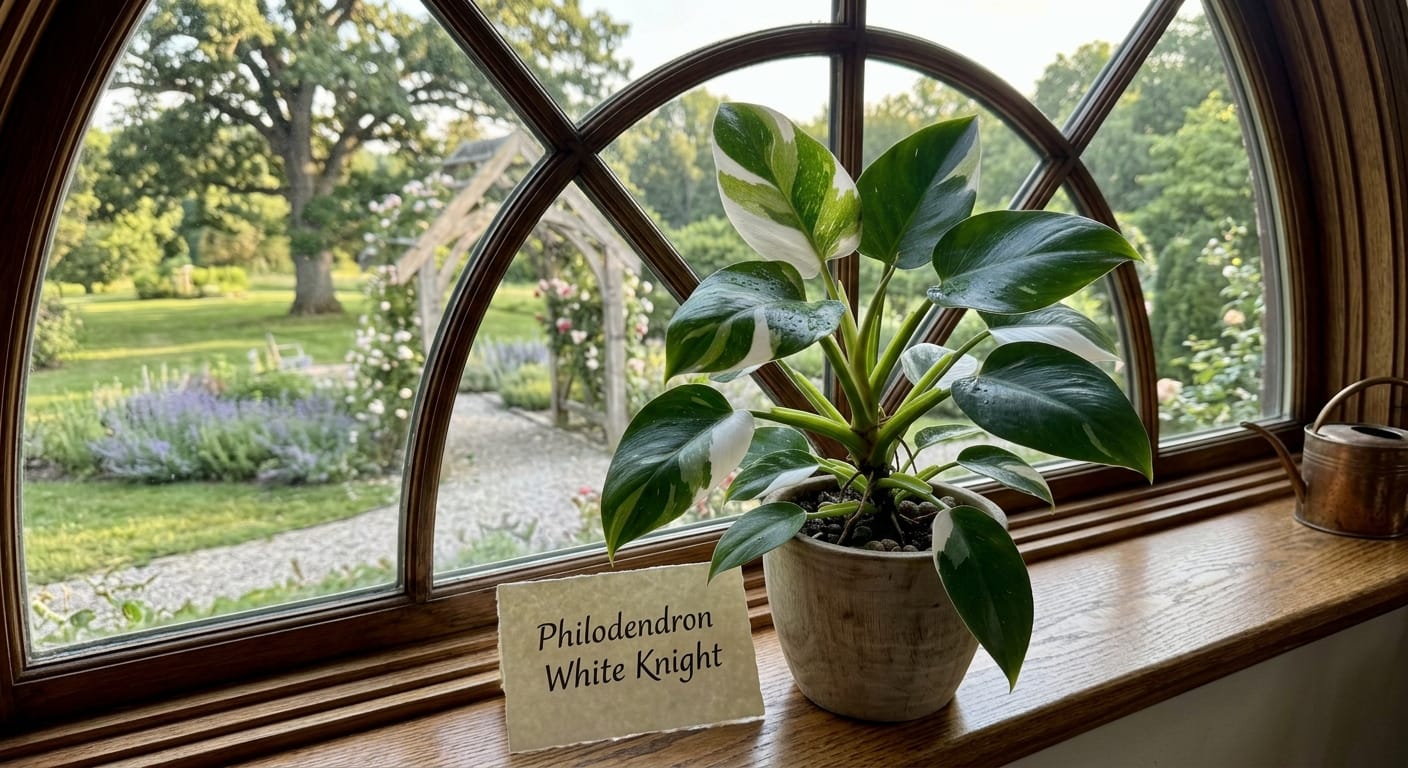
This is something I genuinely wish someone had told me earlier in this hobby.
Check the most recent three to four nodes on the stem before purchasing any White Knight cutting.
If those nodes all produced solid green leaves with zero white, that is a red flag.
That cutting may already be in reversion from an unsuitable section of the donor plant.
You want to see at least one or two recent leaves with visible white patches near the tip.
That signals the active growing point still carries functional chimeric tissue.
This single tip has saved me from multiple bad purchases in online plant trading groups.
Never buy a White Knight based solely on the oldest leaf in the photo.
Sellers sometimes photograph the most variegated historical leaf while hiding a reverted growing tip.
Always ask for a current photo of the newest leaf or active growth point.
Prevention Checklist: Keeping Variegation Stable Long-Term
Prevention is far easier than reversing active reversion once it has started.
Here is the short checklist I follow for all chimeric plants in my collection.
Light: Bright, indirect light for 6 to 8 hours daily. This is non-negotiable.
Temperature: Keep between 65°F and 80°F. No cold drafts. No AC vents nearby.
Fertilizer: Balanced formula at quarter strength, once monthly during the growing season only.
Propagation: Always cut from variegated nodes. Never from green-only stem sections.
Repotting: Wait until root-bound. Use a chunky, breathable substrate. Go up one pot size only.
Support: Give it a moss pole to encourage strong, vertical climbing behavior.
Monitoring: Inspect each new leaf as it unfurls. Catch early reversion immediately before it spreads.
Following this checklist consistently has kept my White Knight producing variegated leaves for years.
My Personal Takeaway After Eight Years
The White Knight was one of the plants that showed me how much chimeric variegation is a relationship, not a guarantee.
That plant taught me how to pay attention. How to actually watch a plant instead of just owning it.
The White Knight has taught me something deeper: patience with biological processes you cannot fully control.
It rewards careful attention with some of the most dramatic foliage you can grow indoors.
It punishes neglect with rapid, frustrating reversion.
The good news is that most reversion cases are genuinely fixable.
Better light, controlled fertilization, and thoughtful pruning solve the problem the majority of the time.
Permanent reversion is the exception, not the norm, when care is dialed in correctly.
If your plant is also showing yellowing alongside the reversion, my guide on why Philodendron Tortum leaves turn yellow covers overlapping environmental stress signals.
Many of the same care factors that cause yellowing also push chimeric plants toward reversion.
Understanding one problem in your collection often helps you solve several others at the same time.
Stay patient with your White Knight. Keep the light strong and the nitrogen low.
It will reward your consistency more than almost any other plant in this entire hobby.