Philodendron Overwatering vs Underwatering: How to Tell the Difference (and Actually Fix It)

The first time I got watering wrong on a philodendron, I overcorrected and got it wrong in the opposite direction three days later.
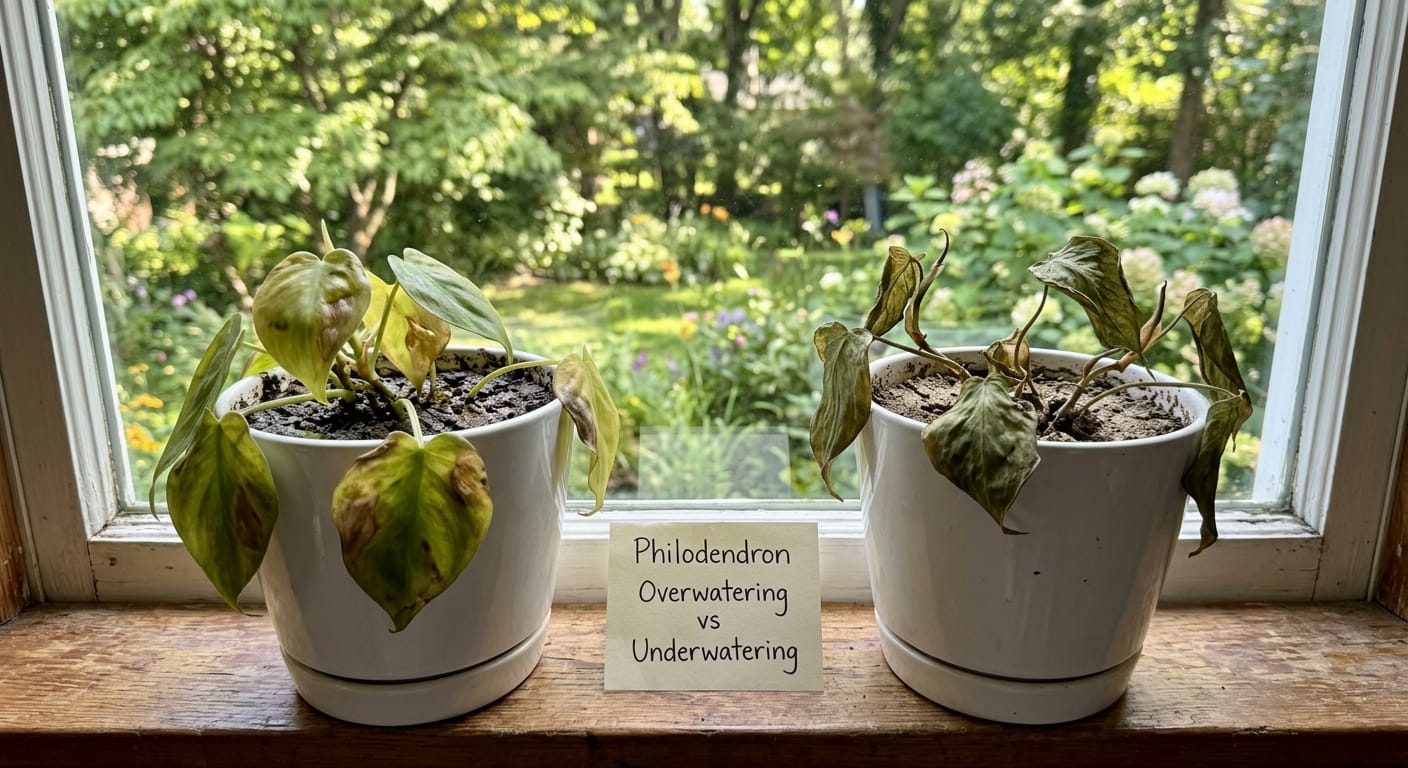
What surprised me was how similar the plant looked both times — drooping, dull, not quite right — with no obvious signal pointing to which problem I was actually dealing with.
That ambiguity is the part that frustrates most growers early on, and understandably so.
Overwatering and underwatering can produce symptoms that look nearly identical at a glance.
After eight years and well over 500 plants, reading those signs has become second nature. But it took real mistakes, with real plants, over real time to get there.
What follows is the pattern recognition I actually use — not a checklist assembled from other sources, but what I look for in my own growing space when something starts to look off.
Why These Two Problems Look So Similar
This is the part nobody explains well enough.
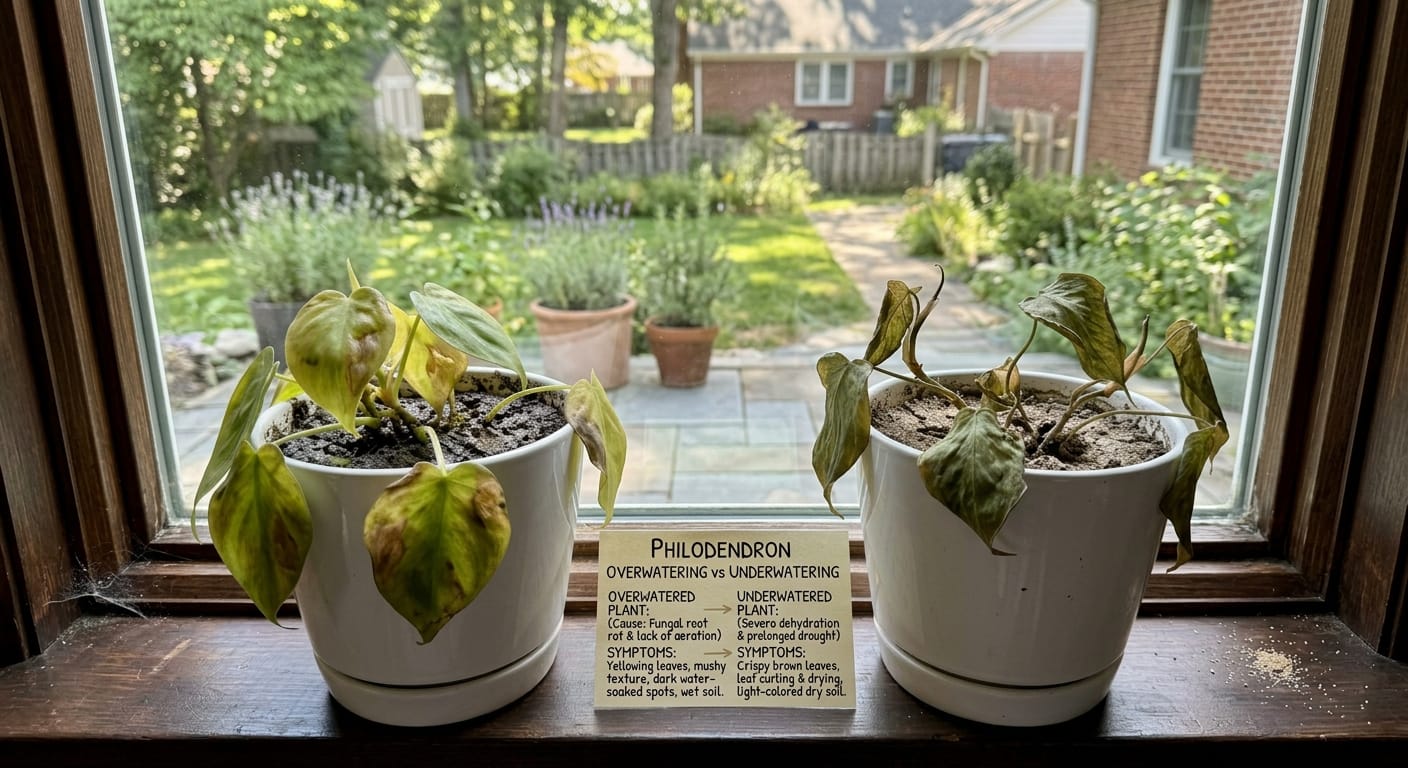
Both overwatering and underwatering cause drooping, yellowing, and sad-looking plants.
That seems completely backwards.
But there is a real biological reason behind it.
When you overwater a philodendron, the roots sit in soggy soil too long.
The air pockets between soil particles fill up with water.
Roots cannot breathe. They shut down. They die.
The roots cannot pump water upward to the leaves.
So the leaves droop, even though the soil is soaking wet.
When you underwater a philodendron, the leaves droop for the opposite reason.
There is simply not enough water in the system.
Same drooping leaves. Two totally different root-level problems.
This is why looking at the leaves alone will fool you every time.
You have to dig deeper, literally.
Signs Your Philodendron Is Overwatered
Here are the patterns I see repeatedly across my collection.
Not surface-level stuff. The actual signals that tell the real story.
1. Yellow Leaves That Feel Soft and Limp
Overwatered leaves turn yellow in a specific way.
The entire leaf blade goes yellow, not just the tips or edges.
Lift the leaf and feel it.
Overwatered leaves feel soft, floppy, and waterlogged.
They may look slightly translucent near the base.
Underwatered leaves turn yellow too, but they feel papery and dry.
That texture difference is your very first diagnostic clue.
2. Soil That Stays Wet for Way Too Long
Push your finger two inches down into the soil.
If it feels wet and cold after seven to ten days, something is wrong.
Either you are watering too often, or your soil drains too slowly.
Dense potting mixes hold moisture far longer than philodendrons can handle.
I learned this during my second year growing.
I was using heavy all-purpose potting soil.
It stayed wet for two full weeks between waterings.
The roots were suffocating in compacted mud. They rotted completely.
3. The Pot Feels Shockingly Heavy
This test sounds too simple. But it works every single time.
Lift your pot right after you water.
Feel the weight carefully.
Lift it again three or four days later.
If it is still really heavy, the water is not draining properly.
I do a quick pot-lift check during my morning plant walk.
A light pot means the soil is cycling correctly.
A pot that stays heavy is always a red flag.
4. Water Blisters on the Leaves (Edema)
This one surprises most people when I bring it up.
Overwatered philodendrons sometimes develop tiny, blister-like bumps on leaves.
This condition is called edema.
It happens when root cells absorb more water than the leaves can release.
The leaf cells literally fill and burst under the pressure.
You see small corky or water-filled bumps on the leaf surface.
I noticed edema first on one of my Melanochrysum plants.
It had been a week of cloudy winter days.
Evaporation slowed down. I kept watering on my usual schedule.
The edema appeared within days.
This is a real overwatering sign that almost no basic care blog mentions.
5. A Foul Smell Rising from the Soil
Healthy soil smells earthy and neutral.
Overwatered soil smells sour, rotten, or like something fermenting.
That smell signals bacterial and fungal activity in the dying roots.
These pathogens move in fast and spread through the root ball.
If you lift the pot to your nose and something smells off, do not wait.
Check the roots immediately.
Root rot does not pause while you think about it.
6. Roots That Are Brown, Black, or Mushy
Healthy philodendron roots are firm and white or light tan.
Overwatered roots turn brown, gray, or black.
They feel slimy or crumble when you touch them.
When I pulled a Burle Marx from its pot during a root rot situation, the smell hit me before I even saw the roots.
Everything below the soil line had turned to mush.
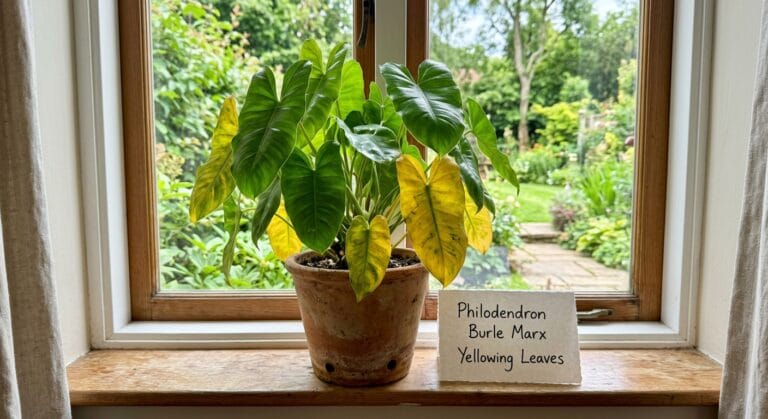
If you want to see what this kind of damage looks like in the leaves above ground, check my post on Philodendron Burle Marx yellowing leaves.
7. Stem Rot Right at the Soil Line
This is the most serious overwatering warning sign.
Look at the stem where it meets the soil.
Press it gently with your finger.
Overwatered plants develop soft, dark, mushy patches right at the base.
This means the rot has traveled above the roots into the stem tissue.
At this stage, you need to act immediately.
Waiting even a few more days can cost you the entire plant.
Signs Your Philodendron Is Underwatered
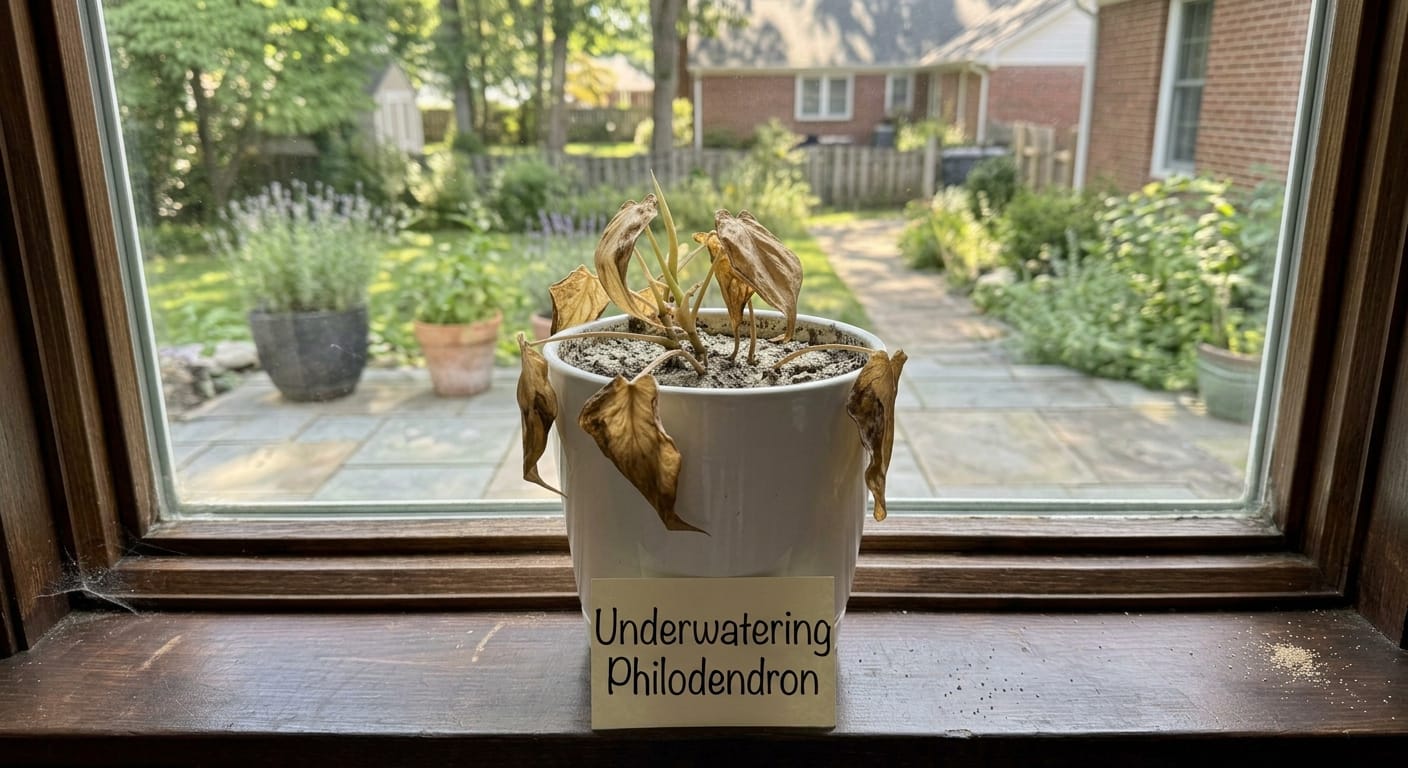
Underwatering has a completely different set of signals.
Once you know them, the distinction becomes fast and obvious.
1. Leaves That Feel Dry and Crispy
Touch the drooping leaf.
If it feels thin, papery, or slightly crispy, that points to underwatering.
Overwatered leaves feel soft and limp.
Underwatered leaves feel like dry paper when you press them.
The whole plant looks deflated rather than bloated.
That deflated versus bloated distinction matters more than people realize.
2. Soil That Pulls Away from the Pot Edges
Check around the inside edge of the pot.
Severely underwatered soil shrinks and pulls away from the container wall.
You can see a visible gap between the dirt and the plastic or ceramic.
The soil surface also looks cracked, pale, and almost dusty.
When soil reaches this level of dryness, it sometimes becomes water-repellent.
Water will run straight through without actually absorbing.
I will cover how to fix this in a moment.
3. Leaves Curling Inward Along the Edges
Underwatered philodendrons curl their leaves to reduce moisture loss.
The leaf rolls slightly inward from both edges.
This is the plant protecting itself with a survival response.
Curling is different from drooping.
Drooping means the leaf hangs down but stays flat.
Curling means the leaf shape actually changes.
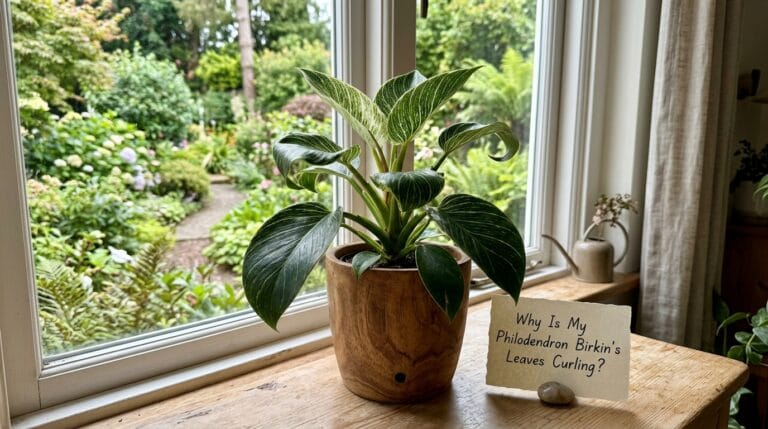
If your Birkin is doing this, my guide on Philodendron Birkin leaves curling and drooping explains every possible cause.
4. Brown Tips That Snap Off Cleanly
Brown tips on an underwatered philodendron are crispy all the way through.
You can snap them between your fingers like a dry cracker.
This is different from overwatering-related brown tips.
Overwatered brown tips feel soft and may have a mushy or wet base.
This quick tip texture test takes two seconds.
It is one of the first things I do when diagnosing any leaf problem.
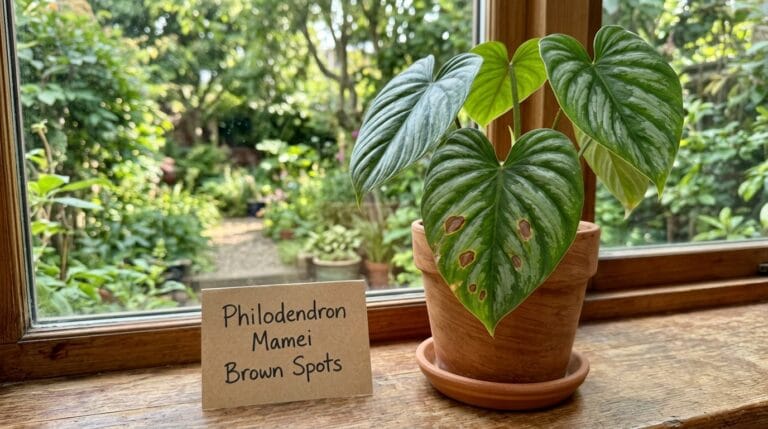
For unusual brown spotting patterns that fall between these two causes, my post on Philodendron Mamei brown spots goes deep on how to read the difference.
5. The Pot Feels Surprisingly Light
The pot-lifting test works in both directions.
An underwatered pot feels almost empty when you pick it up.
Lift your pot and feel genuinely surprised by how light it is.
That lightness means the moisture has been used up or evaporated.
When a pot surprises me with how little it weighs, I water it right then.
No finger test needed. The weight is the answer.
6. No New Growth for Several Weeks
A stressed, underwatered philodendron stops pushing out new leaves.
All energy shifts toward survival mode.
The plant will not waste resources on new growth when roots are stressed.
If your plant has not produced a new leaf in six or more weeks, check the moisture.
Bone-dry soil combined with zero new growth is a classic underwatering pattern.
The Fastest Test to Tell Them Apart
People ask me this question constantly.
What is the single fastest way to know which problem I have?
Here is the two-step process I use every time.
Step 1: Lift the pot.
Very heavy means moisture is still sitting in the soil.
Very light means the soil has dried out.
Step 2: Check two inches down into the soil.
Push your whole finger down.
Wet and cold at two inches deep means overwatering.
Completely dry at two inches deep means underwatering.
If you are still not certain after both steps, pull the plant from the pot.
Look directly at the roots.
White, firm roots with drooping leaves means underwatering.
Brown, soft, smelly roots means overwatering and root rot.
The root check never lies. It is always the final answer.
The Mistake That Fools Even Experienced Growers
Here is something I almost never see addressed on plant care sites.
A plant with severe root rot can look exactly like an underwatered plant.
The soil surface may even feel dry on top.
The roots have rotted so badly that they cannot absorb anything.
So even when you water, the moisture sits unused in the pot.
The plant stays dehydrated above the soil line despite wet conditions below.
You see dry, droopy, crispy-looking leaves.
Your instinct screams: water it more.
That instinct will kill your plant.
This specific situation has cost me more plants than any other single error.
If your plant shows drought stress symptoms but the soil smells sour or stays damp, pull it out.
Check the roots before you do anything else.
Every time. No exceptions.
How to Fix an Overwatered Philodendron
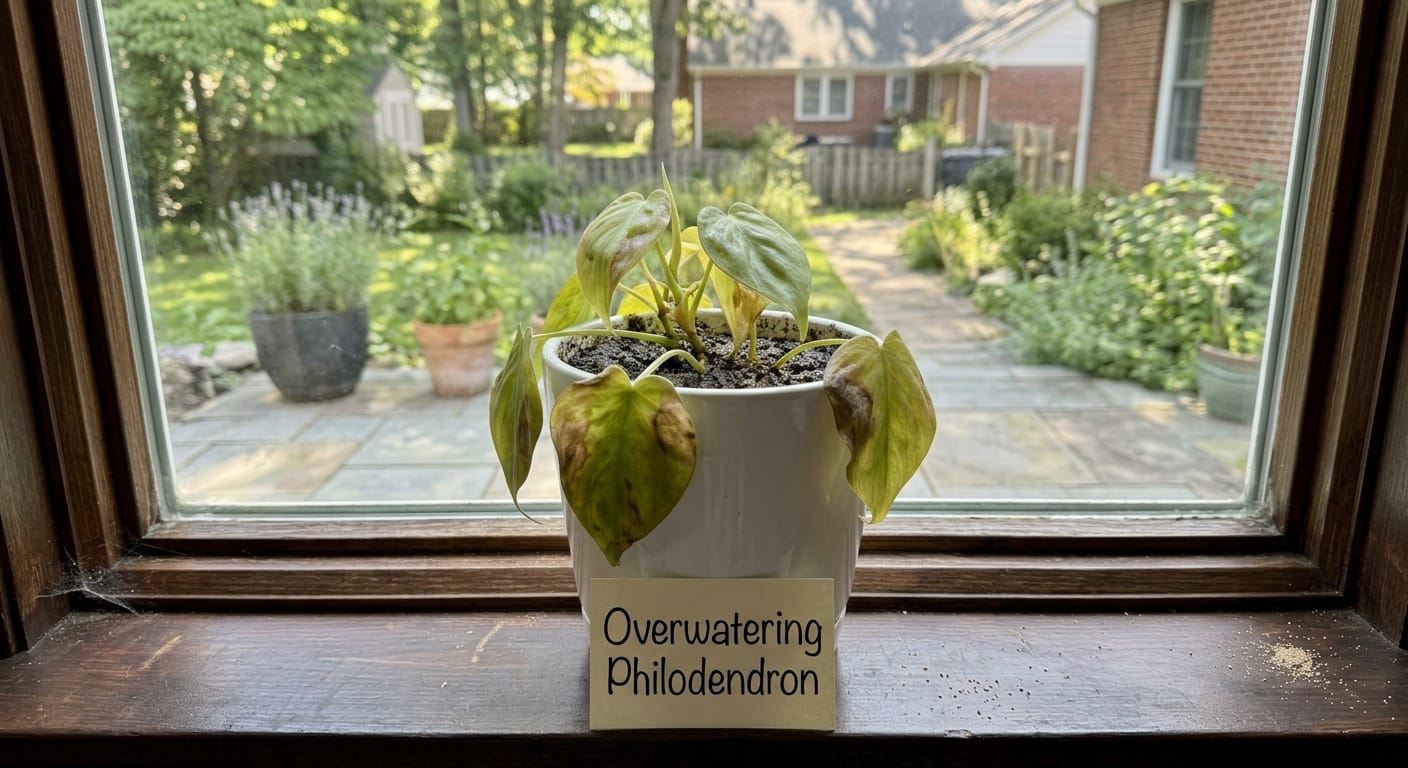
Act quickly. Root rot spreads faster than most people expect.
Stop all watering immediately.
Do not add anything until you assess the damage below the soil.
Move the plant to a brighter indirect light spot.
More light speeds up photosynthesis, which speeds up water use and drying.
If the soil smells bad, unpot the plant.
Gently rinse the roots under lukewarm running water.
Remove all the old soil.
Use clean scissors to cut away every brown or mushy root section.
Healthy roots are white and firm. Cut back until you only see those.
Do not hesitate here. Leaving any rotten root tissue allows the rot to continue spreading.
Treat the remaining healthy roots.
Mix three-percent hydrogen peroxide with three parts water.
Dip or rinse the trimmed roots in this solution.
This kills fungal spores clinging to the healthy tissue without damaging the roots themselves.
Repot in a fresh, chunky aroid soil mix.
Throw away the old soil. Do not reuse it.
My go-to recipe: 40 percent quality potting mix, 30 percent orchid bark, 30 percent perlite.
This is the mix that ended my root rot problems after my second-year disaster.
Wait two to three days before watering after repotting.
Let the trimmed root ends heal and callus slightly.
Then water lightly and let the soil fully dry before the next watering.
How to Fix an Underwatered Philodendron
Good news: underwatering is the easier problem to recover from.
Water deeply and thoroughly.
Take the pot to a sink.
Pour water slowly until it flows freely from the drainage holes.
Let all the excess drain completely before placing it back.
Check if the dry soil is absorbing properly.
Very dry soil can become hydrophobic.
Water will run straight through the cracked surface without soaking in.
If this happens, place the pot in a tray with two inches of water.
Leave it for 30 minutes.
Bottom watering forces the dry soil to absorb moisture from below, slowly and evenly.
Trim any leaves that are fully brown and dead.
They will not recover no matter what you do.
Removing them helps the plant redirect energy into healthy leaves and new growth.
Move to slightly lower indirect light temporarily.
High light increases the plant’s water demand.
A softer light position gives it space to rehydrate without extra stress.
Check soil before every future watering session.
Never water on a fixed schedule again.
The same plant needs water every five days in summer and every ten days in winter.
Soil check first, always. No exceptions.
Why Your Soil Mix Matters More Than How Often You Water
Most people obsess over their watering schedule.
That is the wrong focus.
The real question is: how fast does your soil drain?
Dense potting soil stays wet for too long.
It creates a miniature swamp inside your pot every time you water.
I make my own aroid mix for all 500 of my plants.
The recipe: 40 percent potting mix, 30 percent orchid bark, 30 percent perlite.
This blend drains quickly but holds just enough for roots to drink.
When your soil drains well, you can water more freely without fear.
The excess leaves through the drainage holes, air returns to the root zone, and root rot becomes very unlikely.
Your pot choice also matters more than most people think.
Terracotta pots breathe and dry out faster than plastic or ceramic pots.
I use terracotta for sensitive velvet varieties like the Melanochrysum.
That extra drying effect gives their roots the oxygen they need.
For tougher, more forgiving varieties like the Micans, plastic pots work fine.
They hold moisture slightly longer, which those species handle without issue.
Quick Reference Table: Overwatering vs Underwatering
| Sign | Overwatering | Underwatering |
|---|---|---|
| Leaf texture | Soft, limp, floppy | Dry, crispy, papery |
| Yellow pattern | Full leaf goes yellow | Yellow edges or tips only |
| Brown tips | Soft, wet at the base | Crispy, snaps off clean |
| Soil surface | Wet, dark, compacted | Pale, cracked, dusty |
| Pot weight | Very heavy, stays heavy | Surprisingly light |
| Root color | Brown, black, mushy | White or tan, firm |
| Soil smell | Sour, rotting, fermented | No bad smell present |
| Leaf curling | Rare | Very common |
| Edema bumps | Yes, blisters on leaves | Never |
Print this out and keep it near your plants.
This table alone will stop you from making the wrong diagnosis.
My Morning Walk Method (How I Catch Problems Early)
Every morning, I walk through my plant room with coffee.
I am not touching every plant. I am just looking.
Three things get my attention during this walk.
First: any leaf that looks slightly different from yesterday.
Second: any soil surface that looks cracked or pulling away from the pot.
Third: any smell that seems off when I pass by.
Most watering problems give you a warning several days before they turn serious.
A leaf that looks slightly less turgid than usual is a clue.
A pot that still feels heavy five days after watering is a clue.
Catching these small signals early means fixing problems before they become emergencies.
After eight years, this simple daily habit has saved more plants than any product I have ever purchased.
Final Thoughts
Philodendron overwatering vs underwatering is the most common confusion in this entire hobby.
Both conditions stress the plant in very different ways.
But they look scary similar above the soil.
The difference always lives in the details.
Soil moisture level. Root color. Leaf texture. Pot weight.
Put those four things together, and you will always land on the right answer.
I started this journey with a single Prince of Orange and nearly killed it from bad watering decisions.
That early frustration taught me to stop guessing and start actually checking.
Your philodendron gives you clues every single day.
The leaves, the soil, the roots, and the pot weight are all talking.
You just have to know how to listen.