Why Are My Philodendron Florida Ghost Leaves Turning Green?

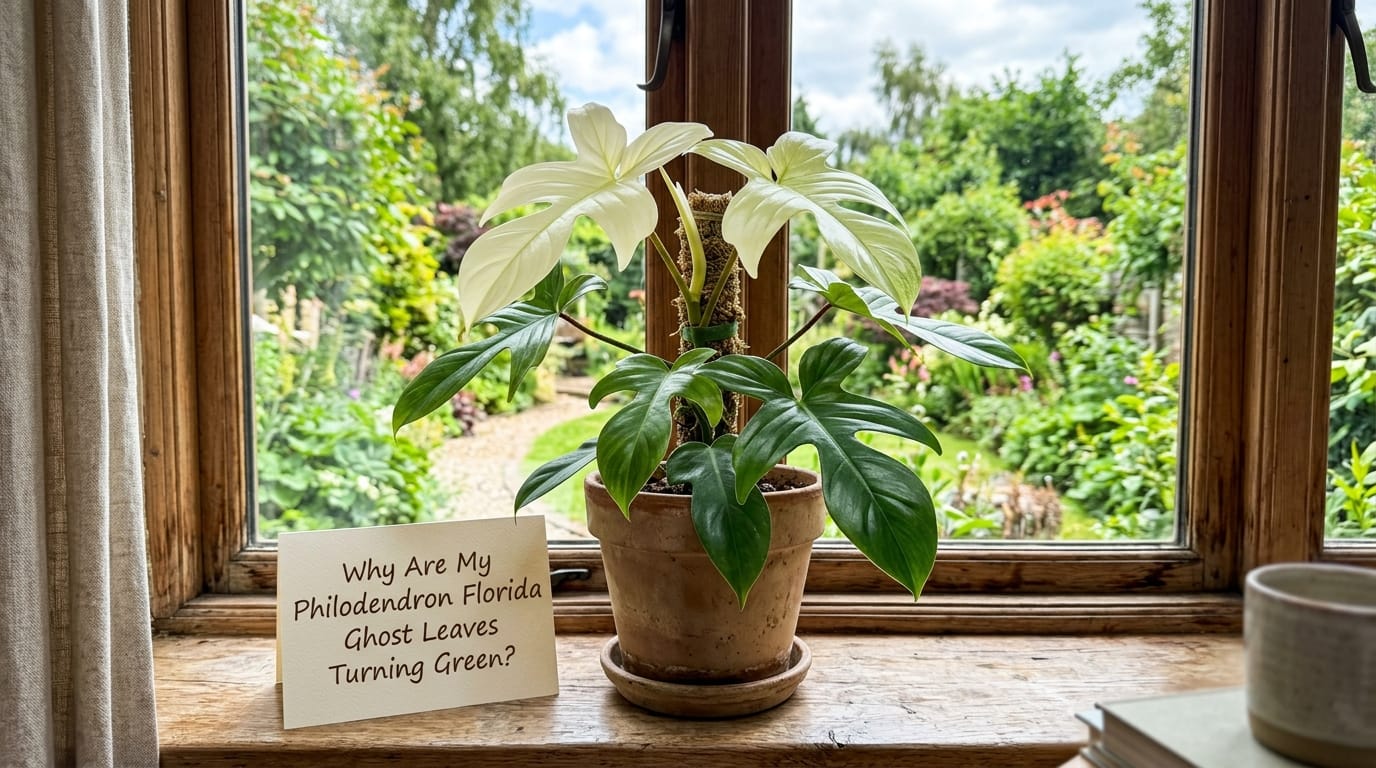
In 2021, I paid more than I care to specify for my first Philodendron Florida Ghost.
The seller’s photos showed pure white new leaves against deep green mature ones — exactly the dramatic contrast the plant is known for.
Three months in, something shifted. New leaves were coming out lighter than the older ones but not white.
By month four, the newest growth was arriving medium green and staying that way.
I spent two weeks in forums trying to diagnose it and came away more confused than when I started.
Most of what I found was either vague or contradictory. So I went back to the plant itself — watched it for several weeks, adjusted light in stages, and tracked what changed.
Eight years and several Florida Ghosts later, I understand why this happens and which situations actually need fixing versus which ones are just how the plant works.
That distinction is what this post is built around.
Before Anything Else, Understand What This Plant Actually Is
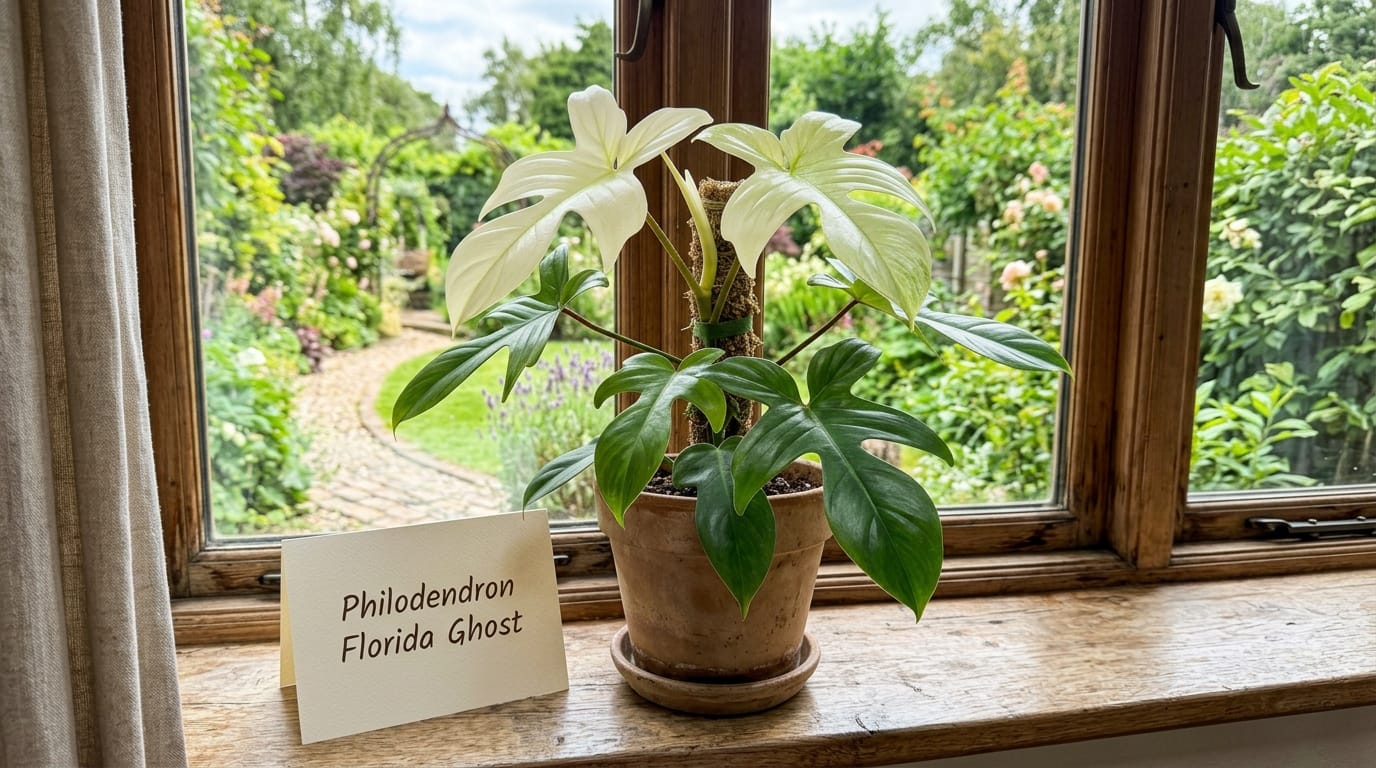
Most people buy a Florida Ghost thinking it works like a variegated plant.
It does not. That’s the core of the confusion.
The Florida Ghost is actually a sport selection of the original Philodendron Florida hybrid.
A sport is a naturally occurring genetic mutation. It is not a stable albo variegation.
The plant is a hybrid between Philodendron pedatum and Philodendron squamiferum.
The red, fuzzy petioles come from the squamiferum parent.
The famous ghostly new leaves come from a phenomenon called delayed greening.
Researchers who study this plant have documented it clearly.
The pale color of new leaves in a normal Florida Ghost is associated with delayed chlorophyll development. (Thai Tissues Research, 2026)
Chlorophyll simply develops more slowly during the early stages of leaf expansion.
The leaf tissue is there. The color pigment just hasn’t arrived yet.
This is completely different from a Monstera Albo, where white cells have no chlorophyll permanently.
On the Florida Ghost, every single leaf is programmed to turn green eventually.
Every one. Without exception.
So the very first answer to your question is this:
Green leaves on a Florida Ghost are normal. They are what mature leaves do.
Now let’s get into the part that actually needs troubleshooting.
The Situation That DOES Need Your Attention
There are two very different situations here, and mixing them up causes a lot of stress.
Situation A: Old leaves getting darker green over weeks and months. This is completely normal.
Situation B: Brand new, freshly unrolled leaves coming out medium or dark green right away.
Situation B is the one that needs fixing.
If your new leaves skip the white or mint phase entirely, something in the environment is off.
The rest of this article is about Situation B.
Reason #1: Not Enough Light (This One Is Almost Always the Answer)
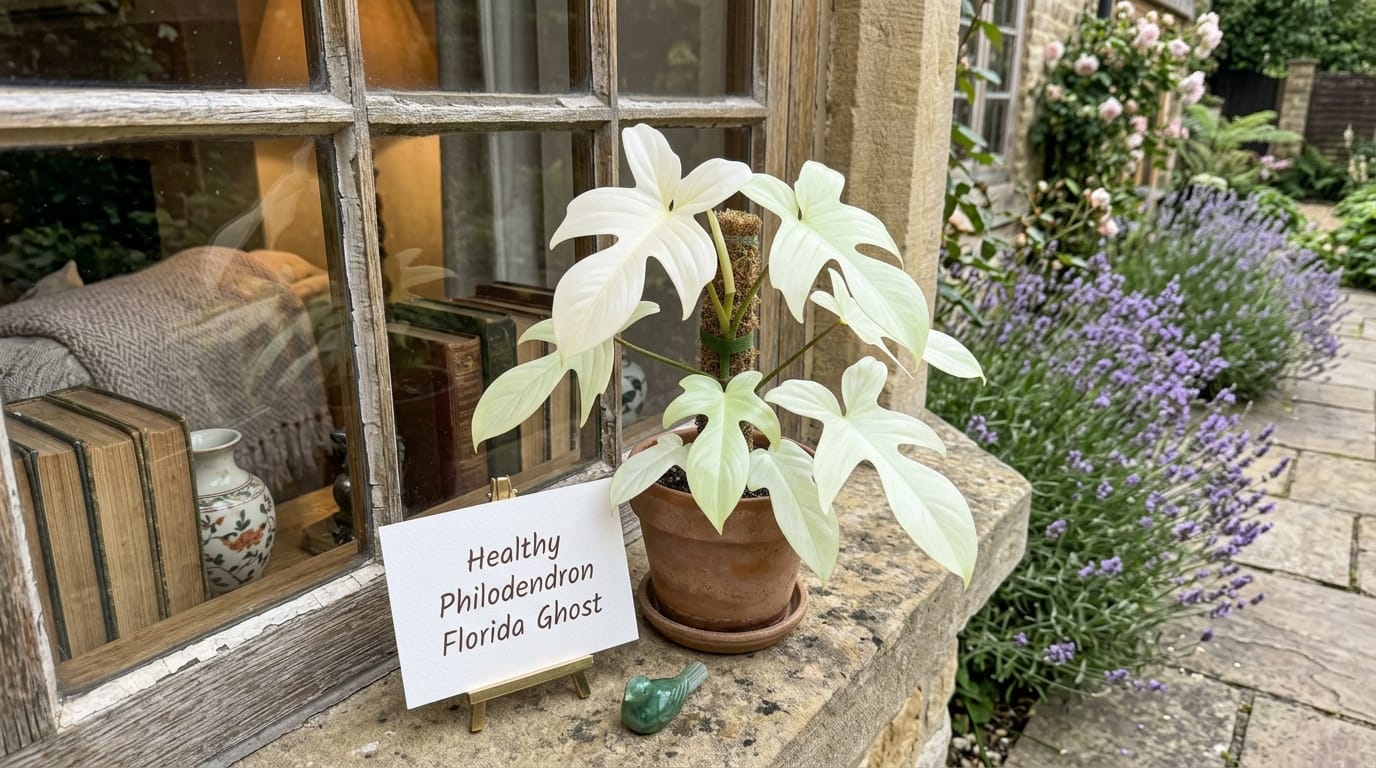
Low light is responsible for the vast majority of “my Florida Ghost leaves are turning green” complaints.
Here is the biology behind it, and it matters.
When a plant doesn’t get enough light, it faces an energy problem.
Photosynthesis requires light. To photosynthesize, the plant needs chlorophyll.
So when light is scarce, the plant floods new leaves with chlorophyll as fast as possible.
It skips the white phase. It cannot afford the luxury of a chlorophyll-light leaf.
Scientific research confirms this directly. Plants exposed to low light intensity show significantly higher chlorophyll content in their leaves as an adaptive survival response. (NCBI / Adaptive Changes in Chlorophyll Under Low Light, 2016)
In plain terms: low light forces more green, not less.
I saw this with my own plant. My grow light timer failed for about two weeks one December.
The next two leaves my Florida Ghost pushed out were a flat, dull medium green.
No white phase at all. It was genuinely disappointing to see.
Once I restored the grow light, I waited. Four weeks later, the next leaf came out pure white.
The fix worked. But it took patience.
What “Bright, Indirect Light” Actually Means in a Real US Home
This phrase gets thrown around endlessly in plant care content.
Let me tell you what it actually looks like in practice.
Bright, indirect light means your plant can cast a light shadow on a piece of paper.
It means you can comfortably read a book by that natural light with no lamp on.
An east-facing window is the gold standard for this plant in most US homes.
It gets gentle morning sun that’s intense enough to trigger white new growth.
A west-facing window is also great. Afternoon light is stronger, so keep a sheer curtain up.
A south-facing window in summer may need a sheer curtain to filter direct rays.
A north-facing window is almost always too dim for this plant to produce white leaves.
If your only window faces north, you need a grow light. Full stop.
How Many Hours of Light Does It Actually Need?
Most care guides ignore light duration completely. They shouldn’t.
My Florida Ghost gets 12 to 14 hours of bright light daily during spring and summer.
In winter, I use a grow light to maintain at least 10 hours per day.
Anything under 8 consistent hours of bright light and color quality suffers noticeably.
Grow Light Basics for Florida Ghost
You do not need an expensive setup to run a grow light.
A full-spectrum LED grow bulb in a basic clip-on lamp does the job.
Keep it roughly 12 to 18 inches above the plant canopy.
Run it on a cheap outlet timer set to 12 hours per day.
The whole setup can cost under $30 on Amazon. It is absolutely worth it in the winter months.
I use a grow light from November through mid-February every single year.
My Florida Ghost produces white new leaves all year long because of it.
Reason #2: Completely Normal Aging (Please Stop Worrying About This)
Let me say this clearly so it really sinks in.
Every leaf that is currently green on your plant was white or mint when it first opened.
That leaf did its job. It displayed its beautiful color, then got to work making energy.
A healthy Florida Ghost at any given time looks something like this:
The newest leaf: white or creamy mint. The next one or two leaves: pale lime green, still transitioning. All the other leaves: medium to dark green.
That contrast is the whole point of this plant. It’s a living color show.
When I get emails from readers with photos of their green Florida Ghost leaves, I ask one thing.
“Is the newest, most recently opened leaf still coming out white?”
If the answer is yes, the plant is thriving. The green leaves are perfectly fine.
Reason #3: Seasonal Light Drop in US Homes
This one is particularly relevant for growers in the northern states.
Natural light levels in American homes drop dramatically between October and February.
Your Florida Ghost responds to this immediately.
Growth slows down. New leaves might still emerge white but green out much faster than normal.
In very low winter light, new leaves might skip white altogether.
This is adaptation, not damage.
Growers in Minnesota, Michigan, Wisconsin, Ohio, and the Pacific Northwest need supplemental light almost every winter.
Growers in Texas, Florida, California, and Arizona often have enough winter window light if they position the plant well.
Know your location. Adjust your setup accordingly.
Reason #4: Nutrient Deficiency Affects Color Expression
This is something most Florida Ghost articles completely skip.
I didn’t understand this one until my third year of growing aroids.
Your plant needs nutrients to build healthy new leaves in any color.
Nitrogen is essential for the plant’s ability to manage chlorophyll production and timing.
When nitrogen is too low, the plant may produce new leaves with even less color stability.
The white phase can become very brief or disappear entirely.
I fertilize my Florida Ghost once per month from March through September.
I use a balanced liquid fertilizer diluted to half the recommended strength.
A 10-10-10 or 20-20-20 ratio works well. Don’t go too heavy on nitrogen alone.
In winter, I stop fertilizing almost completely. The plant isn’t actively growing.
Fertilizing a dormant or slow-growing plant in winter just builds up salt in the soil.
Reason #5: Root Problems Can Show Up in Leaf Color
This one surprised me when I first noticed the connection.
A plant with damaged or rotting roots cannot move water and nutrients efficiently.
When roots are struggling, the plant enters a kind of triage mode.
New leaves might come out smaller than normal. The white phase can rush by very quickly.
Leaves may also look slightly dull or limp on the vine.
If your plant’s new leaves look thin and rush through color changes unusually fast, check the roots.
Lift the pot with both hands. If it feels very heavy and never dries out, that’s a warning sign.
Pull the plant from the pot gently and examine the root ball.
Healthy roots on a Florida Ghost are white or tan and feel firm.
Rotting roots are brown or black, soft to the touch, and often smell sour.
Trim the rotten sections with clean scissors. Repot into fresh, chunky aroid mix.
For my Florida Ghost, I use a mix of potting soil, orchid bark, and perlite.
This blend drains fast and lets roots breathe. Root rot becomes almost impossible.
You can find my full soil and care breakdown in my Philodendron Florida Ghost care guide.
Reason #6: You Might Have the Florida Ghost Mint and Not Know It
This catches a surprising number of collectors off guard.
There are a few distinct versions of this plant sold in the US market.
The standard Florida Ghost produces new leaves that emerge white or very pale cream.
The Florida Ghost Mint produces new leaves that emerge pale mint or soft lime green.
If your plant was labeled “Mint,” the leaves starting greenish is completely normal.
Mint leaves do not go through a true white phase. They start light and deepen to full green.
Some sellers do not clearly label the difference. You might have a Mint and never been told.
That is not a bad thing at all. The Mint version is still a beautiful plant.
But if you’re expecting snow-white leaves and keep getting mint-green ones, check your purchase receipt.
Reason #7: Temperature Stress Disrupts Normal Leaf Development
The Florida Ghost is sensitive to temperature extremes, and most US growers don’t think about this.
Cold drafts near windows in winter can slow leaf development and affect color expression.
Air conditioning vents blowing directly on the plant cause similar issues in summer.
The ideal temperature range for this plant is between 65°F and 85°F year-round.
Anything below 55°F for an extended period can damage leaf tissue and disrupt color patterns.
Keep the plant away from drafty windows, exterior doors, and AC vents.
If you live in a cold climate and keep your house below 65°F in winter, move the plant to a warmer room.
How to Bring Back White Leaves: A Real Action Plan
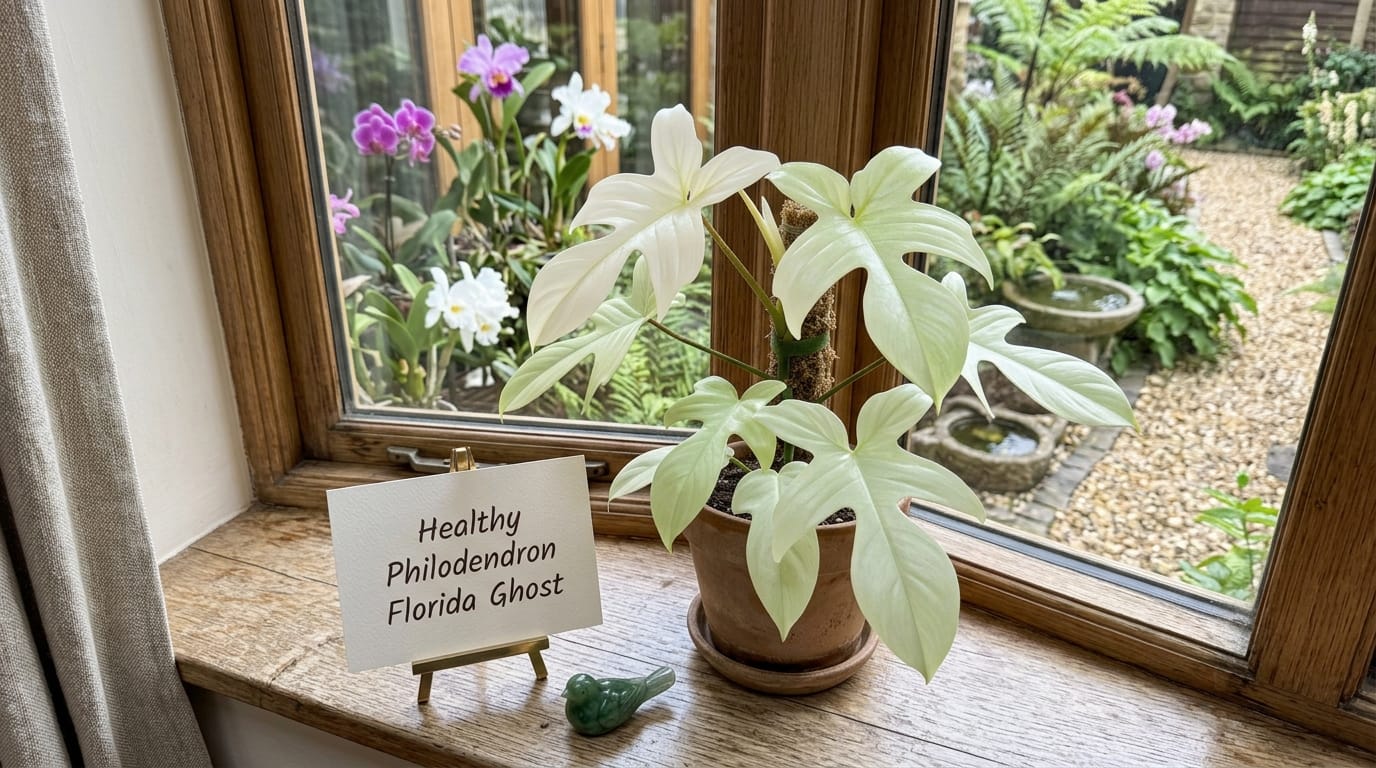
Here is what I actually do when a Florida Ghost stops producing white new growth.
Move it closer to light first. Get it within 2 to 4 feet of a bright east or west window.
Add a grow light if natural light is weak. Run it 12 hours daily on a timer.
Give it 4 to 6 weeks to respond. The bud forming inside the stem right now is already developing under current conditions.
The next new leaf or two might still come out green during this adjustment period.
That is okay. Keep the new conditions steady.
Eventually, after two or three new leaves, you should start seeing the white return.
Check soil moisture. Push your finger 2 inches into the soil before watering.
Only water when the top 2 inches feel dry. Overwatering stresses roots and slows everything down.
Feed lightly once per month in spring and summer. Use a balanced liquid fertilizer at half strength.
Do not over-fertilize in hopes of speeding up results. It backfires and burns roots.
Can Green Leaves Turn White Again?
This question comes up constantly. The answer is no.
Once a Florida Ghost leaf has filled with chlorophyll and gone green, it stays green.
White to green is a one-way transition. The chlorophyll doesn’t reverse out.
Your goal is not to fix the existing green leaves. It is to create conditions for the next new leaf to come out white.
Focus on future growth, not past leaves.
Should You Remove the Green Leaves?
This is a personal preference call more than a plant health decision.
Green leaves are still actively photosynthesizing and feeding the plant energy.
Removing them cuts off that energy supply.
I personally leave all green leaves on my plants unless they turn yellow or start showing rot.
Some collectors trim the oldest, darkest green leaves to keep the plant looking dramatic and fresh.
That is fine. Just never remove more than one-third of the leaves at any time.
Stripping too many leaves at once shocks the plant and slows new growth significantly.
A Word of Warning About Too Much Light
While we’re talking about light, I want to address the opposite mistake.
More light does not mean direct, harsh sun through a glass window.
Summer sunlight through an unfiltered south-facing window will burn the leaves badly.
Burned patches look white and crispy around the edges. That is tissue damage, not healthy color.
Healthy white leaf color is soft, glowing, and even across the entire surface.
Burned white is papery, dry, and usually located on the side facing the window.
Always filter direct sun through a sheer curtain. Keep the plant back from the pane if needed.
What My Florida Ghost Setup Actually Looks Like
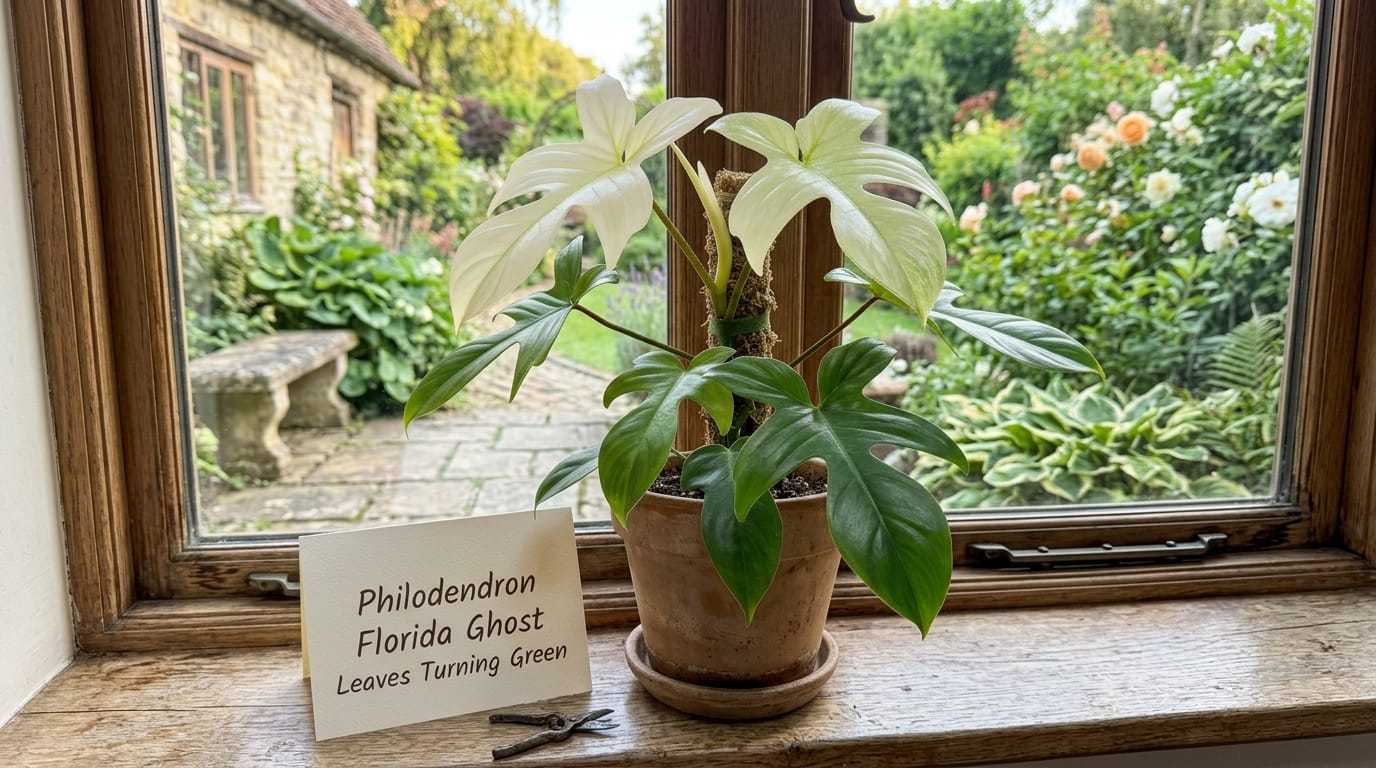
My main Florida Ghost grows in a south-facing room.
In summer, it sits about four feet from the window behind a lightweight sheer curtain.
The light hits it from early morning through mid-afternoon. It’s bright but never harsh.
In winter, I move it to two feet from the window and turn on a grow light.
The grow light runs from 7 AM to 7 PM every day.
My plant consistently pushes out white-to-mint new leaves throughout the year.
It’s mounted on a moss pole. The climbing growth helps it access light more evenly.
I wrote a lot more about moss poles and climbing support in my full Florida Ghost care guide.
How the Florida Ghost Compares to Its Relatives on This Issue
Understanding the full Philodendron Florida family helps a lot here.
According to research by Rare Plant Fairy, the Florida Ghost is a sport selection of the original Florida hybrid. New leaves in a Florida Ghost emerge extremely pale before slowly transitioning to light green. The length of time the leaves remain pale depends heavily on light and overall growing conditions. (Rare Plant Fairy, 2026)
The plain Philodendron Florida Green never goes through a white phase at all. Its leaves are always green.
The Florida Beauty is genuinely variegated. It has stable white or cream patches that don’t fade with age.
The Florida Ghost sits between them. It’s not fully variegated, but it’s not plain green either.
It has a temporary color phase that requires specific care to maximize.
That temporary phase is what you’re paying for. Light is what preserves it.
If you’re curious about growing other Philodendron Florida relatives alongside your Ghost, my Philodendron Micans care guide has some overlap in care approach worth reading.
Frequently Asked Questions
My Florida Ghost has never produced white leaves. Is something wrong with it?
It’s almost certainly a light problem. Put it under a grow light for 6 to 8 weeks and observe the next 2 to 3 new leaves.
Can I use a regular bulb instead of a grow light?
No. Regular warm bulbs lack the full spectrum plants need for healthy growth. Use a dedicated full-spectrum LED grow bulb.
My plant grows slowly. Is that normal?
Yes. Because white and mint leaves contain little chlorophyll, the plant grows more slowly than a fully green philodendron. That’s expected.
The new leaves are white at first but turn green in just a few days. Is that okay?
A very fast transition from white to green usually means light levels are still a bit low. Try increasing light or extending grow light hours.
Is the Florida Ghost toxic to pets?
Yes. Like all philodendrons, it contains calcium oxalate crystals. Keep it out of reach of cats, dogs, and small children.
My plant has some yellow leaves in addition to green ones. Is that different?
Yellow leaves are a different issue entirely. Yellow usually points to overwatering, root rot, or nutrient deficiency. You can read more about diagnosing yellowing and similar leaf issues in my Philodendron tortum leaves turning yellow guide.
The Short Version for Busy Readers
Mature leaves turning green = completely normal. Every leaf does this. Stop worrying.
New leaves coming out green right away = low light is almost always the cause.
Fix: Move plant closer to a bright window, or add a grow light for 12 hours daily.
Wait 4 to 6 weeks for the next new leaves to reflect the improved conditions.
Check roots if the plant also looks limp, grows slowly, or has soil that stays wet forever.
Feed once monthly with balanced fertilizer during the growing season.
Final Thoughts From Eight Years of Growing These Plants
I remember how frustrated I felt staring at my first Florida Ghost after it stopped producing white leaves.
I thought I was failing at something simple.
Now I know it was just a light problem, and a fixable one.
This plant is actually pretty forgiving once you understand what drives its color.
It isn’t asking for much. Just a good bright spot and consistent care.
When those new white leaves unfurl, they are still one of the most satisfying sights in the hobby.
All that patience pays off in one slow, unfolding moment.
If this helped you, scroll back up and bookmark it. Share it with someone in your plant group.
And if you’re ready to go deeper, my complete Philodendron Florida Ghost care guide covers everything from soil mixes to propagation to climbing support.
Thanks for reading. I genuinely hope your next new leaf comes out beautifully white.