Why Is My Philodendron Birkin’s Leaves Curling and Drooping?

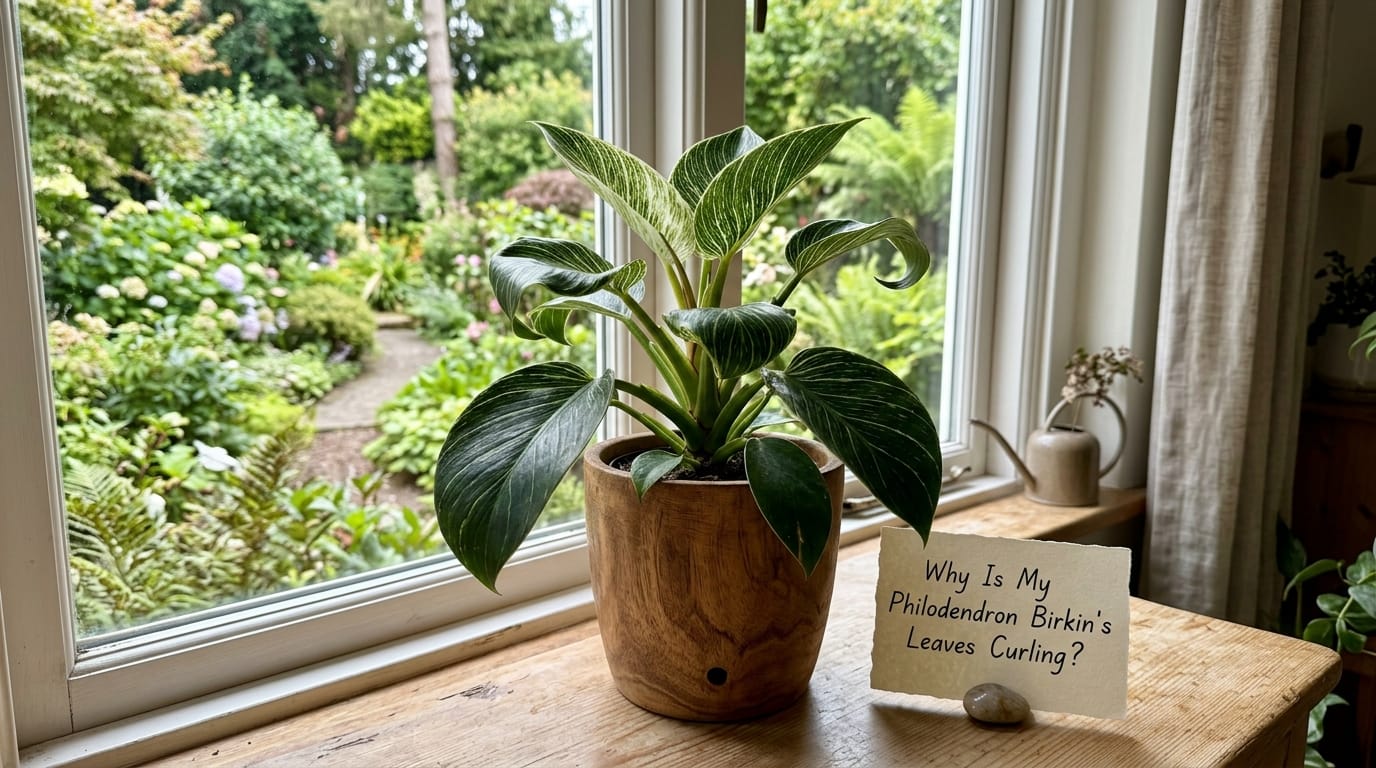
Your Birkin’s white stripes look duller. The leaves feel soft. Some are curling inward like tiny scrolls.
That’s not normal Birkin behavior — and it almost always points to something specific and fixable.
Birkins are some of the most expressive plants in my collection. They don’t hide stress. They announce it, usually within a few days of something shifting in their environment — watering rhythm, light position, humidity, even a drafty window left open nearby.
Curling and drooping together is actually useful information. It narrows things down fast.
Here’s how to read what your plant is telling you, and how to fix the actual cause.
The Quick Answer
Curling and drooping leaves on a Philodendron Birkin usually mean one of these things:
- The soil is too dry or too wet
- Humidity has dropped too low
- The plant got too much direct sun
- Roots are stressed from a recent repot or root rot
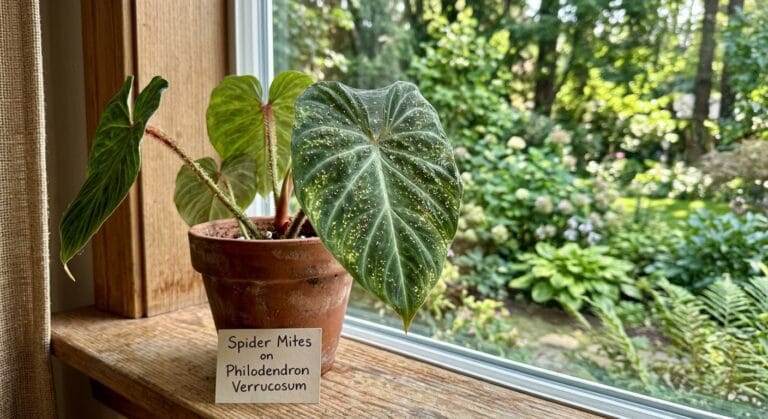
- Pests like spider mites are feeding on the leaves
- The pot has become too small for the root system
Most cases trace back to water and humidity. Let’s break down each cause so you can match it to your plant.
Underwatering: The Most Common Culprit
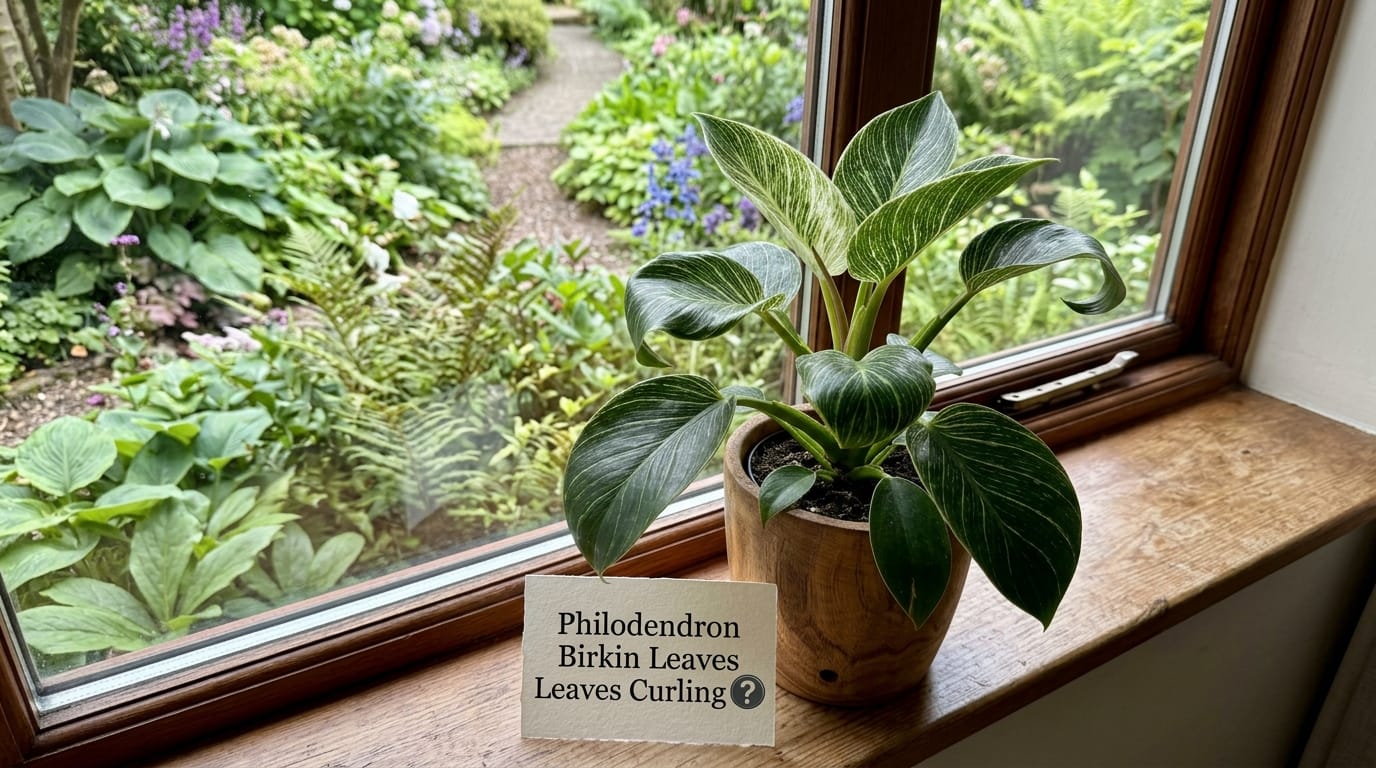
Birkins curl their leaves inward to reduce water loss when the soil dries out too much. This is a survival response, not damage.
Check the soil with your finger, about two inches deep. If it feels bone dry and crumbly, underwatering is likely your answer.
Drooping paired with curling, especially on lower leaves first, points to thirst. The plant is pulling moisture from older growth to protect new leaves.
Fix it: Water thoroughly until liquid runs from the drainage holes. Skip shallow sips that only wet the top layer.
Birkins recover from underwatering fast. You’ll often see leaves perk back up within a few hours.
Overwatering and Root Rot
This one’s trickier because the symptoms look similar at first glance. Overwatered Birkins droop because their roots can’t breathe.
Soggy soil pushes oxygen out of the root zone. Roots start to suffocate, then rot, and stop absorbing water properly.
Here’s the giveaway: the soil feels wet, but the leaves still droop like the plant is thirsty. That mismatch is your clue.
Gently slide the plant out of its pot and look at the roots. Healthy roots are white or light tan and firm.
Dark, mushy, or foul smelling roots mean rot has set in. You’ll need to trim those away and repot in fresh, dry mix.
Extension research on houseplant root health consistently points to poor drainage and overwatering as the top causes of aroid root rot. North Carolina State Extension covers this pattern across many tropical houseplants, not just philodendrons.
Fix it: Let the soil dry out more between waterings. Check that your pot actually drains.
Low Humidity Is Curling Those Edges
Birkins come from humid tropical understories. Most homes run drier than that, especially with heat or AC running.
When humidity drops, leaf edges curl upward to slow moisture loss through the surface. It’s the plant’s own defense move.
You’ll notice this most in winter, or in rooms near vents and radiators. Crispy brown tips often show up alongside the curling.
Fix it: Group plants together, use a pebble tray, or run a small humidifier nearby. Aim for humidity above 50% if you can.
I keep a cheap hygrometer near my Birkin shelf. It’s the single easiest way to catch humidity drops before the leaves react.
Too Much Direct Sun
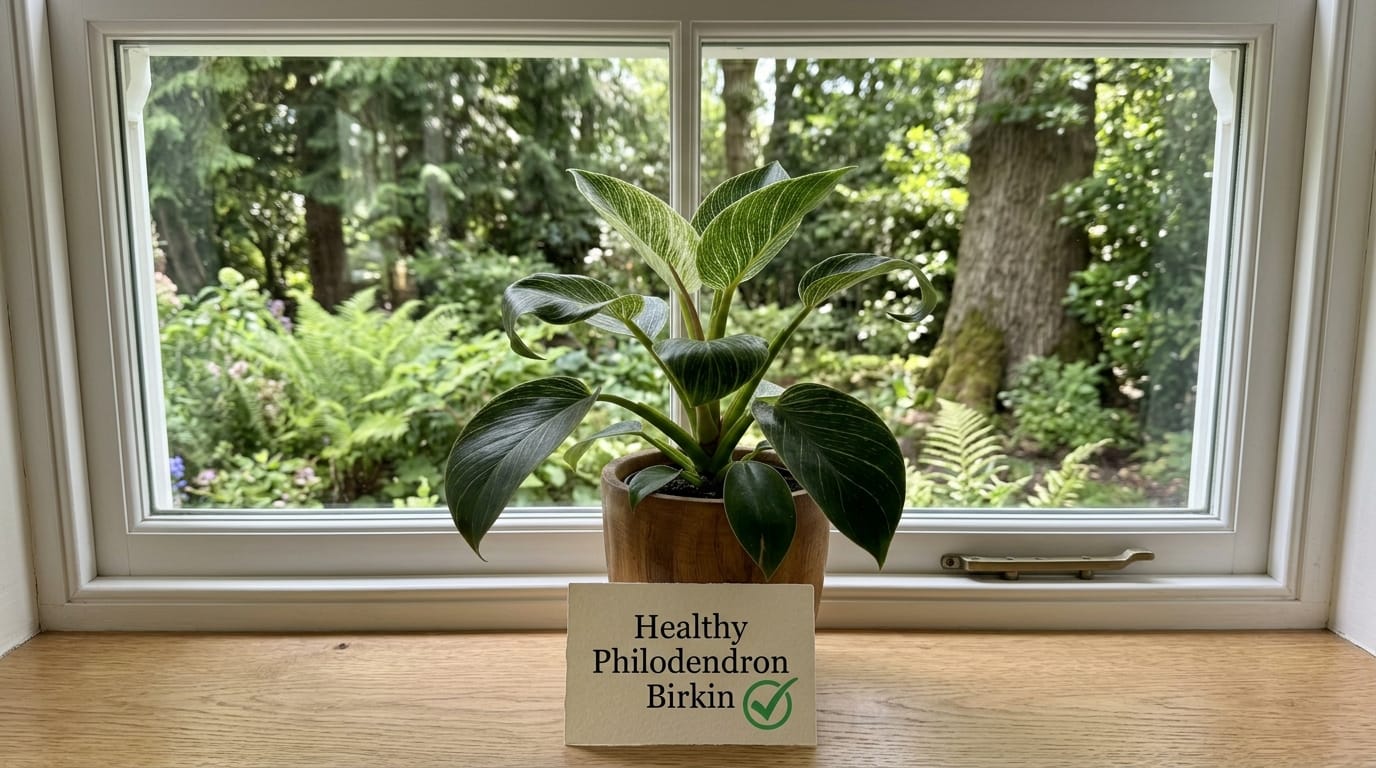
Birkins want bright, indirect light. Direct afternoon sun through an unfiltered window can scorch and curl leaves within days.
Look for curling on the side facing the window. Faded or yellow-brown patches usually confirm sun stress rather than water issues.
The Spruce’s growing guide for this variety notes that harsh direct light is one of the fastest ways to damage Birkin foliage. The Spruce
Fix it: Move the plant a few feet back, or add a sheer curtain between it and the window.
Repotting Stress and Root-Bound Roots
Newly repotted Birkins sometimes droop and curl for a week or two. Disturbed roots need time to settle into new soil.
This is usually temporary. As long as watering stays consistent, the plant bounces back on its own.
Root-bound plants show the opposite problem. Roots circling tightly at the pot’s edge can’t take up enough water anymore.
Fix it: If it’s been over a year since repotting, check the roots. Size up if they’re tightly coiled.
Pests Hiding on the Underside
Spider mites and thrips pierce leaf tissue to feed. That damage causes curling, speckling, and eventually drooping.
Flip a few leaves over and check closely. Tiny moving dots or fine webbing near the stem are red flags.
Pest damage tends to stay localized on a few leaves first, unlike watering issues that affect the whole plant evenly.
Fix it: Wipe leaves with diluted neem oil or insecticidal soap. Repeat weekly until the pests are gone.
A Quick Diagnostic Checklist
| Symptom Pattern | Likely Cause |
|---|---|
| Dry soil, older leaves curling first | Underwatering |
| Wet soil, mushy roots, foul smell | Root rot |
| Crispy tips, low room humidity | Dry air |
| Curling on the window-facing side | Sun scorch |
| Curling right after repotting | Root disturbance |
| Speckled leaves, webbing underneath | Pests |
Step-by-Step Recovery Plan
- Check the soil moisture first with your finger or a moisture meter.
- Inspect the roots if the soil feels consistently wet.
- Move the plant away from direct sun or heating vents.
- Check leaf undersides for pests under bright light.
- Adjust one variable at a time, then wait a few days to see results.
Changing everything at once makes it hard to know what actually fixed the problem. Patience pays off here.
Preventing Future Curling and Drooping
Birkins do best with a predictable routine. Water when the top two inches of soil dry out, not on a fixed schedule.
Keep humidity steady rather than letting it swing between extremes. Bright, filtered light works better than a sunny windowsill.
I’ve found that Birkins punish inconsistency more than any single mistake. A steady routine prevents most of these issues before they start.
If you’re building out a full care routine, my Philodendron Birkin care guide covers watering schedules and soil mix in more detail.
A Note on Safety Around Pets
Philodendron Birkin contains calcium oxalate crystals, which can irritate mouths and stomachs if chewed. This applies to pets and small children.
The ASPCA lists philodendrons as toxic to cats and dogs, so keep curling or drooping plants out of reach during recovery. ASPCA
Frequently Asked Questions
Will curled Birkin leaves go back to normal?
Leaves that curled from temporary stress, like thirst, usually flatten back out. Leaves damaged by sunburn or pests often stay curled permanently.
How often should I water a Philodendron Birkin?
Water when the top two inches of soil feel dry, which is often every seven to ten days indoors.
Why does my Birkin droop even after watering?
Is it normal for new Birkin leaves to curl slightly?
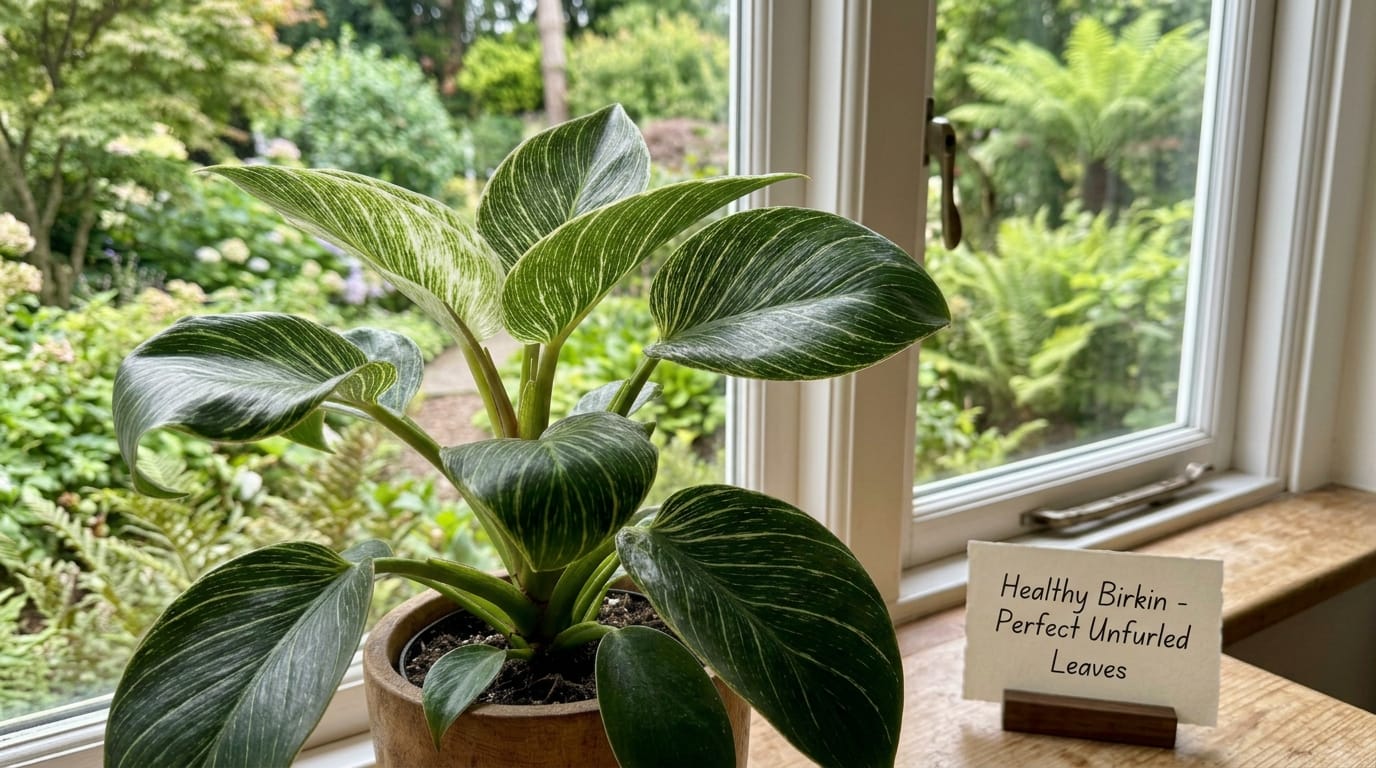
Yes. New leaves often emerge curled and unfurl naturally over a few days as they mature.
Curling and drooping look alarming, but Birkins are honest communicators once you learn their signals. Match the symptom pattern, adjust one thing, and give the plant a few days to respond.
If root rot turned out to be the issue, my guide on propagating philodendrons from healthy cuttings can help you save part of the plant while the rest recovers.