Philodendron White Wizard vs White Knight: The Differences That Actually Matter

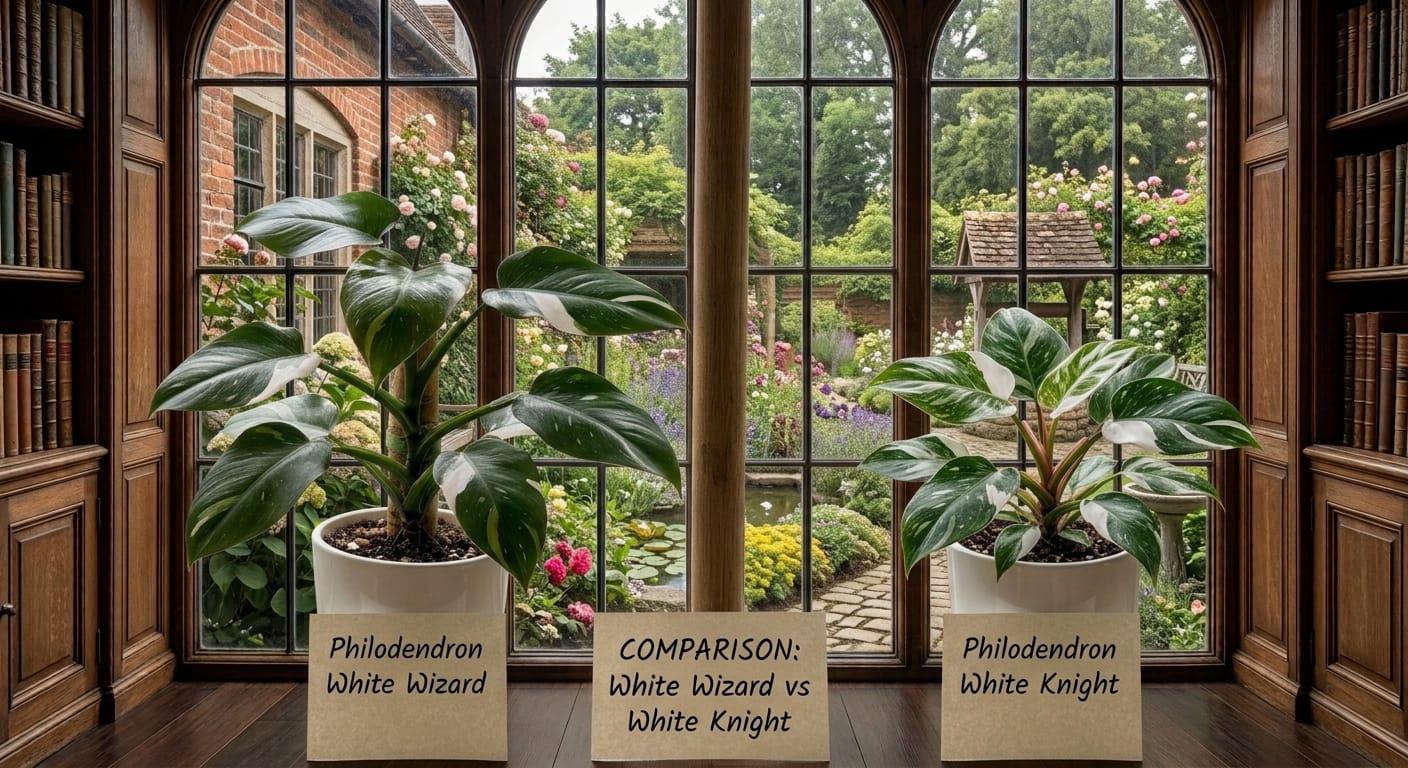
Back in 2023, I made a pretty embarrassing mistake.
I paid a premium price for what the seller called a Philodendron White Wizard.
The plant arrived. It was healthy. The leaves were beautiful.
But something felt off when I put it next to my existing collection.
I pulled out my phone and started comparing stem photos side by side.
That “White Wizard” I bought was actually a White Knight.
I had been fooled. And honestly, it cost me real money.
Eight years into growing philodendrons, with over 500 plants in my care, I still got tricked.
That experience pushed me to really dig into what separates these two plants.
Not the surface-level stuff you read everywhere. The real stuff.
This post covers everything I learned from growing both plants side by side.
The Short Answer (Read This First)
The fastest way to tell these two apart is the stem.
That’s it. Look at the stem. Nothing else comes close as a reliable clue.
Philodendron White Knight has dark burgundy-to-reddish-brown stems.
The petioles (the little stalks connecting each leaf to the main stem) share that dark color.
Philodendron White Wizard has pure green stems striped with white.
The petioles stay a clean, vibrant green with no purple tone at all.
Leaf variegation alone will trick you every single time. Don’t rely on it.
Now let’s go much deeper, because there’s a lot more worth knowing.
What Are These Plants, Exactly?
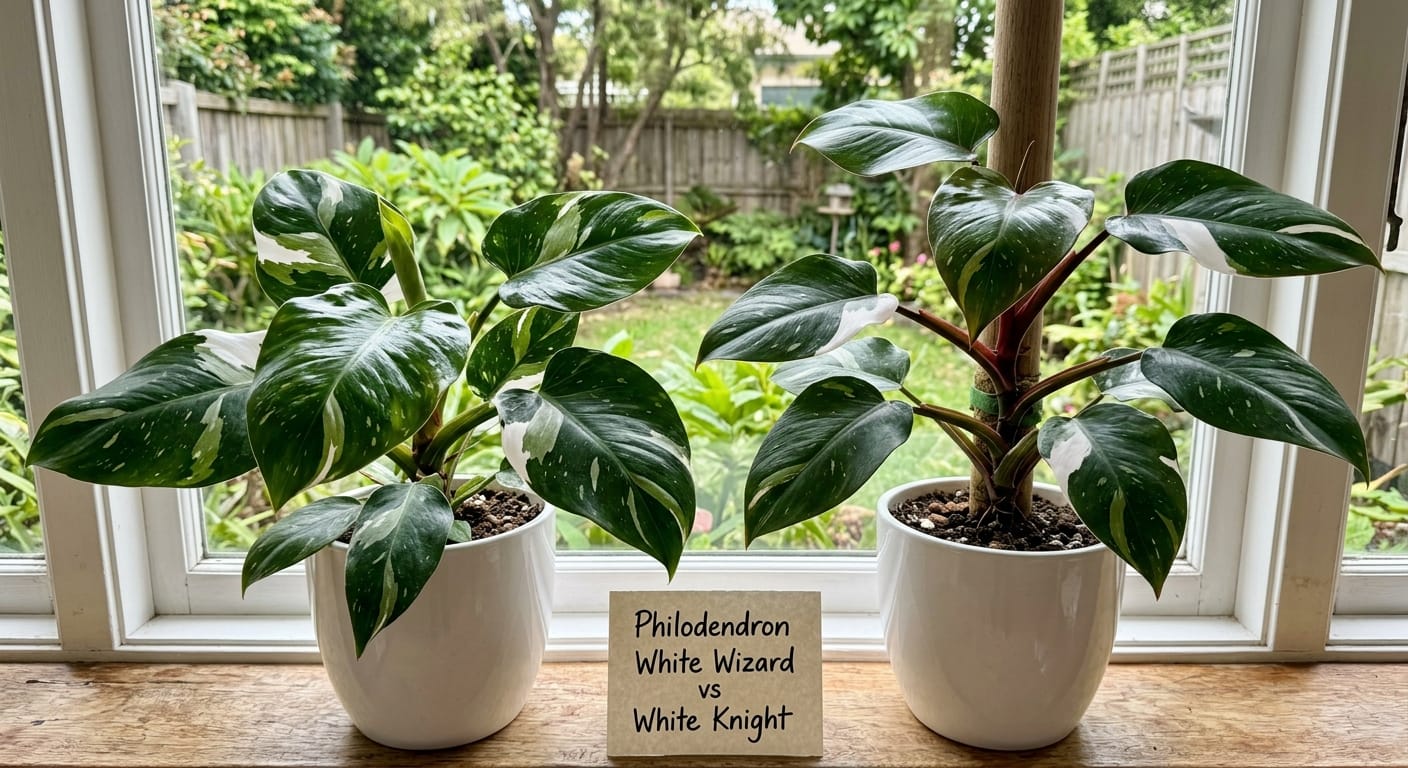
Both plants belong to the Philodendron erubescens species group.
NC State University Extension confirms that Philodendron erubescens is a climbing tropical perennial in the Araceae family.
The species is native to Colombia and grows in wet tropical forest habitats.
Both White Wizard and White Knight are cultivated selections from this species.
They are not separate species. They are cultivars, which means selected and propagated varieties.
That shared origin is exactly why they confuse so many people.
Same family. Same basic leaf shape. Same climbing habit. Just different pigmentation.
The Stem: Your #1 Identification Tool
I said it up top, and I want to say it again even louder here.
The stem is the dead giveaway. Every single time.
Philodendron White Knight Stems
Look at any White Knight and you will see dark, dramatic stems.
The color ranges from deep reddish-brown to full burgundy to almost chocolate.
Some stems look nearly purple in certain lighting conditions.
The petioles match this dark tone consistently from leaf to leaf.
You might even notice white streaking along the cataphylls on a mature plant.
Cataphylls are the little papery sheaths that protect new leaves as they unfurl.
Those white streaks on the cataphylls are another helpful White Knight clue.
No other plant in this group has that combination.
Philodendron White Wizard Stems
Now flip to the White Wizard. The stems are completely different.
They are pure, bright green with crisp white stripes running along them.
There is absolutely no purple or red tone anywhere on the stem.
The petioles stay that same clean, vivid green from base to tip.
This green-and-white stem pattern is striking and actually beautiful in its own right.
Once you see it, you cannot confuse it with a White Knight again.
Leaf Shape and Variegation Patterns
Okay, so we agree the stem is the real ID tool.
But leaves still matter, because they tell you a lot about the plant’s health.
White Knight Leaves
White Knight leaves are broadly heart-shaped and tend to run larger.
The variegation comes in chunky white patches scattered across the green surface.
Some patches are big solid blocks. Others are smaller and more splattered in look.
The green background sits somewhere between light and dark, depending on your growing conditions.
Here is the thing that trips people up: White Knight variegation is incredibly unpredictable.
One leaf might be mostly white. The next one might come out almost solid green.
Occasionally, a White Knight pushes out a leaf that is 100% pure white.
That looks stunning, but that leaf is also fragile. It has no chlorophyll to protect itself.
White Wizard Leaves
White Wizard leaves also start out heart-shaped, but they get rounder as the plant matures.
The white sections on White Wizard leaves tend to be more dramatic and expansive.
The green portions are also noticeably deeper and darker in color compared to White Knight.
This contrast between very dark green and very bright white is what makes the White Wizard so visually striking.
White Wizard also tends to push out larger individual leaves over time with proper support.
The Science Behind White Variegation (And Why It Matters for Care)
This is the part most blogs skip. I think it’s the most important part.
When you see white on a philodendron leaf, that tissue has no chlorophyll.
Research on variegated plants confirms that white or pale sectors contribute little to no photosynthesis.
Chlorophyll is what captures light and converts it into the energy a plant uses to grow.
A leaf that is half white is running on only half its potential energy production.
A leaf that is mostly white is barely powering itself at all.
This has real, practical consequences you need to plan for:
Both plants grow more slowly than solid-green philodendrons. That is not a care failure. That is science.
Both plants need brighter light than you might expect. The green portions have to work harder to power the whole plant.
Heavily variegated leaves are more fragile. Those big white patches can brown at the edges in low humidity.
Pushing for “more white” variegation is actually risky. A plant generating mostly white leaves is slowly running out of energy.
The goal is balance. Healthy mixed leaves keep the plant thriving long-term.
The White Wizard, with its larger white sections, is actually working a bit harder just to stay alive.
That is one reason why it typically grows a bit more slowly than you might expect from its size.
Growth Rate: Which One Is Faster?
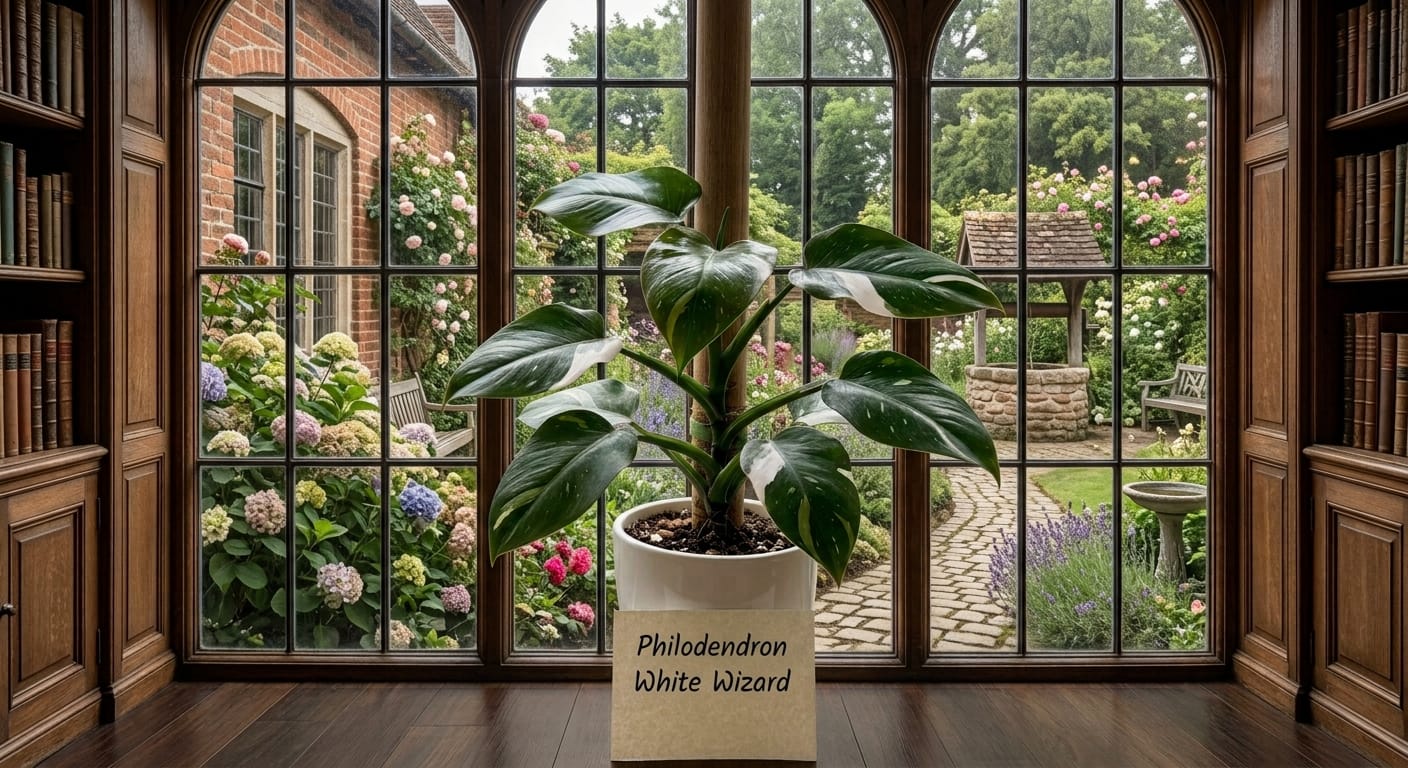
Based on my years growing both, the White Wizard is the faster grower of the two.
This sounds strange given the larger white sections, but it comes down to overall leaf size.
White Wizard leaves get bigger, giving even the reduced green tissue more total surface area.
More surface area, even at a lower percentage of green, still produces more photosynthesis overall.
The White Knight, with its heavily patchy and sometimes dense variegation, often grows noticeably slower.
This growth difference is noted across multiple cultivation sources in the plant community.
In my own growing space, White Wizard consistently pushes new leaves at a slightly faster pace.
Do not expect either plant to be a speed demon, though. Both are measured growers.
Care for Philodendron White Wizard and White Knight
Good news here: care for both plants is nearly identical.
Once you understand the variegation science above, the care decisions make total sense.
Light Requirements
Both need bright, indirect light. This is non-negotiable for these plants.
Place them within three to five feet of a bright window.
A sheer curtain blocking harsh afternoon sun is a good setup for both.
Direct sun will scorch those white sections fast. They have zero protective pigmentation.
Low light will cause both plants to slowly revert toward solid green.
I run mine under a simple LED grow light in the darker winter months.
Nothing fancy. Just a basic full-spectrum bulb on a twelve-hour timer.
Watering
Check the top one to two inches of soil before every single watering.
If that layer is still damp, put the watering can down and walk away.
Water only when the top layer feels dry to the touch.
Then water thoroughly until it flows freely out of the drainage holes.
Never let either plant sit in a saucer of standing water.
Root rot is the fastest way to kill both of these plants.
I lift the pot to judge moisture. A light pot needs water. A heavy one does not.
Soil Mix
I stopped using regular potting soil for these plants years ago.
Standard potting soil stays wet too long. These roots need air circulation.
My current mix for both White Knight and White Wizard is:
- 40% standard potting mix
- 30% orchid bark (chunky grade)
- 20% perlite
- 10% coco coir or coarse sphagnum
This mix drains fast, holds just enough moisture, and lets the roots breathe.
If you want to learn more about this kind of chunky aroid mix, I cover it in depth for other climbing philodendrons like the Philodendron Micans care guide.
Humidity
Both plants prefer humidity in the 60 to 80 percent range.
Most US homes run between 30 and 50 percent, which is on the dry side.
Grouping plants together naturally lifts the local humidity a few points.
A small humidifier near your collection is the most effective option.
The white leaf sections are the first to show brown, crispy edges when humidity drops.
Watch those white portions like an early warning system for your home’s air quality.
Temperature
Keep both plants between 65 and 85 degrees Fahrenheit during the day.
Do not let temps fall below 55 degrees Fahrenheit at night.
Cold drafts from windows or air conditioning vents are a real problem.
A cold snap that stresses the root system will set these plants back weeks.
Fertilizing
Both plants benefit from a balanced liquid fertilizer during spring and summer.
I use a diluted, balanced formula (like 10-10-10) at half the recommended strength.
Feeding every four to six weeks during the growing season is plenty.
Stop fertilizing in late fall and skip it entirely through winter.
Over-fertilizing a variegated plant can cause fertilizer burn on those sensitive white sections.
When in doubt, go lighter on fertilizer than you think you need to.
Moss Pole Support
Both White Knight and White Wizard are natural climbers. Give them something to climb.
A moss pole, coco coir pole, or simple wooden stake works well.
When these plants climb vertically, they push out larger, more dramatic leaves.
A White Wizard trailing off a shelf produces okay leaves. The same plant climbing a pole? Completely different size leaves.
I anchor my poles deeply into the pot and let the stems attach with natural aerial roots.
Reversion: What It Is and How to Handle It
Reversion is when your variegated plant starts pushing out entirely green leaves.
Both White Knight and White Wizard can revert. It happens more often than sellers admit.
The most common cause is insufficient light. The plant boosts chlorophyll production to survive.
I’ve written a full breakdown on why Philodendron White Knight reverts and how to fix it.
The short version: move the plant to brighter (but still indirect) light immediately.
For pruning, cut back any reverted green stems to a node that previously showed variegation.
New growth from that node has a better chance of expressing the white pattern again.
Never propagate cuttings from a fully reverted green section. That cutting will likely stay green.
Always take cuttings from stems that have already shown variegated growth in the past.
Propagating White Knight and White Wizard
Both plants propagate the same way. Stem cuttings with a node and ideally one aerial root.
Philodendron erubescens propagates well in water using this exact method.
Cut just below a node. Remove the lowest leaf if present. Place in clean water.
Change the water every few days to prevent bacteria from building up.
Roots should emerge within two to four weeks in warm conditions.
The most important rule: only propagate from stems with clear variegation history.
A green cutting from a White Knight is just a green philodendron. Full stop.
Price and Where to Find These Plants in the US
Let’s talk money, because both plants are not cheap.
White Knight is more widely available and generally easier to source.
You can often find White Knight cuttings on Etsy, Facebook Marketplace, and local plant swaps.
Rooted White Knight plants from specialty sellers typically run between $30 and $80 depending on size and variegation.
White Wizard is noticeably rarer in the US market.
The higher price reflects both scarcity and the more dramatic visual appeal.
Rooted White Wizard plants commonly list between $50 and over $100.
Home Depot has listed White Wizard plants in 4-inch pots for around $106 online.
That price point reflects just how rare this plant still is at mainstream retail.
For either plant, check Etsy shops with strong reviews and clear photos of the mother plant.
Ask sellers to show you the stem before committing to a White Wizard purchase specifically.
If the stem in the photo looks green with white stripes, you have a real White Wizard.
If it looks dark burgundy, that is a White Knight regardless of the label.
Which Plant Should You Choose?
This comes down to four things: your budget, your space, your patience, and your goals.
Choose White Knight if:
- You want a variegated statement plant without paying top dollar
- You enjoy the bold look of dark burgundy stems against white-patched leaves
- You are okay with slower, more unpredictable variegation patterns
- This is your first high-end variegated philodendron
Choose White Wizard if:
- You want more dramatic, consistent-looking white variegation
- You are comfortable sourcing from specialty sellers online
- You have already grown other variegated philodendrons successfully
- You want the rarer of the two in your collection
Personally? I keep both. They sit on the same shelf.
The White Knight’s dark stems next to the White Wizard’s bright green ones look incredible together.
If you are just starting out with variegated aroids, I would also look at the Philodendron Pink Princess.
It shares a similar care profile and the burgundy stem color actually resembles White Knight closely.
And if you want to see where my plant obsession started, that Philodendron Prince of Orange care guide tells the whole story.
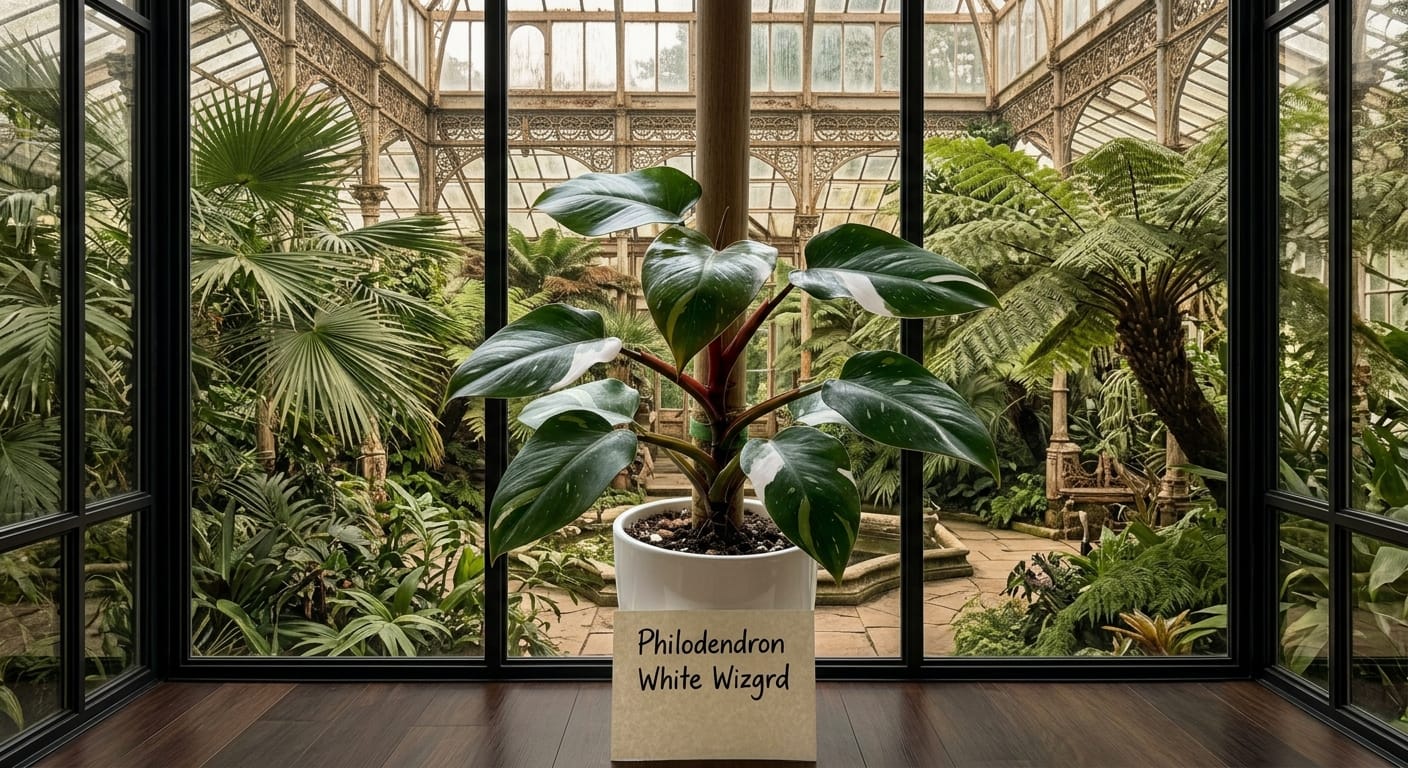
Side-by-Side Comparison Chart
| Feature | White Knight | White Wizard |
|---|---|---|
| Stem Color | Dark burgundy / reddish-brown | Pure green with white stripes |
| Petiole Color | Dark purple-brown | Vibrant green |
| Cataphylls | White edges visible | Plain green |
| Leaf Shape | Heart-shaped, broader | Heart-shaped, rounds with age |
| Variegation Style | Bold scattered patches | Larger, more expansive white sections |
| Green Tone | Light to mid green | Darker, deeper green |
| Growth Rate | Slower | Slightly faster |
| Rarity (US) | More available | Rarer |
| Price Range | $30 to $80 | $50 to $100+ |
| Growth Habit | Climbing | Climbing |
| Moss Pole Needed | Yes | Yes |
Frequently Asked Questions
Can I grow White Knight and White Wizard together in the same pot?
Technically yes, but I would not recommend it long-term.
They will compete for root space. Give each plant its own pot and its own moss pole.
Which one is easier for beginners?
White Knight is generally the more forgiving starting point.
It is easier to find, slightly cheaper, and more tolerant of minor care inconsistencies.
Why is my White Wizard losing its white variegation?
Low light is almost always the cause. Move it closer to a bright window.
If that doesn’t help, a full-spectrum grow light on a 12-hour cycle can reset variegation production.
Are both plants toxic?
Yes. Both contain calcium oxalate crystals throughout the leaves and stems.
Keep them away from pets and children. Chewing the leaves causes oral irritation and swelling.
Do both plants need a moss pole?
Both are natural climbers and will produce significantly larger, better leaves with vertical support.
A moss pole is strongly recommended for either plant to reach its full potential indoors.
Final Thoughts
Look, the plant market is full of mislabeled aroids.
Sellers sometimes get these wrong. Sometimes they do it on purpose to charge more.
The single best thing you can do before buying either plant is ask for a clear stem photo.
If the stem is dark and burgundy, that is a White Knight.
If it is green and striped with white, that is a White Wizard.
Nothing else on this plant is as reliable as that stem color.
Both plants are genuinely beautiful. Both reward the effort you put into their care.
I have grown both through full seasons now, and the joy of watching those variegated leaves unfurl never gets old.
Have questions about either plant? Drop them in the comments. I read every single one.