Philodendron Nangaritense Care Indoors: The Complete Grower’s Guide (2026)

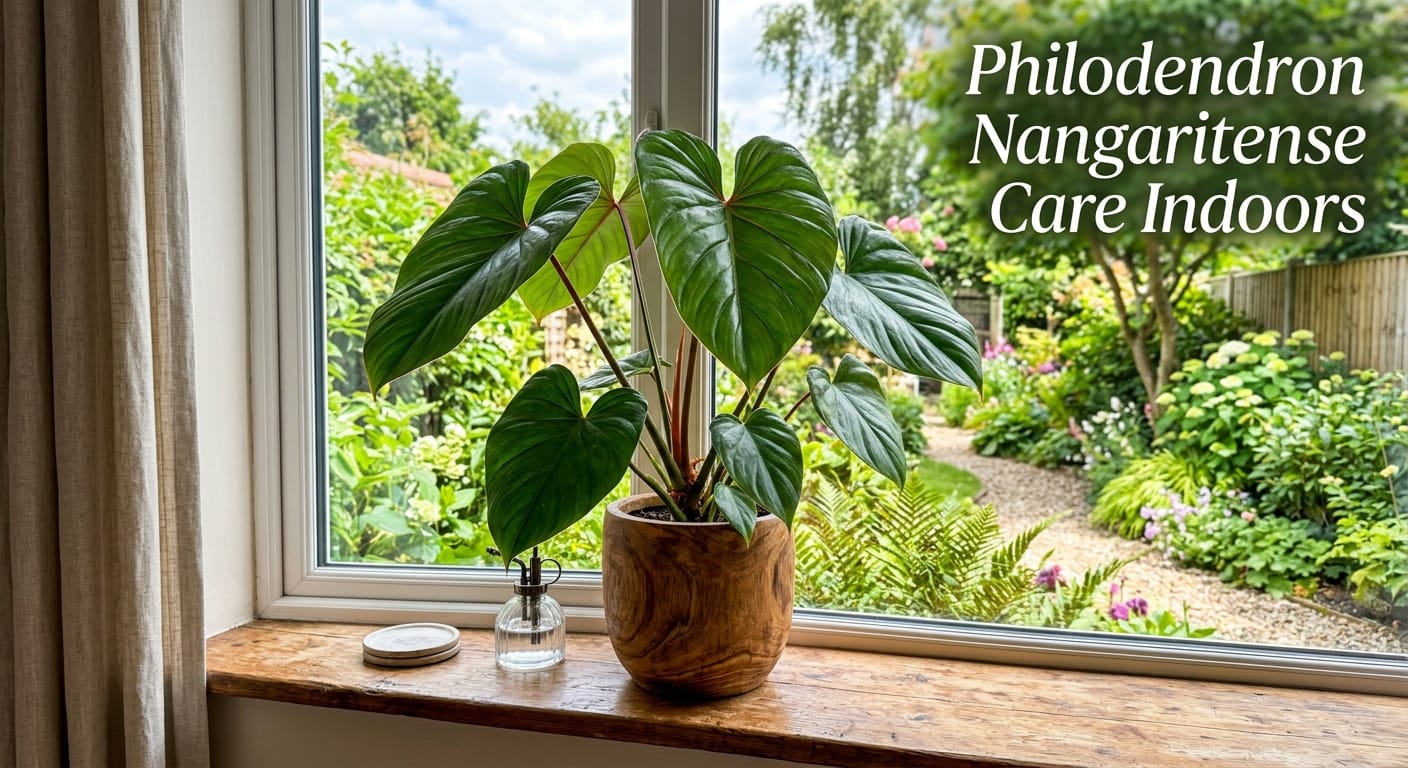
Walk into any serious plant collector’s home, and you will likely stop dead at one plant.
Its leaves are big and green. But those petioles? They are covered in soft, vivid red-orange fuzz.
That is the Philodendron nangaritense — and it is something else entirely.
I first got my hands on one about five years ago. Back then, tracking down a decent specimen meant weeks of searching specialty aroid sellers online.
Since then, I’ve worked out exactly what this plant needs to stay healthy indoors — what trips growers up, what the care guides usually get wrong, and what’s changed as it’s become slightly more accessible.
This guide covers all of it: origins, light, water, soil, humidity, propagation, pricing, and where to buy.
What is Philodendron Nangaritense?
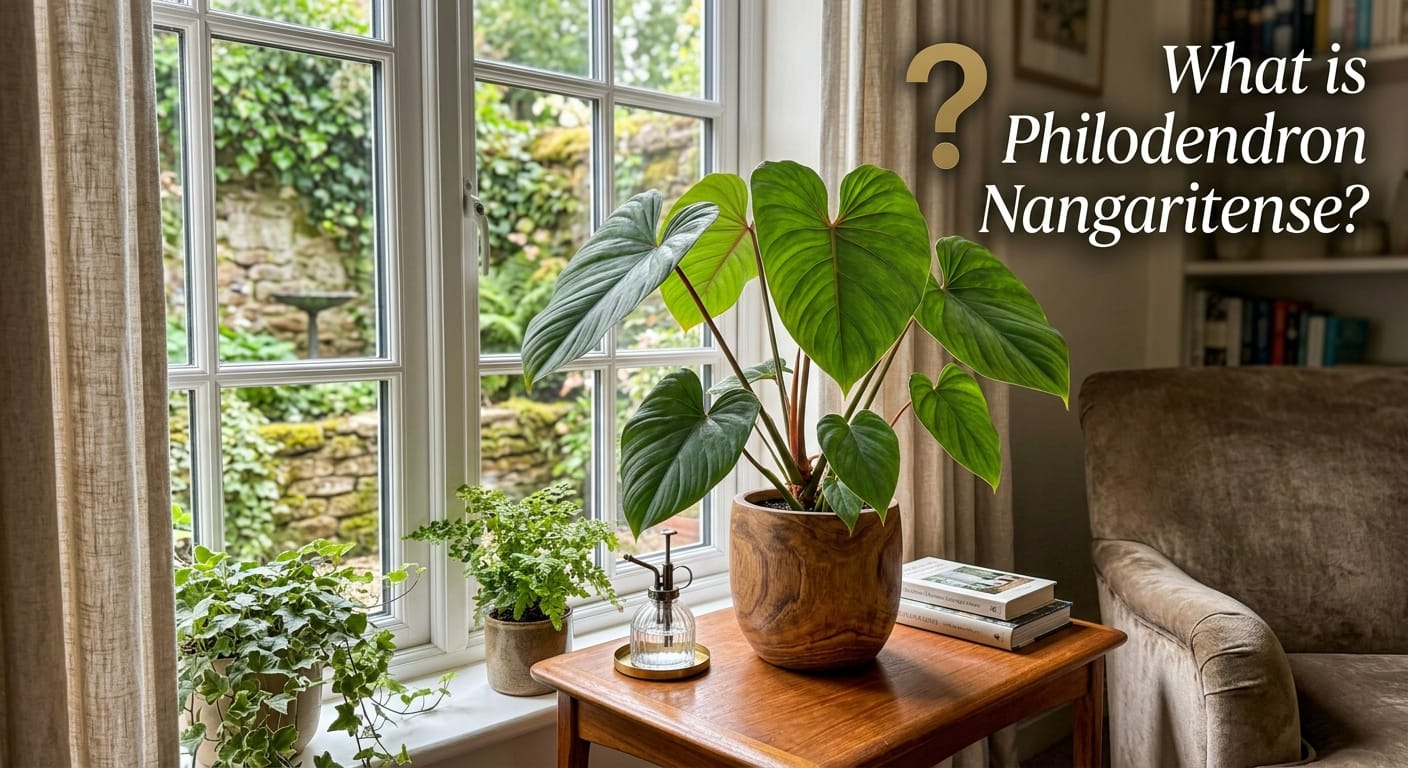
Philodendron nangaritense is a rare tropical aroid from Ecuador.
It belongs to the massive Araceae plant family.
Monstera, Anthurium, and Pothos are all cousins of this plant.
What sets nangaritense apart from every other philodendron is its petiole.
The petiole is the stalk that connects each leaf to the main stem.
On this plant, those stalks are coated in fine reddish fuzz.
That texture comes from tiny bumps called tubercles.
As the plant matures, those petioles turn a rich orange-red.
It is one of the most tactile and visually striking plants you can grow indoors.
Many growers say they chose it just to touch those petioles.
Scientific, Botanical, and Common Names
Here is a quick reference for the plant’s classification:
| Classification | Details |
|---|---|
| Scientific Name | Philodendron nangaritense |
| Family | Araceae |
| Subfamily | Aroideae |
| Genus | Philodendron |
| Common Names | Fuzzy Petiole Philodendron, Velvet-Stem Philodendron |
The species name “nangaritense” refers to the Rio Nangaritza river valley in southern Ecuador.
That is where this plant was first formally described and collected.
Its most popular trade name in the US is “Fuzzy Petiole Philodendron.”
This name is widely used on Etsy, eBay, and in plant groups.
Both names refer to the exact same plant.
Native Habitat and Origin
Philodendron nangaritense is native to southern Ecuador.
Specifically, it comes from the Nangaritza Valley near the Rio Nangaritza.
This area sits within Ecuador’s Zamora-Chinchipe Province.
It is a tropical rainforest region with dense canopy cover.
The plant grows along riverbanks under heavy shade.
In the wild, direct sunlight barely ever reaches it.
The area receives heavy rainfall and stays very humid throughout the year.
Night temperatures in this valley can dip into the low 60s Fahrenheit.
Understanding this helps you replicate the right conditions at home.
The plant’s care requirements all trace back to this natural environment.
Characteristics and Features
Leaf Appearance
The leaves are large, heart-shaped, and bright green.
The top surface is smooth and slightly glossy.
The underside is lighter with a matte texture.
Mature leaves can reach 8 to 16 inches in length.
New leaves emerge with a soft copper or reddish blush.
That color transitions to deep green as the leaf matures.
The leaf surface is delicate and can tear if handled roughly.
The Star Feature: The Petiole
This is what everyone is really here for.
The petioles are thick, upright, and covered in fine fuzz.
That fuzz comes from tiny red bumps called tubercles.
On young plants, the fuzz is subtle and pinkish.
On mature specimens, the petioles glow with a vivid reddish-orange color.
They feel like soft velvet when you run your fingers along them.
This feature has no functional rival in the philodendron world.
Growth Form
This plant is a hemiepiphyte.
That means it can grow both along the ground and up surfaces.
In nature, it creeps along the forest floor.
Indoors, it tends to spread laterally across the soil.
It can also climb if given a pole or support structure.
Growth Pattern
Philodendron nangaritense is a moderate grower.
It will not explode with new leaves every week.
Instead, it channels energy into large, well-formed leaves.
In active growing months (spring and summer), expect 2 to 4 new leaves per month.
Growth slows noticeably in fall and nearly stops in winter.
The plant spreads outward as it grows, not just upward.
This makes a wide pot more important than a deep one.
Giving it a moss pole will shift it into climbing mode.
Climbing produces noticeably larger leaves over time.
Dormancy
Philodendron nangaritense does not go fully dormant like a bulb plant.
But it does slow down significantly in winter.
New leaf production may stop for weeks at a time.
This is normal and expected.
Do not try to force growth by adding more fertilizer.
That can damage the roots during a slow period.
Just reduce watering, skip fertilizing, and wait.
When spring arrives and temperatures rise, the plant will wake back up.
New leaves will begin unfurling again, often quickly.
Benefits of Growing Philodendron Nangaritense Indoors
Visual Impact Few plants match its combination of large leaves and colorful petioles.
Conversation Starter Guests always stop and ask about those fuzzy red stems.
Collector Prestige It is still rare enough to be a notable addition to any collection.
Air Purification Like all aroids, it helps filter and oxygenate indoor air.
Rewarding Experience Watching those copper-flushed new leaves unfurl never gets old.
Care Guide
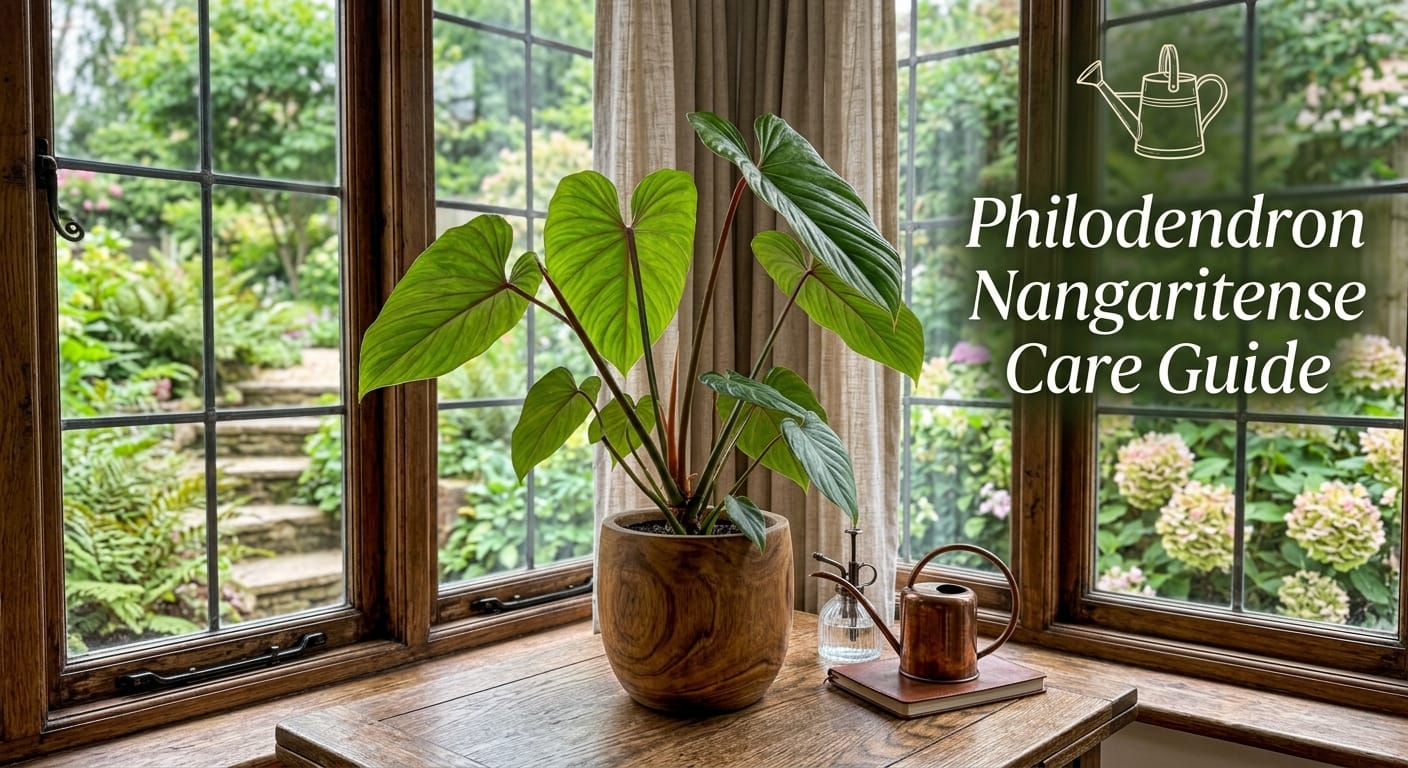
Sunlight
Place your nangaritense in bright, indirect light.
An east or west-facing window is ideal.
A spot 2 to 4 feet from a bright window works well.
Never put it under direct afternoon sun.
Direct sunlight scorches the delicate leaf surface quickly.
In dark rooms, a full-spectrum LED grow light works well.
Position the light about 10 to 12 inches above the canopy.
Run it for 12 to 14 hours per day.
Tolerable in lower light, but growth will slow and leaves get smaller.
Watering
Water when the top 1 to 2 inches of soil feel dry.
Do not go by a fixed schedule.
Feel the soil with your finger before every watering.
When you water, water thoroughly until it drains from the bottom.
Never let the plant sit in standing water.
Empty the drip tray after every watering session.
In summer, this may mean watering every 7 to 10 days.
In winter, stretch that to every 14 to 21 days.
Signs of overwatering: yellowing lower leaves, soggy soil, mushy stem base.
Signs of underwatering: drooping leaves, dry crispy edges, very light pot.
Fertilizers
Feed during the active growing season (spring and summer only).
Use a balanced liquid fertilizer with a higher nitrogen (N) ratio.
Nitrogen supports lush, large leaf production.
Apply every 4 to 6 weeks during the growing season.
Always dilute to half the recommended strength.
Full-strength fertilizer burns roots easily.
Stop fertilizing in fall and winter entirely.
Over-fertilizing shows up as curled leaf tips and salt buildup on the soil.
Flush the soil with plain water once a month to clear mineral salts.
Soil Mix
Philodendron nangaritense hates waterlogged soil.
You need a chunky, airy, fast-draining mix.
Here is the blend I use for this plant:
- 40% orchid bark (for drainage and aeration)
- 30% perlite (keeps the mix light and prevents compaction)
- 20% potting soil (adds some moisture retention and nutrients)
- 10% horticultural charcoal (fights bacteria and keeps roots clean)
This mix drains fast but holds just enough moisture.
Avoid any mix that contains a lot of peat.
Peat holds water too long and leads to root rot.
Good aeration around the roots is critical for healthy petiole development.
Humidity
Aim for 60% to 80% relative humidity.
This is the most important care factor for this plant.
Below 50%, leaves become smaller and less vibrant.
Below 40%, the leaf tips will brown and the plant will struggle.
A digital hygrometer tells you exactly what your humidity is.
A small ultrasonic humidifier placed nearby works best.
You can also group plants together to raise ambient humidity naturally.
Pebble trays filled with water placed under the pot also help.
Misting the leaves 2 to 3 times a week provides supplemental moisture.
Dry your leaves after misting to avoid bacterial issues.
Temperature
Keep the plant between 55°F and 80°F (12.75°C to 26°C).
The sweet spot for active growth is 65°F to 75°F.
Never expose it to temperatures below 55°F.
Cold drafts from windows are dangerous, especially in winter.
Keep it well away from AC vents and heating radiators.
Both hot and cold air blowing directly on leaves causes damage.
Sudden temperature swings stress the plant and halt new leaf production.
Consistent warmth matters more than reaching a perfect target number.
Climbing Stake
A moss pole or coco coir pole encourages natural climbing.
Climbing shifts the plant into a mode that produces larger leaves.
Push the pole firmly into the center of the pot.
Use soft plant ties to gently attach existing stems.
As new growth emerges, guide it toward the pole.
The plant’s aerial roots will eventually grip the pole on their own.
Wet the moss pole regularly to encourage root attachment.
A climbing nangaritense is a dramatically more impressive plant over time.
Toxicity
Philodendron nangaritense is toxic to humans, cats, dogs, and other pets.
It contains calcium oxalate crystals throughout the plant tissue.
Ingesting any part causes burning, swelling, and difficulty swallowing.
Skin contact with sap may cause mild irritation in sensitive people.
The ASPCA lists philodendrons as toxic to cats and dogs.
Keep the plant out of reach of pets and young children at all times.
Wear gloves when pruning or propagating.
If a pet ingests any part of this plant, call your vet immediately.
What Real Growers Are Saying
Here is a verified review from a real buyer who purchased Philodendron nangaritense from Ecuagenera, one of the most respected Ecuadorian aroid exporters:
“The plant is gorgeous and the petiole a flaming orange. Honestly I love it so much. It has become one of my favorite philodendrons. I wish I had ordered it sooner. Super impressed with this specimen.”
Source: Verified buyer review, Ecuagenera Product Page https://ecuagenera.com/products/philodendron-nangaritense
That reaction is extremely common among first-time nangaritense owners.
No photo prepares you for how vivid those petioles look in person.
Repotting Guide
Repot every 1 to 2 years, or when roots start emerging from drainage holes.
Spring is the best time to repot.
Choose a pot that is 1 to 2 inches wider than the current one.
Width matters more than depth for this plant.
Wide, shallow pots suit its creeping growth habit perfectly.
How to repot:
- Water the plant the day before to reduce root stress.
- Gently tip the plant out of the old pot.
- Shake loose old soil from the roots.
- Inspect roots and trim any black, mushy, or dead ones.
- Fill the new pot with fresh chunky mix.
- Set the plant in and fill around the roots.
- Water lightly and place in bright indirect light.
Avoid fertilizing for 4 to 6 weeks after repotting.
Let the roots settle before you start feeding again.
Pruning Guide
Pruning keeps the plant healthy and tidy.
It is not strictly necessary, but it helps.
Remove yellow, dead, or damaged leaves as soon as you spot them.
This directs the plant’s energy toward healthy new growth.
Use clean, sharp scissors or pruning shears.
Sterilize the blade with rubbing alcohol before and after use.
Never remove more than 30% of the plant at once.
Pruning is best done in spring or early summer.
Cut just above a node to encourage new branching at that point.
Wash your hands thoroughly after pruning.
Propagation Guide
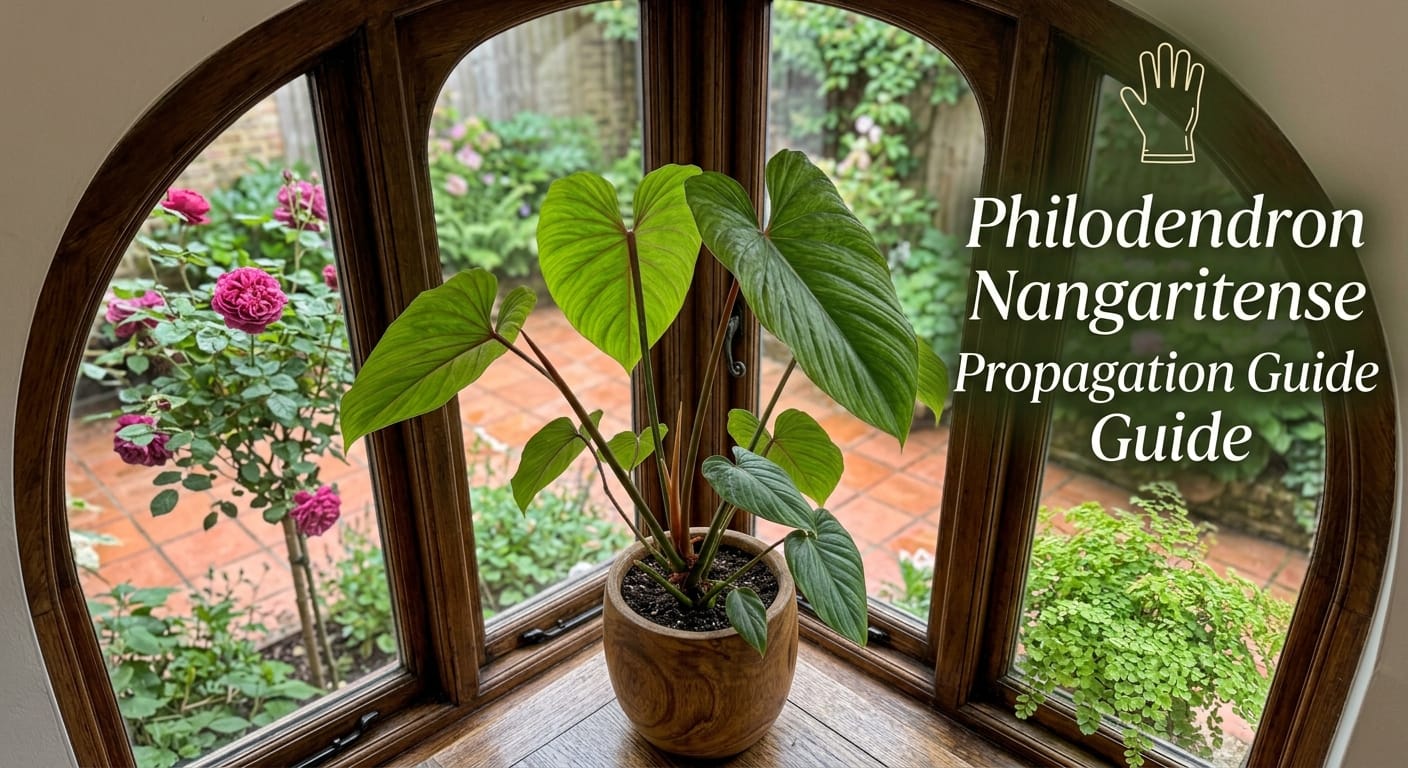
Philodendron nangaritense is easy to propagate from stem cuttings.
The stem takes root readily in the right conditions.
What you need:
- A healthy parent plant
- Clean, sharp blade or scissors
- Rubbing alcohol for sterilization
- A jar of water or moist sphagnum moss
- A small plastic bag or humidity dome (optional)
Step-by-step:
- Find a healthy stem with at least one visible node.
- The node is the bump on the stem where a leaf grows.
- Cut just below the node with a clean blade.
- Let the cut sit open air for 20 to 30 minutes to callous.
- Place the cutting in water or into moist sphagnum moss.
- Keep in a warm spot with bright indirect light.
- Roots should appear within 3 to 5 weeks.
- Once roots reach 1 to 2 inches, pot in your chunky mix.
Keep humidity high during rooting for best results.
A humidity dome or clear plastic bag placed loosely over the cutting helps.
Water propagation works well but sometimes produces weaker roots.
Sphagnum moss often gives stronger, more established roots.
Common Pest and Disease Problems
Spider Mites
Spider mites love dry, hot conditions.
Look for fine webbing between leaves and tiny moving dots.
Fix: Wipe all leaf surfaces with neem oil solution.
Increase humidity to make the environment hostile for mites.
Repeat treatment weekly for 3 to 4 weeks.
Mealybugs
These appear as white cottony clusters on stems and leaf joints.
Fix: Dab each cluster with a cotton swab soaked in 70% isopropyl alcohol.
Follow up with an insecticidal soap spray on all surfaces.
Check weekly and repeat until no signs remain.
Root Rot
Root rot is caused by overwatering and poor drainage.
Signs include yellowing leaves, soft mushy stem base, and a foul smell.
Fix: Remove the plant from its pot immediately.
Cut away all black, mushy, or dead roots with a clean blade.
Let the remaining roots air dry for an hour.
Repot in fresh, dry chunky soil mix.
Adjust your watering habits going forward.
Bacterial Leaf Spot
Shows up as dark water-soaked spots on the leaf surface.
Usually caused by water sitting on leaves for too long.
Fix: Remove all affected leaves.
Avoid wetting the foliage when watering.
Improve airflow around the plant.
A gentle fan nearby can help prevent bacterial issues.
Fungus Gnats
Tiny flies hovering around the soil surface are a sign.
They breed in wet, organic-rich soil.
Fix: Allow the top layer of soil to dry between waterings.
Use yellow sticky traps to catch adult gnats.
Drench the soil with a diluted hydrogen peroxide solution (1 part H2O2 to 4 parts water).
This kills larvae without harming the roots.
Pricing Guide
Philodendron nangaritense has become more accessible in recent years.
Tissue culture propagation has brought prices down compared to 5 years ago.
But it is still not a plant you will find at a big-box garden center.
Here is a general price guide for 2026 in the US:
| Plant Size / Type | Estimated Price Range |
|---|---|
| Small rooted cutting | $15 to $35 |
| Young 4-inch pot plant | $35 to $65 |
| Mid-size established plant | $65 to $100 |
| Large mature specimen | $100 to $150+ |
| Tissue-cultured starter | $12 to $25 |
Tissue-cultured plants are cheaper but typically smaller and less vigorous initially.
Plants grown from cuttings tend to establish faster and grow more true to form.
Rare wild-type specimens from specialty collectors can exceed $200.
Buying Guide
Buy from sellers who specialize in rare aroids.
General plant shops rarely carry this species.
Where to buy Philodendron nangaritense in the US:
Ecuagenera is a top-tier Ecuadorian nursery with authenticated specimens. They ship directly to the US. Visit: ecuagenera.com
Etsy has many vetted plant sellers. Search “Philodendron nangaritense” and filter by high-rated sellers.
Facebook Marketplace plant groups allow you to buy local. Local pickup eliminates shipping stress on delicate plants.
Specialty US aroid nurseries like The Sill or NSE Tropicals sometimes stock it.
Tips before buying:
- Always ask for a current photo of the exact plant.
- Ask if it was grown from a cutting or tissue culture.
- Check the petioles in the photo. They should be visible and intact.
- Avoid plants with yellowing leaves or soft stems in photos.
- Buy during spring or summer to avoid cold-shock during shipping.
Common Mistakes to Avoid
Overwatering This is the number one killer of this plant.
Always check the soil before you add more water.
When in doubt, wait another 2 to 3 days.
Putting it in direct sun Direct afternoon sun scorches the leaves within hours.
Always filter the light or keep it a few feet from the window.
Low humidity Below 50% humidity, this plant struggles noticeably.
Invest in a small humidifier near the plant.
Using a deep, narrow pot This plant creeps outward, not downward.
A deep pot holds excess moisture and increases root rot risk.
Always choose wide and shallow over tall and narrow.
Cold drafts Even 10 minutes of cold air from a window or AC vent can halt growth.
Move the plant away from any cold air sources in winter.
Over-fertilizing More fertilizer does not mean more growth.
It causes root burn, curled leaf tips, and long-term damage.
Always dilute to half-strength and feed less often than you think.
Ignoring the petioles as a health signal The petioles are a great health indicator.
Plump, vivid orange petioles mean the plant is happy.
Shriveled, dull, or soft petioles signal a problem.
Related Reads on Jefrev.com
If you enjoyed this guide, you will love these too:
- How to Care for Philodendron Melanochrysum Indoors
- Philodendron Silver Sword Care: The Only Guide You’ll Ever Need
- Philodendron Micans Care: Growing the Velvet Leaf Philodendron
- Philodendron Florida Ghost Care: The Complete Guide
- Philodendron Spiritus Sancti Care: 8-Year Experience Guide
- Philodendron Brandtianum Care Indoors: The Complete Silver Leaf Guide
Frequently Asked Questions (FAQ)
Is Philodendron nangaritense the same as Fuzzy Petiole Philodendron?
Yes. “Fuzzy Petiole” is the most common trade name for Philodendron nangaritense in the US hobby market. They are the same plant.
Why are my nangaritense petioles not turning red or orange?
Young plants have less pronounced petiole color and fuzz. The vivid orange-red develops as the plant matures. Make sure it gets enough bright indirect light and humidity. Low light reduces pigment development.
How often should I water my nangaritense?
There is no fixed schedule. Water when the top 1 to 2 inches of soil feel dry. That typically works out to every 7 to 14 days depending on your home conditions.
Does it need a moss pole?
No, it does not need one to survive. But adding one encourages climbing and leads to noticeably larger leaves over time.
Can I grow Philodendron nangaritense outdoors?
Yes, in USDA Hardiness Zones 10a to 11. In all other zones, it must stay indoors year-round. It cannot survive frost.
Why are my nangaritense leaves tearing?
The leaf surface is naturally delicate. Tearing is often caused by pets, children, or accidental rough handling. Low humidity can also make leaves more fragile. Keep humidity above 60%.
How do I know if my plant is getting too much fertilizer?
Look for curled or brown leaf tips, white crusty deposits on the soil surface, or stunted growth. These are all signs of fertilizer salt buildup. Flush the soil with plain water and skip fertilizing for 6 to 8 weeks.
What is the minimum temperature Philodendron nangaritense can handle?
Do not let it drop below 55°F (12.75°C). Sustained cold causes stress, leaf drop, and potential root damage. Keep it away from cold drafts in winter.
Conclusion
Philodendron nangaritense is a plant that earns its reputation.
Those red-orange fuzzy petioles are genuinely unlike anything else in the hobby.
Getting the care right is not complicated.
Give it warmth, high humidity, bright indirect light, and well-draining soil.
Water it carefully. Feed it lightly. Give it a wide pot and maybe a pole.
Do those things consistently, and this plant will reward you endlessly.
New leaves with copper blush will unfurl regularly.
And those vivid, fuzzy petioles will keep stopping every guest in their tracks.
That is exactly what this plant does best.