Philodendron Prince of Orange Care: The Complete Guide

The Prince of Orange was the plant that started this whole collection, back in 2018 — the full story’s on my About page if you’re curious.
What matters for care purposes is that it’s one of the more forgiving philodendrons you can own, which is exactly why it works as someone’s first.
This guide covers everything I know about Philodendron Prince of Orange care.
Nothing padded out. Just the real stuff that works.
What is the Philodendron Prince of Orange?
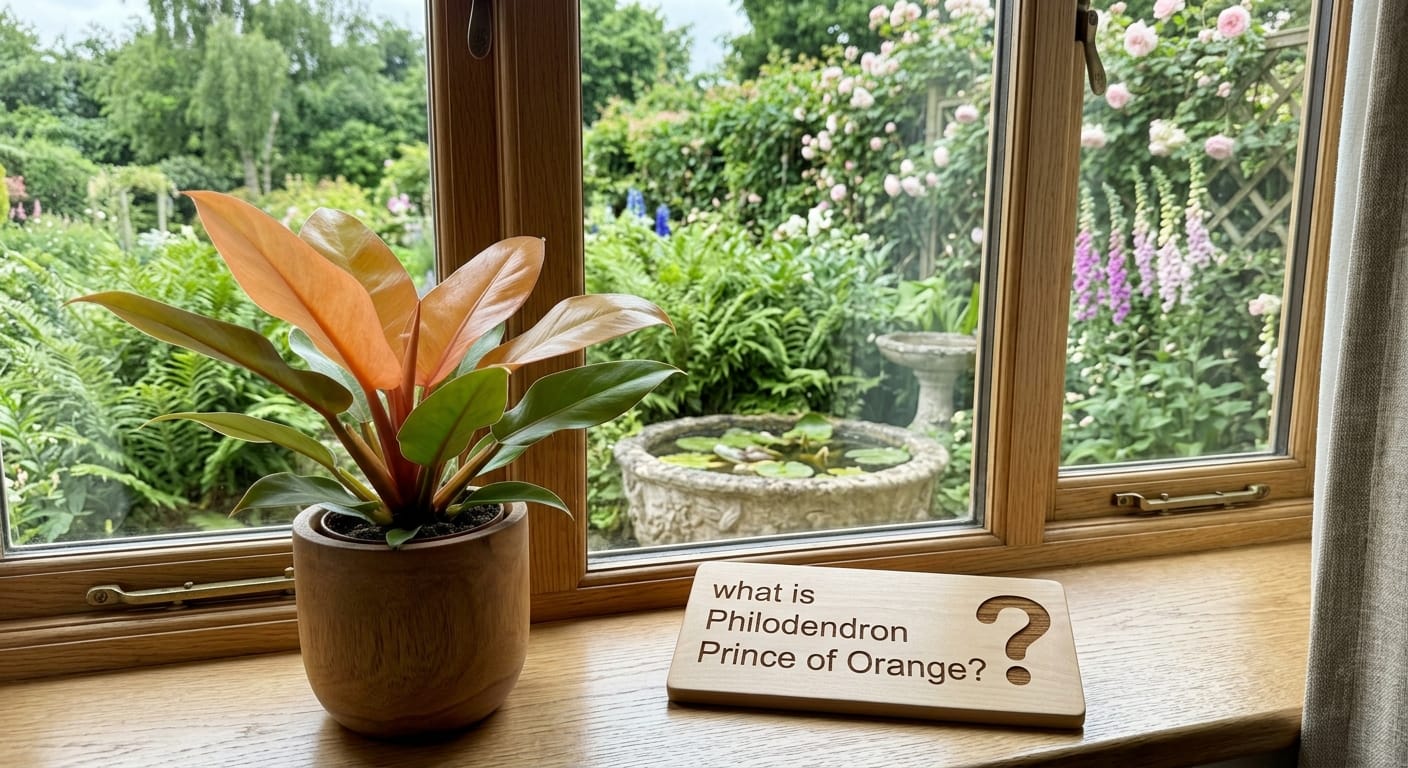
The Philodendron Prince of Orange is a self-heading hybrid houseplant.
It grows upright from a central crown. No vines. No trailing stems.
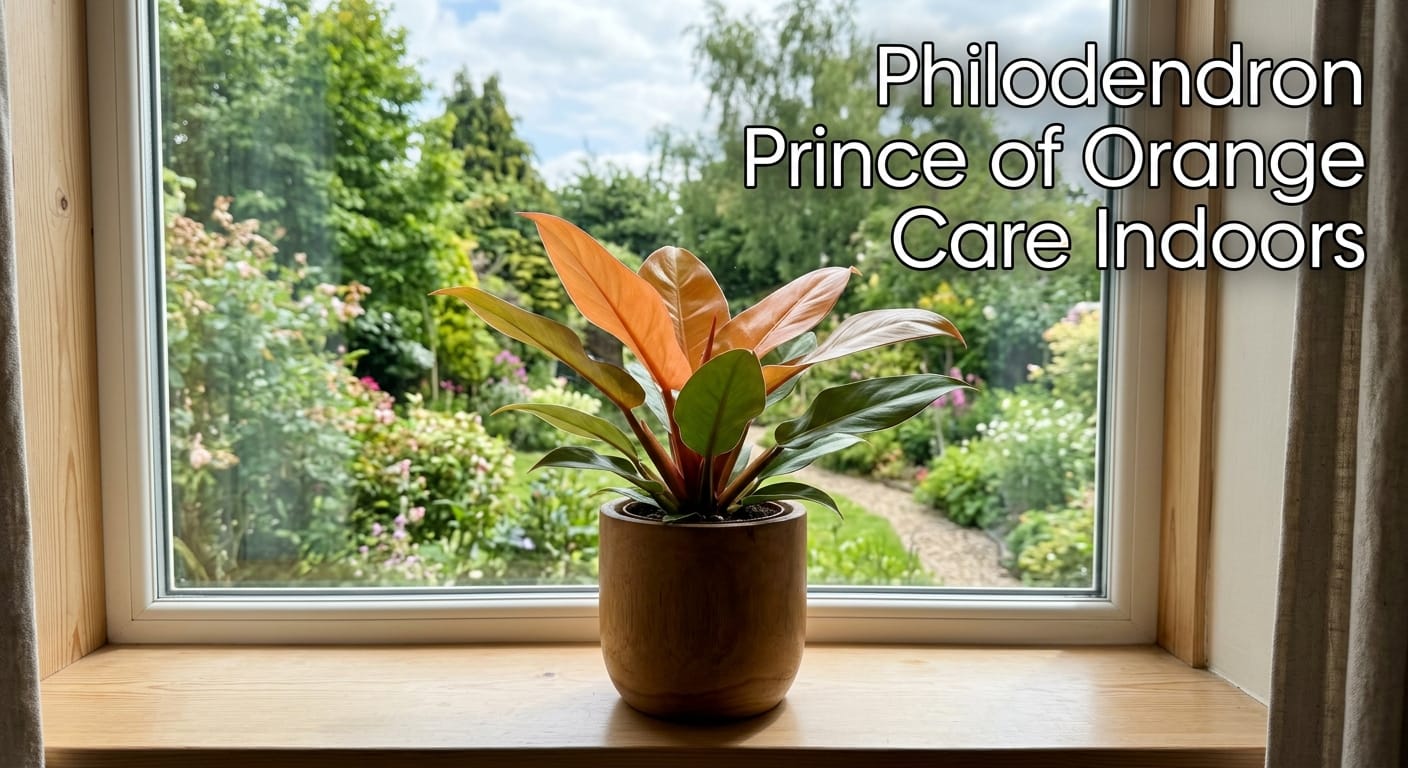
Each new leaf unfurls from the center as a bright, glossy orange.
Over time, that leaf shifts to apricot, then yellow-green, then deep green.
The result is a plant that wears multiple colors at once.
It is bold, compact, and genuinely easy to grow indoors.
Plant collectors love it. Beginners love how forgiving it is.
Scientific, Botanical, and Common Name
- Scientific/Botanical Name: Philodendron erubescens ‘Prince of Orange’
- Family: Araceae
- Common Names: Prince of Orange, Philodendron Prince of Orange
The name comes from the plant’s signature new-growth coloring.
Fresh leaves emerge in a vivid, glossy orange that grabs attention immediately.
The genus name comes from Greek. “Philo” means love. “Dendron” means tree.
The full translation is roughly “tree lover,” which fits a plant that clings to forest canopies.
Native and Origin
The Philodendron Prince of Orange does not grow wild anywhere on earth.
It is a man-made hybrid, created through selective breeding in Florida.
According to the original US Plant Patent USPP6797P, breeder Cora McColley of Orlando developed this cultivar.
The hybrid crosses include P. domesticum, P. erubescens, P. wendlandii, P. imbe, and P. cannifolium.
Its parent species are native to tropical regions of Central and South America.
Wild ancestors grow in tropical rainforests, under dense tree canopies.
That background explains why this plant loves humidity and indirect light indoors.
Characteristics/Features
Appearance
The leaves are elliptic to ovate in shape, slightly elongated.
Each leaf can grow around 12 inches long and 8 inches wide at maturity.
The petioles (leaf stems) are short and thick, averaging six to seven inches long.
They carry a pinkish-red tone that adds to the plant’s overall color display.
The leaf surface is glossy, which makes the orange pop beautifully under bright light.
The overall look is lush, layered, and distinctly tropical.
Growth Pattern
This is a self-heading philodendron, and that is a key detail.
It does not vine or trail. Leaves emerge in a whorl from the central crown.
Think of it as a rosette, not a climber.
Indoors, expect it to reach about two feet tall and up to three feet wide.
Growth rate depends on light. More light typically means more new leaves.
A healthy plant pushes out a new leaf every few weeks in spring and summer.
Here is what a Houzz forum member named bouldergrower shared after one year with this plant:
“I bought an Exotic Angle Philodendron Prince of Orange in a 4″ pot at Home Depot a year ago and decided to repot it today. This plant gets plenty of light and puts out a new leaf about every two weeks. At nearly 30″ wide, it is getting much larger than I expected.”
— bouldergrower, Houzz Forum, 2015
That surprise is real. This plant can spread well beyond what a four-inch starter suggests.
Plan ahead for a mature width of two to three feet.
Dormancy
The Prince of Orange does not go fully dormant indoors.
Growth does slow noticeably in fall and winter.
Fewer new leaves appear. The plant looks quieter overall.
Reduce watering frequency during this period.
Hold off on fertilizing until spring returns.
It will pick back up naturally once daylight hours increase.
Giving it a slightly brighter spot during winter can also help maintain some growth.
Benefits
Stunning color display. The shifting leaf color creates a year-round visual show.
Air-purifying properties. Like most aroids, this plant filters common indoor toxins. The University of Florida IFAS Extension notes that philodendrons are effective air-cleaning houseplants.
Compact footprint. Two feet tall fits most rooms, desks, or shelves without crowding.
Beginner-friendly. It recovers well from minor mistakes in watering or lighting.
No staking required. Self-heading growth means zero climbing setup needed.
Mood and wellness. Studies consistently link indoor plants with lower stress and better focus.
Care Guide
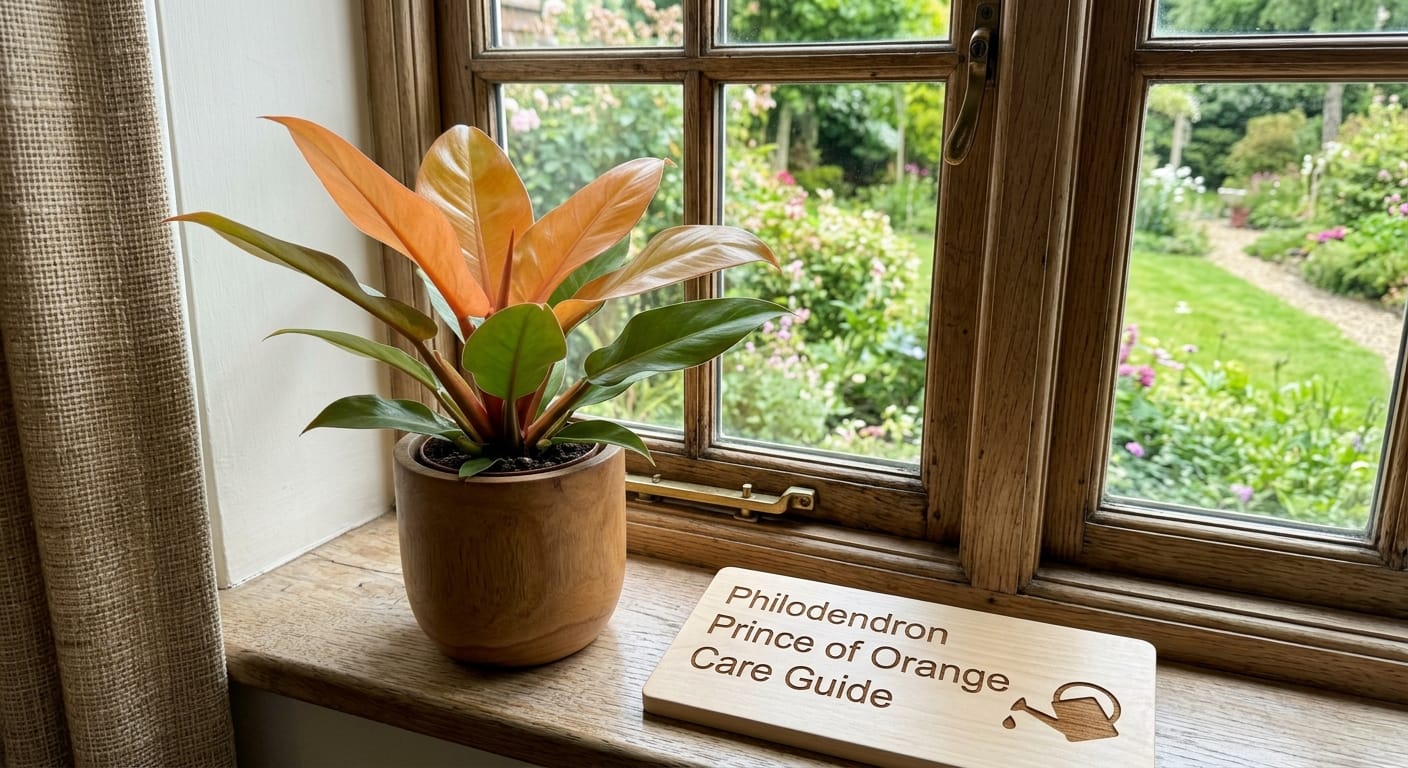
Sunlight
Bright, indirect light is what this plant thrives on.
Light filtered through a sheer curtain a few feet from a window is ideal.
The original plant patent notes it performs best at 1,000 to 1,800 foot candles indoors.
Direct midday sun causes leaf colors to fade to a dull, washed-out bronze.
Too little light slows growth and reduces how vivid the orange becomes.
East-facing or west-facing windows work well for most US homes.
Rotate the pot every two to three weeks for even, balanced growth.
Watering
Watering is where most people run into trouble with this plant.
Check the top one to two inches of soil before every watering.
If the soil feels dry at that depth, it is time to water.
If it still feels damp, wait a day or two and check again.
Water slowly and thoroughly until water drains from the bottom holes.
Empty the saucer after each watering session.
Never let the plant sit in standing water for more than an hour.
Reduce watering frequency in fall and winter when growth slows.
For a deeper look at watering schedules, see my philodendron watering guide.
Fertilizers
Feed your Prince of Orange once a month during spring and summer.
Use a balanced liquid fertilizer, such as a 20-20-20 formulation.
A high-nitrogen option can boost leaf size and vibrancy during active growth.
Always fertilize on moist soil. Applying fertilizer to dry soil burns roots.
Cut feeding back to once every six to eight weeks in fall and winter.
Signs of over-fertilizing: brown leaf tips, white salt crust on the soil surface.
If that happens, flush the soil thoroughly with water and hold off on feeding.
For specific product picks, see my fertilizer guide for philodendrons.
Soil Mix
This plant needs a fast-draining aroid mix.
Standard potting soil alone holds too much moisture and increases root rot risk.
A reliable mix: 40% potting soil, 30% perlite, 30% orchid bark.
Coco coir works as a swap for potting soil if you prefer a peat-free option.
Good drainage keeps roots healthy and prevents waterlogged conditions.
Never use garden soil or heavy compost-based mixes indoors.
Check out my step-by-step aroid soil mix recipe for exact ratios.
Humidity
Aim for 60% ambient humidity or higher.
As a tropical plant, it prefers moisture in the air, not just in the soil.
In dry US climates or homes with heating or air conditioning, use a humidifier nearby.
A pebble tray with water placed under the pot also adds consistent ambient humidity.
Misting the leaves offers a short-term boost but is not reliable long-term.
Brown, crispy leaf tips are usually the first sign of insufficient humidity.
Temperature
Keep temperatures between 65°F and 85°F for best growth.
The plant tolerates brief dips near 60°F but reacts poorly to cold drafts.
Keep it well away from air conditioning vents and exterior doors in winter.
The original plant patent documents it grows across a range of 60°F to 90°F.
Above 90°F, the leaf coloring shifts from vivid orange toward a dull, yellowish bronze.
Cold window glass during winter nights can stress plants placed too close.
Climbing Stake
Good news here: a climbing stake is not needed.
The Philodendron Prince of Orange is self-heading and fully supports itself upright.
Leaves grow from a central crown, not from vines that need a pole.
This makes setup about as simple as setting a pot on a shelf.
If you notice the plant leaning over time, rotating the pot is the right fix.
For more on choosing the right philodendron type, see my philodendron variety guide.
Toxicity
This plant is toxic to pets and to humans if ingested.
It contains insoluble calcium oxalate crystals in all parts of the plant.
The ASPCA lists philodendrons as toxic to dogs, cats, and horses.
Symptoms after ingestion include oral burning, drooling, vomiting, and difficulty swallowing.
Keep it out of reach of children, cats, and dogs.
Wear gloves when pruning or repotting if you have sensitive skin.
Call the ASPCA Poison Control line at (888) 426-4435 if ingestion happens.
Repotting Guide
Repot your Prince of Orange every two to three years.
The clearest signs it is ready: roots circling inside the pot or poking through drainage holes.
Choose a new pot one to two inches larger in diameter.
Going too large traps excess moisture and raises root rot risk significantly.
Spring is the ideal time to repot, right as active growth picks back up.
Use fresh, well-draining aroid mix in the new container.
Water lightly after repotting and keep it away from direct sun for one week.
The plant may show minor drooping after repotting. That is normal and temporary.
Pruning Guide
Regular pruning keeps the plant looking tidy and directs energy well.
Remove yellow, brown, or damaged leaves by cutting at the base of the petiole.
Cut as close to the crown as possible without nicking it.
This lets the plant focus energy on healthy, new leaves rather than struggling ones.
Pruning is fine at any time of year, though spring and summer are best.
Always use clean, sharp scissors or pruning shears.
Dirty blades spread bacteria and fungal spores between cuts.
Remove one or two leaves at a time. Heavy pruning can stress the plant.
Propagation Guide
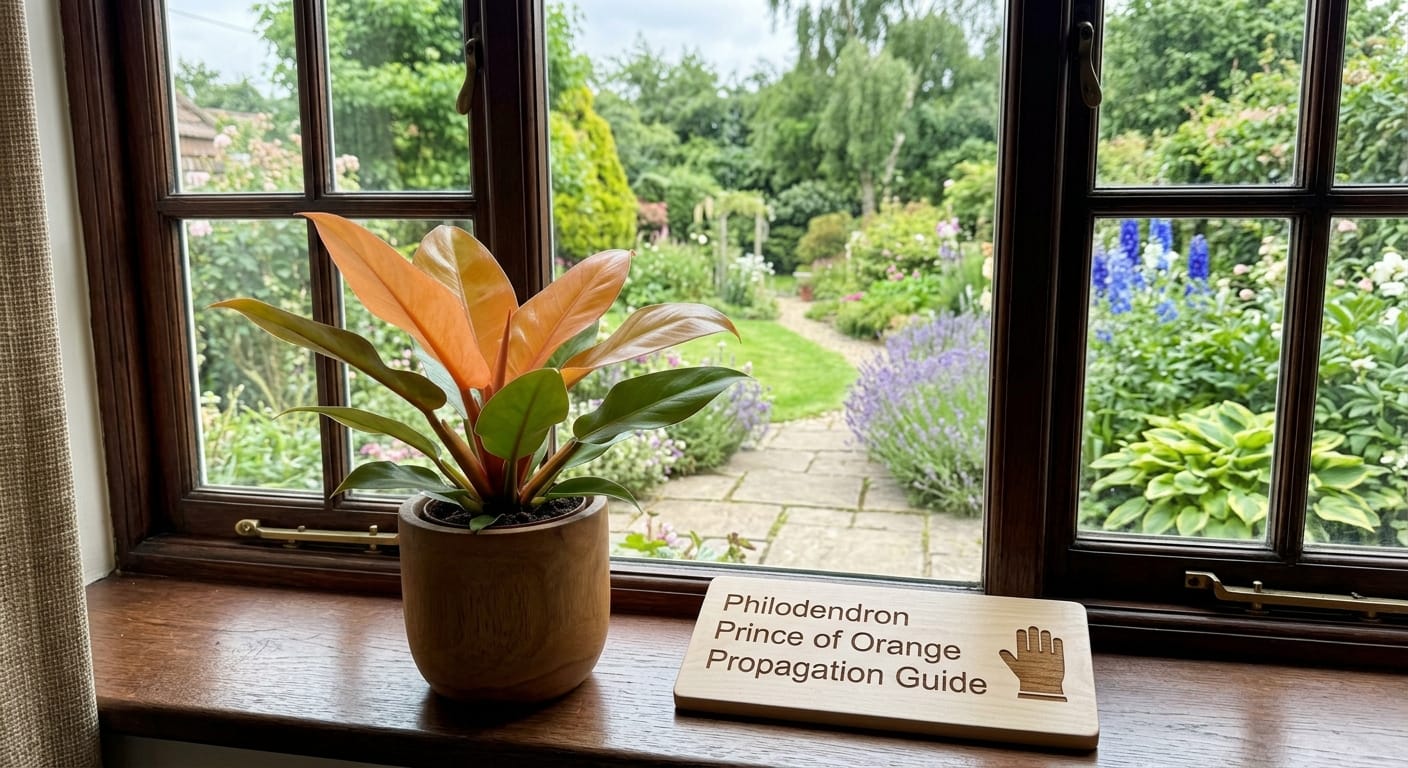
Propagating a Philodendron Prince of Orange is trickier than most houseplants.
Because it is self-heading, traditional vine cuttings are simply not an option.
The plant grows from a tight central crown without accessible nodes on long stems.
The most reliable method is crown division during a repotting session.
Look for small offsets or pups emerging at the base of the main plant.
Carefully separate them with roots attached and pot them individually in fresh mix.
You can also attempt stem cuttings if the plant has developed a visible basal stem.
Cut just below a node, allow the cut end to dry for one hour, then pot in moist mix.
Success rates with stem cuttings are variable. Division produces more consistent results.
Tissue culture is how this plant is produced commercially, but that is beyond home growing.
For a detailed walkthrough, see my philodendron propagation guide.
Common Pests, Diseases, and Solutions
Spider Mites
Low humidity environments are where spider mites strike first.
Look for fine webbing on the undersides of leaves and a dusty, stippled leaf texture.
Wipe affected leaves with a damp cloth and increase ambient humidity right away.
Neem oil spray applied every five to seven days clears most infestations effectively.
Mealybugs
Mealybugs look like small cotton clusters near leaf joints and petiole bases.
Remove visible bugs using a cotton swab dipped in rubbing alcohol.
Follow up with a neem oil spray applied across the entire plant weekly.
Repeat for three to four weeks to catch newly hatched insects.
Scale
Scale insects appear as small, flat brown bumps attached to stems and leaf undersides.
Use a soft toothbrush to dislodge them manually, then treat with insecticidal soap.
Neem oil spray works as a follow-up treatment to prevent reinfestation.
Fungus Gnats
Fungus gnats arrive when soil stays consistently wet for too long.
Let the top two inches of soil dry fully between waterings to deprive larvae.
Yellow sticky traps placed at soil level catch adult gnats flying around.
Beneficial nematodes mixed into the soil also help eliminate larvae at the root level.
Root Rot
Root rot is caused by overwatering or poorly draining soil.
Symptoms include mushy stems at the base, yellowing leaves, and a sour smell from the pot.
Remove the plant from its pot, trim all dark and soft roots, and repot in fresh dry mix.
Allow the repotted plant to dry slightly before resuming a normal watering schedule.
Bacterial and Fungal Leaf Spot
Good news: the original plant patent documents that the Prince of Orange shows strong resistance to both bacterial leaf rot and fungal leaf spot.
If spots appear, improve air circulation and avoid getting water on the leaves.
Remove heavily spotted leaves and adjust watering frequency.
For a full breakdown of common houseplant pests, see my pest identification and treatment guide.
Pricing Guide
Prices vary by pot size, seller type, and where you live in the US.
| Pot Size | Typical Price Range |
|---|---|
| 2-inch starter | $8 to $15 |
| 4-inch pot | $15 to $25 |
| 6-inch pot | $25 to $65 |
| 10-inch pot | $65 to $115 |
Online specialty sellers and Etsy shops tend to price on the higher end.
Big box stores like Home Depot and Walmart stock them closer to the lower end when available.
Seasonal availability affects price too. Spring and summer bring more options at lower costs.
Buying Guide
Look for active new growth. A visible orange leaf unfurling from the center is a great sign.
Inspect the roots at the nursery. Ask if you can tip the pot slightly.
Healthy roots appear white or light tan. Dark, mushy roots mean root rot.
Avoid plants with drooping stems. Soft, drooping petioles suggest transit stress or overwatering.
Check for pests. Flip a few leaves and look at the undersides closely.
For online shopping, look for sellers offering live arrival guarantees and detailed photos.
Etsy sellers specializing in aroids and established plant shops are generally reliable options.
Buy in spring or summer when plants are actively growing and recovering well from shipping.
Avoid unusually cheap prices. Deeply discounted plants often arrive in poor condition.
Common Mistakes to Avoid
Overwatering. This is the most common reason Prince of Orange plants decline.
Always check soil moisture before watering. When in doubt, wait one more day.
Expecting it to climb. This plant will not vine up a pole or trail from a basket.
Too much direct sun. Direct midday sun fades the orange coloring and scorches leaf edges.
Bright indirect light is always the correct setting for this plant.
Heavy soil without drainage. Standard potting soil traps water near the roots.
Always amend with perlite and orchid bark to improve drainage significantly.
Skipping humidity in dry homes. Most US homes run dry, especially in heated winters.
A humidifier or pebble tray makes a measurable difference in leaf health.
Repotting into an oversized pot. A huge pot holds excess moisture the roots cannot use.
Move up only one to two inches in diameter at each repotting.
Fertilizing during dormancy. The plant cannot absorb nutrients well when growth is slow.
Hold off on fertilizing from October through February.
Ignoring the outer leaves. Older outer leaves naturally turn yellow and fall off over time.
Do not confuse normal senescence with a watering or nutrient problem.
FAQ
Why are my Prince of Orange leaves turning fully green so fast?
This is normal. All leaves start orange and mature to green.
Too little light speeds up that color transition significantly.
Move the plant closer to a bright, indirect light source to slow the shift.
Why are my leaves curling?
Leaf curling usually points to low humidity or inconsistent watering.
Check the soil moisture, then check ambient humidity levels with a hygrometer.
Is the Philodendron Prince of Orange rare?
No. It is widely available at garden centers, big box stores, and online.
Prices are generally accessible, which makes it a great first self-heading philodendron.
Can it grow outdoors in the US?
Yes, but only in USDA hardiness zones 10 to 12.
That covers southern Florida, parts of Southern California, and Hawaii.
Everywhere else, keep it as a permanent indoor plant.
How fast does it grow?
In good conditions, one new leaf every two to three weeks during spring and summer.
Growth slows significantly in fall and winter months.
Do I need to mist this plant?
Misting helps short-term but does not substitute for consistent ambient humidity.
A humidifier running nearby is far more effective than daily misting.
Can I grow it in water?
Short-term propagation in water is possible.
Long-term, it needs well-draining soil to sustain healthy root development.
Does it bloom?
Rarely indoors. Very mature plants or outdoor specimens occasionally produce a spathe.
Do not expect flowers as a regular occurrence inside the home.
What is the best pot material for this plant?
Terracotta helps soil dry faster, which lowers overwatering risk.
Plastic or glazed ceramic retains moisture longer, which works well in arid climates.
Why are the new leaves coming out small or deformed?
Low light, inconsistent watering, or low humidity are the usual suspects.
Assess all three before making changes.
Conclusion
The Philodendron Prince of Orange came to me as a gift, and it changed everything.
It turned me into someone who pays real attention to plants.
It is not a demanding plant. It does not need rare care or expensive gear.
Bright indirect light, well-draining soil, and careful watering is really all it takes.
The color show it puts on every time a new leaf unfurls is worth the effort.
If you are thinking about adding one to your collection, go for it.
Start with a healthy four-inch plant, find it a bright spot, and let it grow.
You might be surprised how much space it eventually fills.