Philodendron 69686 Care: The Complete Grower’s Guide (2026)

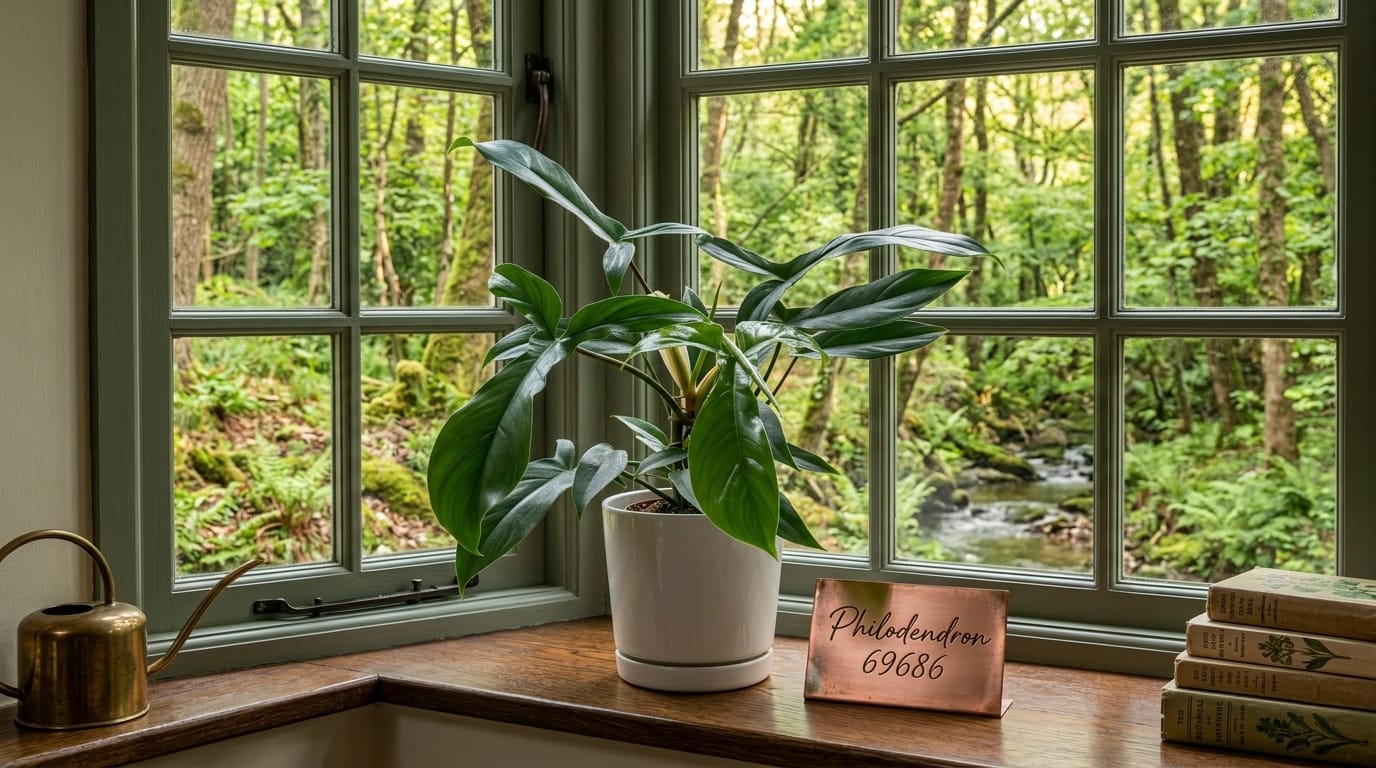
I first spotted this plant at a local aroid swap in 2022.
The leaves stopped me cold. Three bold lobes. Deep green. An hourglass pinch in the center.
Nothing in my 500-plant collection looked quite like it.
The seller called it Philodendron 69686. I had never heard that name before.
I bought a small rooted cutting on the spot and brought it home.
That cutting is now a full-sized climbing specimen in my growing room.
Watching it transform leaf by leaf has been one of the most rewarding experiences in eight years of growing philodendrons.
This guide covers everything I’ve learned from growing the 69686 firsthand.
No filler. No copy-paste fluff. Just what actually works, from someone who grows them daily.
What is the Philodendron 69686?
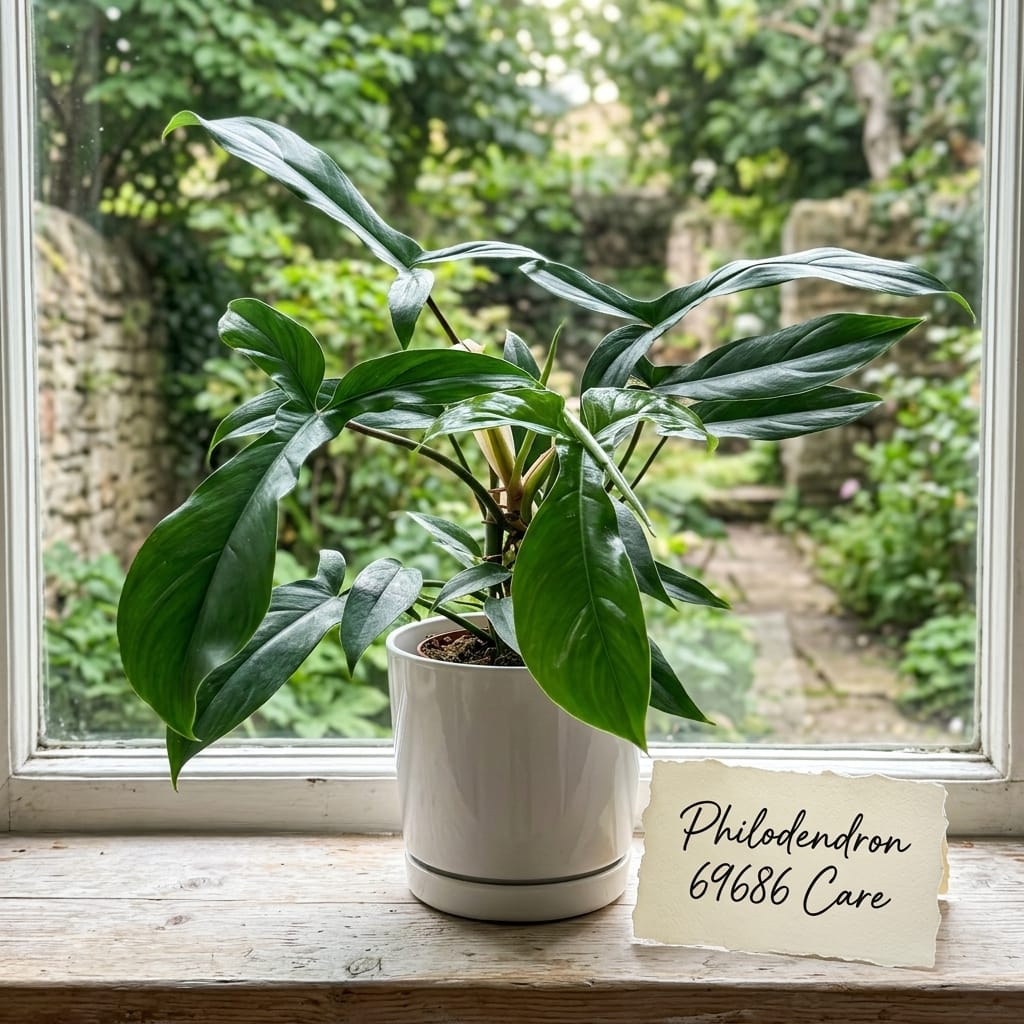
The Philodendron 69686 is one of the most mysterious plants in the aroid hobby.
It has no official scientific species name. None at all.
The number 69686 is not a botanical name. It is a Missouri Botanical Garden accession number.
It is widely believed to be a natural hybrid, most likely from the tropical rainforests of Brazil.
The plant is also sold under the cultivar name Philodendron ‘Bette Waterbury.’
That name honors Bette Waterbury, a founding figure of the International Aroid Society.
She spotted this plant in the legendary collection of Brazilian landscape architect Roberto Burle-Marx.
Burle-Marx famously collected over 500 philodendron species on his estate near Rio de Janeiro.
Waterbury brought a specimen to Dr. Thomas Croat at the Missouri Botanical Garden for study.
Dr. Croat cataloged it under accession number 69686 during his research there.
Despite decades in cultivation, no botanist has formally described or named it as a species.
That unsolved mystery is a huge part of why serious collectors are obsessed with this plant.
Scientific, Botanical, and Common Name
| Name Type | Name |
|---|---|
| Scientific Status | Undescribed hybrid (no formal species name) |
| MOBOT Accession Number | 69686 |
| Cultivar Name | Philodendron ‘Bette Waterbury’ |
| Common Names | Philodendron 69686, Big Ears Philodendron |
| Family | Araceae |
| Genus | Philodendron |
| Order | Alismatales |
The number 69686 is a cataloging code, not a Latin species name.
Dr. Thomas Croat, described by botanical historians as one of the most prolific plant collectors ever, assigned it.
You can read more about the Missouri Botanical Garden’s research legacy at missouribotanicalgarden.org.
For a deeper look at Dr. Croat’s work and career in aroid science, the Wikipedia article on Thomas Croat is a solid starting point.
The cultivar name ‘Bette Waterbury’ is increasingly used at specialty nurseries and collector shops.
Native and Origin
Philodendron 69686 is believed to originate from the tropical rainforests of Brazil.
Its exact wild habitat has never been formally confirmed.
No wild collection record of this plant exists anywhere in the botanical record.
That’s part of what makes it such a genuine botanical mystery.
The plant is most closely associated with the Roberto Burle-Marx estate near Rio de Janeiro.
Burle-Marx was a world-famous landscape architect and passionate plant collector who died in 1994.
He amassed an enormous private collection of Brazilian tropicals during his lifetime.
The 69686 was among his rarest finds, passed through collector channels after his death.
Given its behavior and morphology, it acts like a typical hemiepiphyte from a humid Brazilian rainforest.
A hemiepiphyte starts life on the ground and then climbs trees as it grows larger.
Its growth pattern, aerial root production, and leaf transformation all point to that tropical climbing origin.
Characteristics and Features
Appearance
The juvenile leaves of the Philodendron 69686 look simple at first.
Young plants produce basic oval to slightly elongated leaves with minimal lobing.
Don’t judge this plant by its baby leaves. The real show starts with height.
As the plant climbs, the foliage transforms dramatically with each new growth stage.
The lower two lobes widen outward like large ears spreading from the stem.
The center of the leaf pinches inward, creating a striking hourglass or butterfly silhouette.
Mature leaves can reach up to 30 inches long with bold, clearly visible veining.
The surface is semi-glossy when young, becoming thicker and more leathery as the plant ages.
The color is a consistent, rich medium green indoors. It rarely fades.
Quick ID tip: the 69686 has all-green leaves on both sides.
The similar-looking Philodendron mexicanum has dark pink or burgundy-colored leaf undersides. That’s the key difference.
The 69686 also has smoother, more rounded leaf edges compared to the jagged lobes of Philodendron joepii.
Growth Pattern
The Philodendron 69686 is an enthusiastic, vigorous climber.
It wants to go up. Give it something to grip and it will absolutely take off.
In my growing room, a well-supported 69686 pushes a new leaf every 3 to 6 weeks during spring and summer.
Indoors, expect it to reach 6 to 8 feet tall with proper vertical support.
Under greenhouse conditions with sustained high humidity, it can reportedly reach 24 feet.
Each new leaf gets larger as the plant climbs higher. This is the whole point of the moss pole.
The aerial roots are thick and purposeful. They grip onto moist poles with real strength.
Dormancy
The Philodendron 69686 has no true dormancy period when kept indoors.
Growth slows noticeably in winter as light levels drop.
This is completely normal. Don’t panic if new leaves appear less frequently in December or January.
Reduce watering slightly during winter to match the slower growth pace.
Resume normal care in early spring as natural light levels increase again.
Benefits
Collector Value: This plant is rare and distinctive. Not many people have one.
Dramatic Transformation: Watching juvenile leaves become massive tri-lobed mature forms is genuinely thrilling.
Relatively Beginner-Friendly: Despite the rarity, the 69686 is forgiving and not fussy.
Fast Growth Rate: With the right conditions, it moves quickly and rewards consistent care.
Air Quality: Like most philodendrons, it contributes to cleaner indoor air by filtering common pollutants.
Conversation Piece: Guests always ask about it. Always.
Care Guides
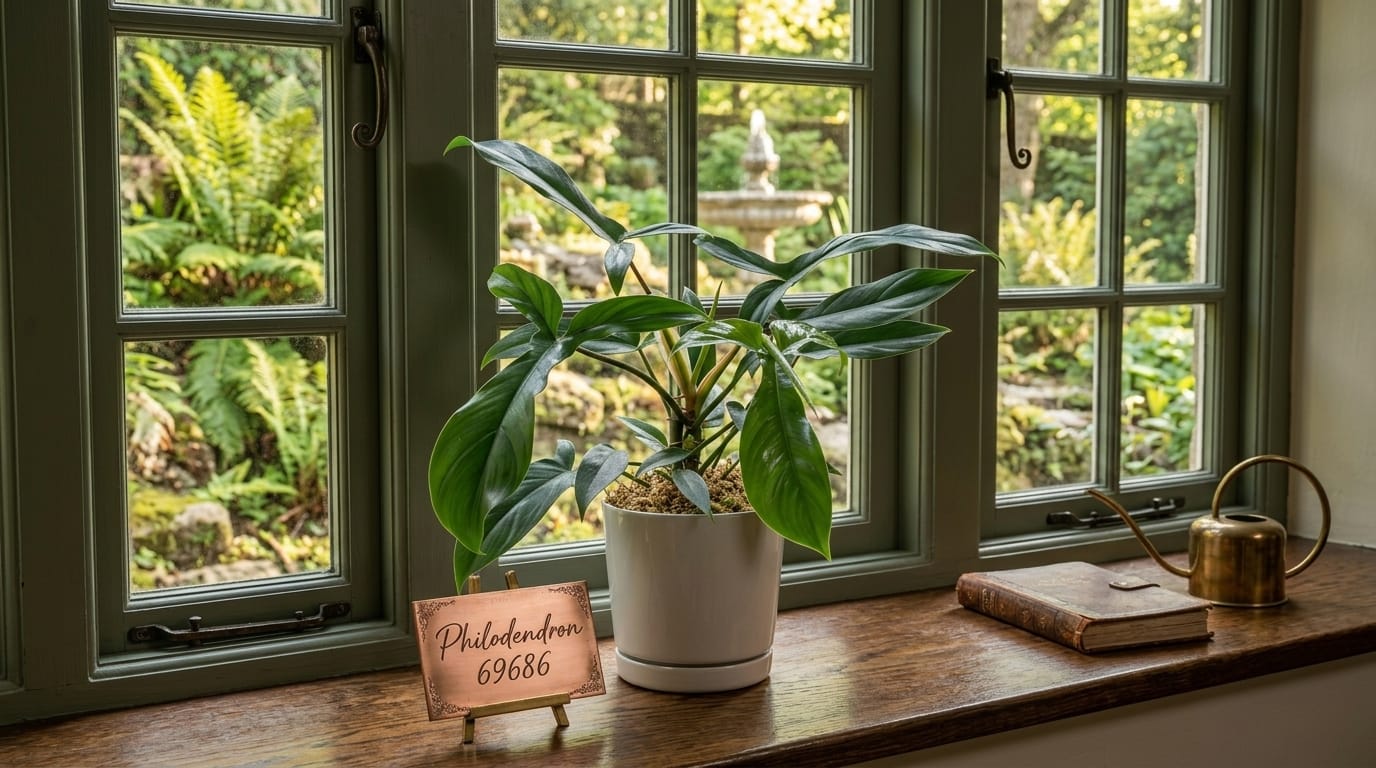
Here’s the exact care setup I use in my personal growing room for this plant.
Sunlight
Bright, indirect light is the clear sweet spot for Philodendron 69686.
Think of a spot near a window where sunlight never actually lands directly on the leaves.
An east-facing window that gets morning light is close to perfect.
I use sheer curtains on south-facing windows during summer afternoons.
This blocks the harsh direct rays without cutting off the bright ambient light.
Direct sun causes bleached, white or pale patches on the leaves. That damage is permanent.
Too little light slows growth and keeps the leaves small and simple-looking.
In winter, I supplement with a basic LED grow light for 12 to 14 hours daily.
A cheap grow bulb in a regular floor lamp near the plant works surprisingly well.
Keep it within 6 feet of a window for consistent results year-round.
Watering
The 69686 prefers a slight dry-out period between each watering session.
Always check the top 1 to 2 inches of soil before you water.
If those top inches are dry to the touch, go ahead and water.
If the soil still feels cool and damp, put the can down and come back later.
When I do water, I do it thoroughly.
I take the plant to the sink and flush water through until it drains freely from the bottom.
This practice washes away fertilizer salt buildup and keeps the root zone clean and oxygenated.
Never let this plant sit in a saucer with standing water below it.
Standing water causes root rot faster than almost anything else.
Yellow leaves usually signal overwatering. Drooping leaves typically mean the plant needs water.
Let the plant guide you. Don’t water by the calendar.
Fertilizers
Fertilize only during the active growing season: spring through early fall.
I use a balanced liquid fertilizer at half the label-recommended strength every 4 to 6 weeks.
Never apply fertilizer to dry or stressed soil. Water the plant first, then feed.
Over-fertilizing causes brown crispy leaf tips and harmful salt buildup in the root zone.
Skip fertilizing entirely from late October through February.
The plant is in a slow phase and doesn’t need or use extra nutrients during that time.
A slow-release granular fertilizer worked into the topsoil in spring is another solid option.
Soil Mix
The Philodendron 69686 absolutely needs a chunky, fast-draining soil mix.
Standard potting soil straight from the bag is too dense and stays wet too long.
Heavy wet soil smothers the roots and invites rot fast.
My personal mix for climbing philodendrons is:
- 40% quality potting mix
- 30% medium orchid bark chunks
- 20% perlite
- 10% worm castings
This mix drains fast while retaining just enough moisture to keep roots hydrated.
The aerial roots of this plant evolved to be exposed to air. They hate being buried in soggy mud.
A peat-perlite or peat-vermiculite blend also works well if orchid bark is unavailable.
The real test: water should flow freely and fully out of the drainage holes within seconds.
Humidity
This plant loves humidity. The higher, the better for vigorous climbing growth.
Aim for at least 60% relative humidity during the day.
Below 50% and you’ll start seeing brown, crispy edges appear on the leaves.
I keep a digital hygrometer in my plant room to track exact humidity levels.
Grouping plants together naturally creates a more humid microclimate around all of them.
A small ultrasonic humidifier nearby is the most reliable, consistent fix for dry homes.
Misting the leaves helps short-term but isn’t as effective as maintaining ambient humidity.
My home drops to 35 to 40% humidity in winter when the heat runs constantly.
I run a humidifier near my aroids from November through March every single year.
For serious climbing growth with dramatic leaf development, aim for 70% humidity or above.
Temperature
Keep your 69686 between 65°F and 85°F for best growth results.
That range covers most US homes comfortably through spring, summer, and fall.
Never expose it to temperatures below 55°F. Cold stress causes rapid leaf damage.
Keep it away from AC vents, exterior doors in winter, and drafty window gaps.
Sudden cold drafts are more damaging than sustained cool temperatures.
My plant room stays around 72°F year-round, and the 69686 thrives in that environment.
If you live in USDA Hardiness Zones 10 or 11, this plant can live outdoors in a shaded location.
For the majority of US growers, this is strictly an indoor plant.
Climbing Stake
A moss pole is not optional for this plant. It is essential.
The Philodendron 69686 is a climber at its core. Without vertical support, it gets leggy fast.
More importantly, the tri-lobed mature leaf transformation only happens as the plant climbs upward.
If you want those dramatic big-eared leaves, provide a tall moss pole from the start.
I use a 5-foot coir fiber moss pole for my personal 69686.
Keep the pole moist so the aerial roots can attach and absorb humidity directly from it.
Gently tie the stem to the pole with soft plant ties as new growth appears.
Once the aerial roots grip the pole on their own, you can safely remove the ties.
Check out my guide on Philodendron Whipple Way care for more detail on my moss pole setup method.
Toxicity
The Philodendron 69686 is toxic to humans, cats, and dogs. Take this seriously.
Like all philodendrons, it contains calcium oxalate crystals throughout its leaves and stems.
If ingested, these crystals cause oral irritation, swelling, drooling, and vomiting.
In pets, symptoms can also include numbness and difficulty swallowing.
Contact your vet immediately if your pet chews on any part of this plant.
Keep it on a high shelf or in a room your pets cannot access.
For a full and verified list of toxic plants, refer to the ASPCA Animal Poison Control Center.
Keep this plant out of reach of young children as well.
Repotting Guide
Repot your Philodendron 69686 when roots start pushing through the drainage holes.
This typically happens every 1 to 2 years as the plant grows.
Spring is the best time to repot. The plant enters active growth and recovers quickly.
Choose a new pot only 1 to 2 inches larger in diameter than the current one.
Going too large causes extra soil to stay wet too long, triggering root rot.
Always use your fresh chunky, well-draining soil mix when repotting.
Gently loosen the root ball before placing it into the new container.
Water thoroughly after repotting and return it to bright indirect light immediately.
Avoid fertilizing for the first 4 to 6 weeks after repotting to prevent root burn on tender new growth.
The plant may look slightly stressed for a week or two after moving. That’s completely normal.
Pruning Guide
The Philodendron 69686 doesn’t need heavy pruning to stay healthy and happy.
Light pruning helps manage the plant’s size and removes damaged or aging leaves.
Use clean, sharp scissors or pruning shears. Dirty tools spread disease between plants.
I wipe my blades down with 70% isopropyl alcohol before pruning any plant in my collection.
Cut the stem just above a leaf node when removing a section.
Remove yellow, brown, or mushy leaves immediately. They drain energy from the rest of the plant.
Prune in spring or early summer for the fastest recovery and regrowth.
Never remove more than one-third of the plant at one time.
Any healthy stem you prune off is a potential propagation cutting. Don’t throw those away.
Propagation Guide
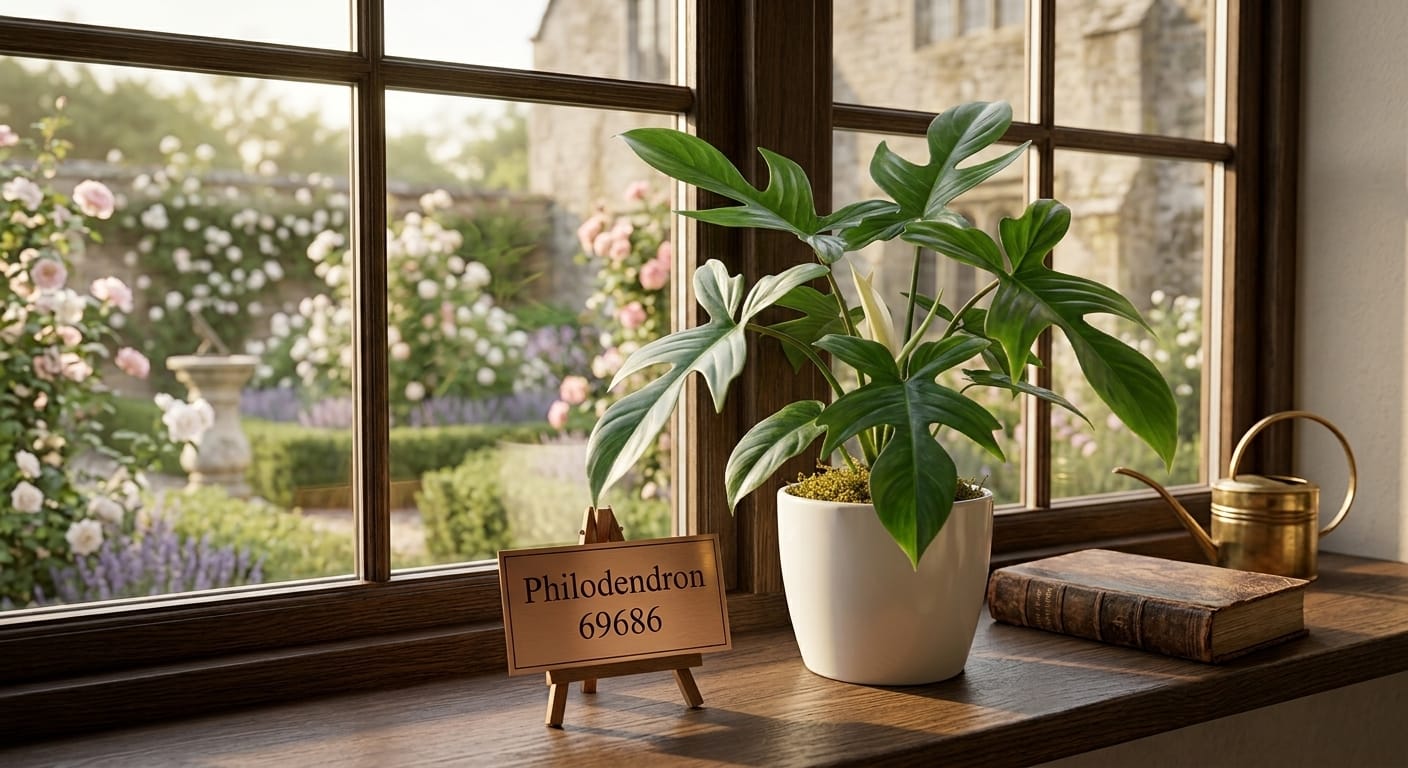
Propagating the Philodendron 69686 is one of my favorite things to do with this plant.
The most reliable method is stem cuttings rooted in sphagnum moss.
What you need: Sharp clean scissors, sphagnum moss, a small pot or propagation box, a humidity cover.
Step 1: Identify a healthy stem with at least one clear node and one attached leaf.
Step 2: Cut just below the node with your clean, sterilized scissors.
Step 3: Let the cut end air dry for 30 to 60 minutes to form a light callus.
Step 4: Place the cutting in lightly damp sphagnum moss inside your propagation container.
Step 5: Cover with a plastic bag or humidity dome to trap moisture around the cutting.
Step 6: Keep it in bright indirect light and maintain temps between 70°F and 80°F.
Roots should start forming within 3 to 6 weeks.
Once roots reach 2 to 3 inches in length, pot up into your regular chunky soil mix.
Water propagation also works, though sphagnum moss tends to produce stronger, more established root systems.
For more hands-on propagation details using similar techniques, check my guide on propagating Philodendron Brasil in soil.
Common Pests, Diseases, and Solutions
Eight years and 500-plus plants have taught me one undeniable truth about indoor pests: they always find you eventually.
The Philodendron 69686 attracts the same pest suspects as most aroids.
Spider mites leave fine webbing underneath leaves and cause a dusty, speckled appearance on the surface.
They thrive in hot, dry, low-humidity conditions indoors.
Keeping humidity above 60% is your first and best line of defense against them.
Treat active infestations with insecticidal soap spray, covering all leaf surfaces including the undersides.
Repeat every 5 to 7 days for at least 3 to 4 consecutive weeks.
I documented my personal spider mite battle in detail over at my Philodendron Melanochrysum care guide.
Mealybugs
Mealybugs look like tiny white cottony clusters. They hide in leaf joints and along stem creases.
Dab individual bugs with a cotton swab soaked in 70% isopropyl alcohol.
For larger outbreaks, spray the entire plant with a neem oil solution weekly until they are eliminated.
Thrips
Thrips cause silver streaking and distorted, deformed new growth on emerging leaves.
They are sneaky. I often don’t spot them until their damage shows on brand-new leaves.
Treat immediately with a spinosad-based insecticide or consistent neem oil spray applications.
Isolate the affected plant from all your other plants the moment you find thrips.
Root Rot
Root rot is caused by overwatering paired with poor soil drainage. It’s a disease, not a bug.
Symptoms include mushy stems at the base, sudden yellowing leaves, and a foul sour odor from the pot.
Remove the plant, inspect the roots, and cut away any dark brown or black mushy sections.
Let healthy remaining roots air out for about an hour, then repot into fresh dry soil.
Pricing Guide
The Philodendron 69686 is a collector’s plant. It is not available at most garden centers or big box stores.
Pricing varies based on plant size, seller reputation, and regional availability.
| Plant Size or Type | Typical US Price Range |
|---|---|
| Single Unrooted Cutting | $15 to $40 |
| Small Rooted Cutting | $30 to $80 |
| Established 4-inch Pot | $40 to $100 |
| Established 6-inch Pot | $80 to $150 |
| Large Specimen (6 to 8 inch pot) | $150 to $420+ |
Prices have dropped from the peak frenzy years of 2021 and 2022.
But this plant still commands a significant premium over common philodendrons.
Large, well-rooted specimens with multiple nodes and strong leaf development sit at the higher end.
Buying Guide
Finding a quality Philodendron 69686 takes more effort than a trip to Home Depot.
Where to Buy:
- Specialty aroid nurseries (search for aroid sellers in your specific US state)
- Etsy shops with strong verified reviews and high completed sale counts
- Facebook plant groups and local aroid swap events
- Plant festivals and regional collector meetups
What to Look For:
- Minimum 2 to 3 healthy, fully green leaves with no yellow
- No browning, softness, or mushiness at the stem base
- Visible firm nodes on the stem
- Roots emerging from drainage holes (sign of a well-established plant)
- A seller who includes care notes and has documented buyer feedback
Red Flags to Avoid:
- Suspiciously low prices on large “rare” plants (may be mislabeled common species)
- Heavily color-edited listing photos that make leaves look unnaturally saturated
- Sellers with zero reviews or only a handful of transactions
- Brown or soft stem bases visible in the listing photos
When possible, buy from a seller located as close to you as possible.
Shorter shipping time equals less stress on the plant. That matters a lot with aroids.
Common Mistakes to Avoid
These are the mistakes I see most often from new 69686 growers.
Mistake 1: Using standard potting soil without amendments.
Regular potting mix holds moisture too long for this plant. Always add orchid bark and perlite.
Mistake 2: Skipping the climbing pole.
The dramatic tri-lobed mature leaves will not develop without vertical support. A moss pole is not optional.
Mistake 3: Watering on a fixed weekly schedule.
This plant doesn’t run on your calendar. Check the soil every single time before watering.
Mistake 4: Ignoring humidity.
The 69686 survives in average household humidity but won’t truly thrive. Invest in a small humidifier.
Mistake 5: Placing it in direct sun.
Even indirect sun through glass can scorch and bleach those beautiful mature leaves permanently.
Mistake 6: Repotting too often or into a too-large pot.
This plant tolerates being slightly root-bound. Repot only when roots are clearly overflowing the container.
Mistake 7: Not watching the aerial roots.
Those thick aerial roots are the plant signaling it wants to climb. Give them a moist pole to grip.
FAQ
Q: Is Philodendron 69686 rare?
Yes, it is genuinely rare. Most plant shops and garden centers don’t stock it.
You’ll find it primarily through specialty aroid nurseries and online plant markets like Etsy.
Q: How fast does Philodendron 69686 grow?
It’s a vigorous grower when given proper light, humidity, and climbing support.
During the active growing season, expect a new leaf roughly every 3 to 6 weeks.
Q: What is the difference between Philodendron 69686 and Philodendron joepii?
Both are tri-lobed climbers and look strikingly similar.
The 69686 has more rounded, smooth-edged lobes. The joepii has more pointed, jagged-edged lobes.
Q: Is Philodendron 69686 the same as Philodendron mexicanum?
No, they are different plants. The mexicanum has dark pink or burgundy undersides on its leaves.
The 69686 has all-green leaves on both the top and underside surfaces.
Q: Why won’t my Philodendron 69686 grow tri-lobed leaves?
The tri-lobed mature leaf form only develops as the plant climbs upward on a vertical support.
Without a moss pole, the plant stays in its simpler juvenile leaf form indefinitely.
Q: Can I grow Philodendron 69686 outdoors in the US?
Only in USDA Hardiness Zones 10 and 11, such as South Florida, Hawaii, and parts of Southern California.
For the vast majority of US growers, this is a strictly indoor houseplant.
Q: How do I tell a real Philodendron 69686 from a look-alike?
Look for all-green tri-lobed leaves with smooth, rounded edges and that signature hourglass pinch in the leaf center.
Ask sellers for photos of multiple growth stages before purchasing.
Conclusion
The Philodendron 69686 is one of the most fascinating plants in my entire growing collection.
Its story starts in a Brazilian landscape architect’s private garden. It passed through the hands of a world-class botanist.
It has been in collector circulation for decades and still has no official scientific name.
That makes it unique in a way most plants simply are not.
But here is the real truth about growing it: the care is not complicated.
Bright indirect light, chunky well-draining soil, humidity above 60%, and a tall moss pole.
Water when the top soil dries out. Fertilize during the growing season. Keep it away from cold drafts.
Do those things consistently and this plant will produce some of the most dramatic leaves you’ve ever seen indoors.
If you’re new to philodendrons, I’d suggest starting with something more accessible first.
The Philodendron Prince of Orange was actually the plant that started my entire growing journey.
The Philodendron Micans is another fantastic starting point with very forgiving care needs.
Those plants will teach you the fundamentals of aroid care without the higher price tag.
Once you’ve got a feel for how philodendrons communicate, the 69686 is absolutely worth adding.
It’s a botanical mystery that grows right on your windowsill. And honestly, that’s pretty remarkable.