Philodendron Red Congo Care Indoors: The Complete Rojo Congo Guide (2026)

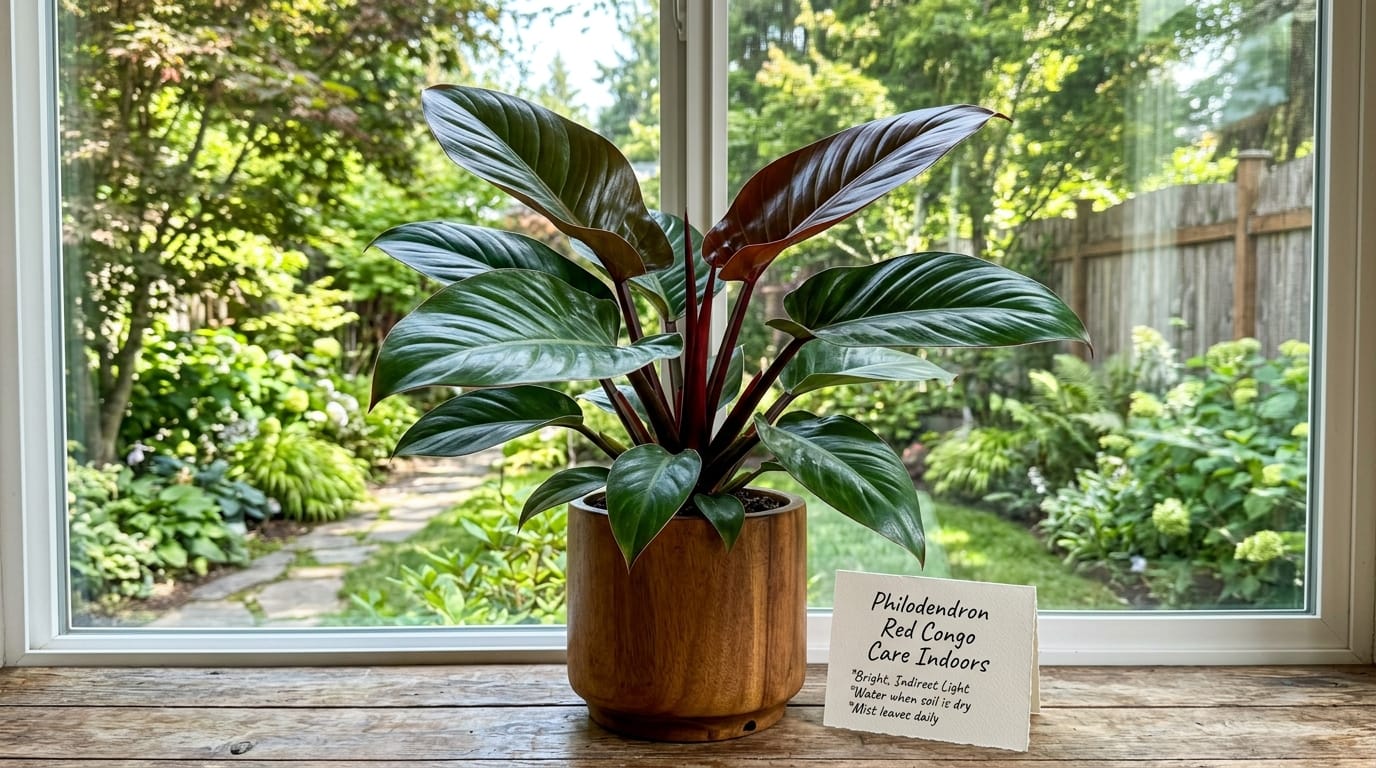
By the time I brought home my Philodendron Red Congo, I was about a year into serious philodendron collecting, with something like 30 plants crammed onto every shelf I owned. I thought I’d seen most of what this genus could do.
Then I turned a corner in a local nursery, coffee in hand, and saw a Philodendron Rojo Congo with a new leaf still unfurling — deep burgundy, almost brownish-red, with thick purple-black petioles that stopped me mid-step. I didn’t bother reading the tag. I carried it straight to the register.
That impulse buy turned into one of the better calls I’ve made in this hobby. I’ve grown this plant for several years now, pushed dozens of dramatic new leaves out of it, made my share of watering mistakes along the way, and learned what actually keeps it happy versus what the internet assumes keeps it happy.
This guide covers what that experience taught me. No filler, no generic advice — just what’s worked, and what hasn’t, with this specific plant in my own home.
What Is the Philodendron Rojo Congo (Red Congo)?
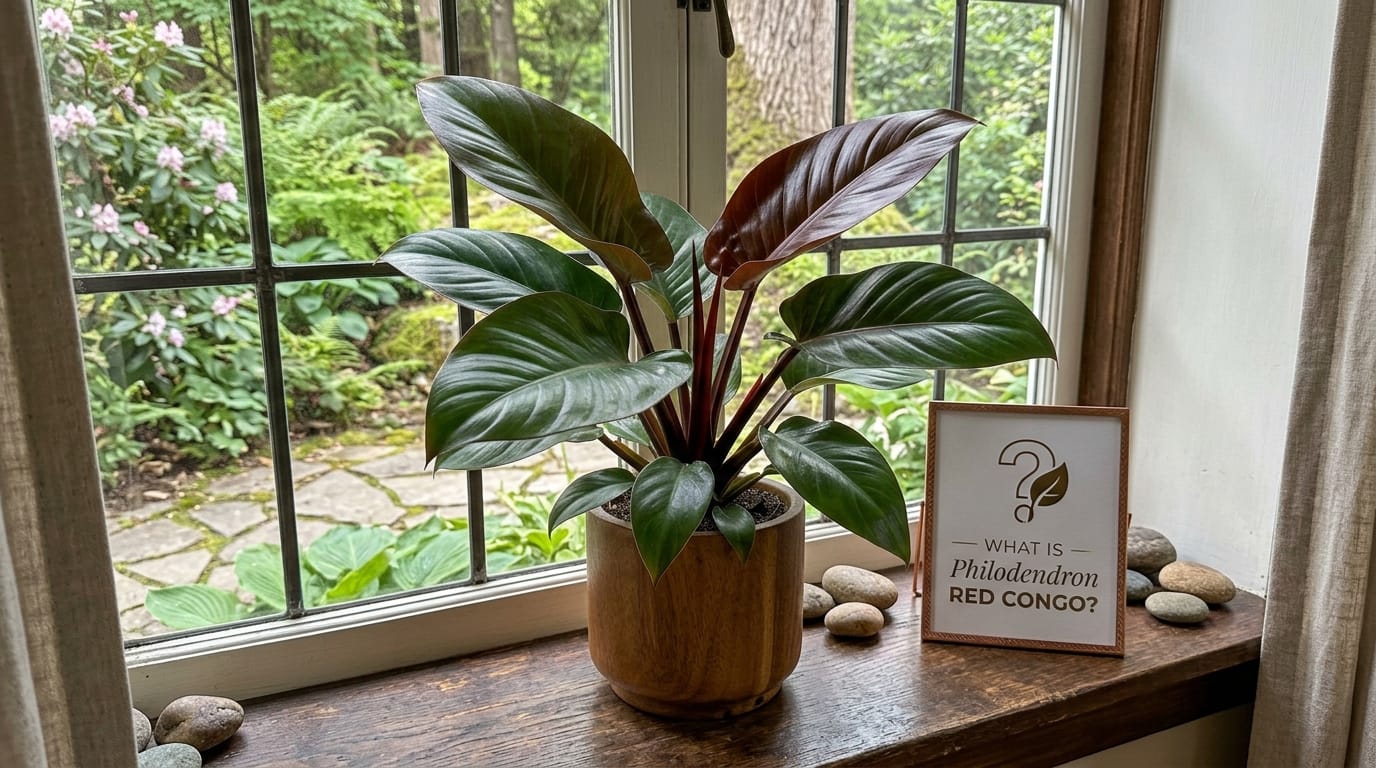
The Philodendron Rojo Congo is a hybrid plant, not a naturally occurring wild species.
It was purposely created through a planned breeding program in the state of Florida.
A plant breeder named Marian Wincenty Osiecki developed it for a company called Oglesby Plants International.
The objective was straightforward: breed a large, vigorous, self-supporting philodendron with striking foliage colors.
In 1995, Osiecki crossed Philodendron ‘Imperial Red’ (the female parent) with Philodendron tatei spp. melanochlorum (the male parent).
The cross produced a seedling that was selected in 1996.
That seedling became the Rojo Congo we grow in our homes today.
The result exceeded the original goal in almost every way.
The Rojo Congo inherited the Imperial Red’s dramatic coloration and the tatei’s large, thick leaf structure.
It also became significantly more vigorous than either of its parent plants.
One critical thing sets the Rojo Congo apart from most other philodendrons in your collection.
It is self-heading. It does not vine, trail, or climb.
It grows upright and outward from a central stem, like a compact tropical shrub.
This makes it one of the cleanest, most architectural philodendrons you can keep indoors.
Scientific, Botanical, and Common Name
| Detail | Information |
|---|---|
| Scientific Name | Philodendron hybrid-cultivar ‘Rojo Congo’ |
| Male Parent | Philodendron tatei Krause spp. melanochlorum (Bunting) Bunting |
| Female Parent | Philodendron cultivar ‘Imperial Red’ |
| Plant Family | Araceae (Aroid family) |
| Genus | Philodendron |
| US Plant Patent | USPP14116P3 (Filed December 2001; granted August 2003) |
| Assignee | Oglesby Plants International Inc. |
| Common Names | Rojo Congo, Red Congo, Congo Rojo, Rojo Philodendron |
The plant holds US Plant Patent USPP14116P3, which has now expired, making it freely available for commercial propagation.
That expiration is one reason the Rojo Congo is so widely available and affordable today.
In stores, you’ll sometimes find it labeled as Philodendron Imperial Red or even Philodendron Black Cardinal.
These are related but genuinely different cultivars. Knowing the difference saves you from disappointment.
The Rojo Congo has thicker, more broadly ovate leaves and distinctive dark purple-brown petioles.
The Imperial Red has slightly less dramatic petioles and subtly different leaf proportions.
If you’re shopping and unsure, look at the petiole color. Purple-brown equals Rojo Congo.
Native Origin
The Rojo Congo itself has no natural native range in the wild.
It was entirely created in a controlled greenhouse environment in Altha, Florida, in the mid-1990s.
However, understanding its parent plants’ origins genuinely helps you care for it better indoors.
The male parent, Philodendron tatei, is native to wet tropical areas in South America.
Specifically, it grows naturally in northern Brazil, Guyana, Peru, and Venezuela.
These are dense, humid rainforest environments with filtered, dappled light under a thick canopy.
The forest floor where these plants grow rarely sees direct harsh sunlight.
It stays warm, humid, and consistently moist but never waterlogged.
Understanding this environment is the key to understanding what the Rojo Congo needs from you indoors.
It wants warmth, bright filtered light, good drainage, and moderate to high humidity.
That matches exactly what a South American rainforest understory provides.
Characteristics and Features
Appearance
The Philodendron Red Congo is one of the most visually dramatic aroids you can buy at a regular plant shop.
Its defining characteristic is the leaf color transformation.
New leaves emerge tightly rolled and colored in deep burgundy, maroon, and brownish-red tones.
Over seven to fourteen days, they slowly unfurl and transition to very dark, rich green.
The undersides of mature leaves retain a brownish or reddish-green undertone.
Leaf blades are broadly ovate with a slightly asymmetric base and an acute tip.
Each mature leaf measures roughly 18 inches long and 12 inches wide under good growing conditions.
The texture is thick, leathery, and slightly glossy on the upper surface.
The petioles (the stems that connect each leaf to the main plant) are a standout feature.
They are thick, firm, and dark purple-brown in color.
This purple-brown color persists on the mature petioles and gives the whole plant a moody, dramatic look.
The petiole sheaths at the base of each stalk are long and red-purple.
Aerial roots are numerous and thick. Many have a subtle reddish zone near their tips.
All of this together creates a plant with a bold, dark, architectural presence in any room.
Growth Pattern
Understanding how the Rojo Congo grows prevents a lot of confusion for new owners.
This plant is self-heading, which means it does not produce vining or trailing stems.
Unlike a Philodendron Micans or a Heartleaf Philodendron, it will not drape down a bookshelf.
All new leaves grow from a single central growing point on the main stem.
Each new leaf forms directly above or adjacent to the previous one.
The plant expands mostly outward and slightly upward as it matures.
A healthy adult Rojo Congo can reach approximately 3 feet tall and up to 4 feet wide.
Growth rate is relatively fast under ideal conditions during spring and summer.
Expect one to two new leaves per month during the active growing season.
New leaves stay tightly rolled for several days before slowly unfurling on their own.
Do not try to unroll them by hand. Forced unrolling tears the delicate leaf tissue.
Dormancy
The Rojo Congo does not go through a dramatic full dormancy period when kept indoors.
Growth simply slows noticeably during fall and winter as light levels and day length drop.
During cooler months, expect one new leaf approximately every six to eight weeks.
This slowdown is completely normal and not a sign that something is wrong.
Do not try to push more growth by increasing watering or fertilizer during this period.
Doing so is one of the top causes of root rot on this plant.
I keep my Rojo Congo near a south-facing window during winter months.
Even with reduced daylight hours, my plant still produces at least one leaf every five to six weeks.
If you’ve added a grow light during winter, expect growth to remain a bit more active.
Benefits of Growing Philodendron Red Congo Indoors
The Rojo Congo earns its place in your home in more ways than just looking good.
Here are the real, practical benefits of keeping one:
Air Quality. Philodendrons are widely recognized for removing common indoor air pollutants.
The Rojo Congo’s large leaf surface area makes it particularly effective at this.
Low Maintenance. It requires no climbing stake, no trellis, and no pruning to stay healthy.
Beginner Friendly. Its tolerance for imperfect care makes it genuinely forgiving for newer plant owners.
No Support Structure Needed. Self-heading plants need no additional hardware. It just grows on its own.
Design Impact. The dark leaves and purple-brown stems make it a natural focal point in any room.
Space Efficient Vertically. Unlike trailing plants that need height, the Rojo Congo spreads outward. It fits well on floors and low plant stands.
Durable. It bounces back from missed waterings and minor care errors better than most large-leaved tropicals.
Philodendron Red Congo Care Guide Indoors
Sunlight
Light is the single factor that controls the Rojo Congo’s color intensity and overall growth rate.
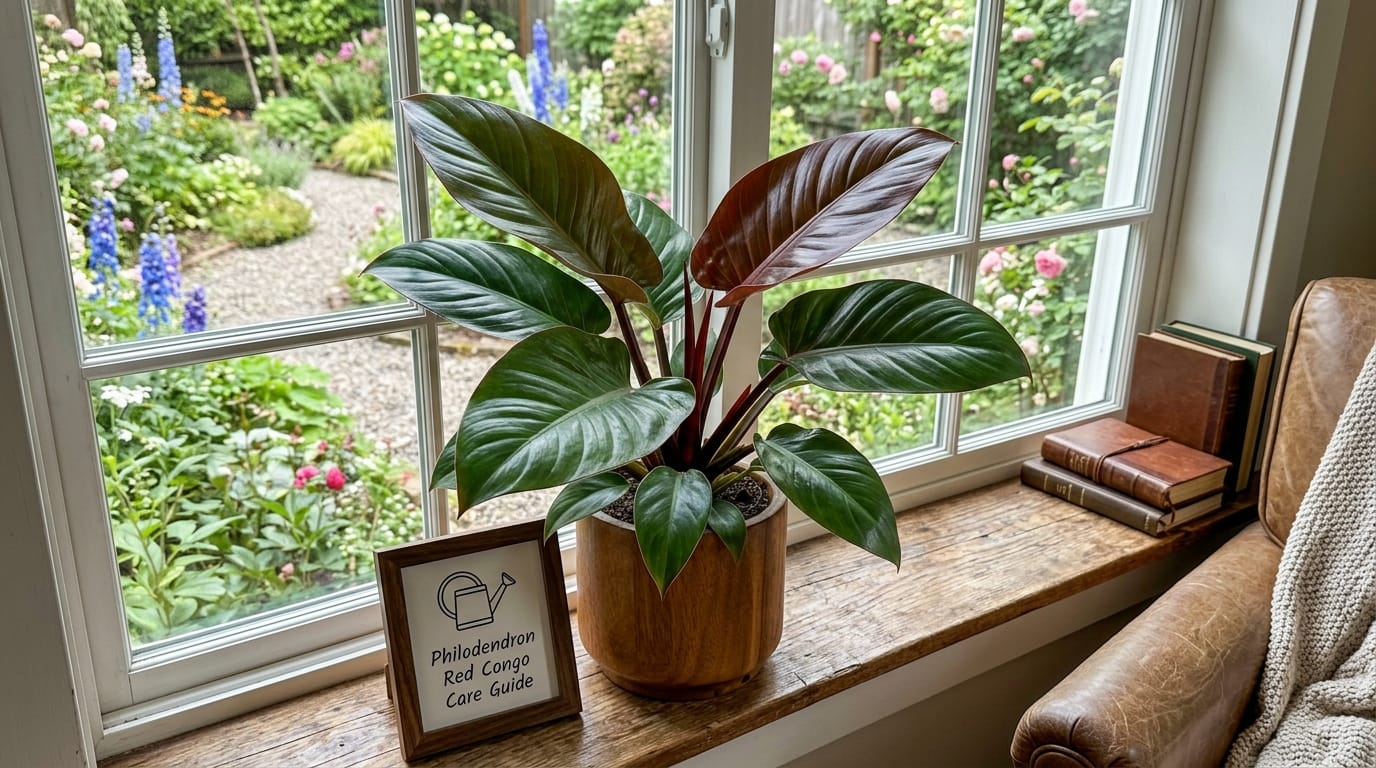
This plant needs bright, indirect light for a minimum of three to four hours daily.
Near a north-facing window only, growth stalls and the burgundy color fades to muddy green.
An east or west-facing window is usually the ideal spot for this plant indoors.
If you have a south-facing window, position the plant a few feet back from the glass.
Direct afternoon sun burns those beautiful dark leaves, and the damage is permanent.
I learned this the hard way during my first summer with the Rojo Congo.
One afternoon of harsh direct western sun left a bleached, white patch on one leaf.
No amount of care reversed that damage. That leaf stayed marked for its entire life.
Now I use a sheer curtain on my south-facing windows from June through September.
In winter, I pull the plant closer to maximize the weaker winter sunlight.
If your home doesn’t get much natural light, a basic LED grow light works very well.
No specialty equipment is required. A simple clip-on LED bulb in a standard floor lamp works.
Key light signals to watch:
- New leaves coming in smaller than old ones = needs more light.
- Leaf color fading from dark green to lighter green = needs more light.
- Tips burning or looking pale and washed out = too much direct sun.
Watering
Watering the Rojo Congo is where most beginners make their first and most costly mistake.
This plant wants to partially dry out between waterings, but it should never go completely bone dry.
The rule is simple: water thoroughly, then wait until the top two inches of soil feel dry.
Never water on a strict schedule. Check the soil first, every single time.
A fixed calendar (watering every Tuesday, for example) ignores what the plant actually needs.
In spring and summer, you might water every seven to ten days.
In fall and winter, that may stretch to every twelve to fourteen days or longer.
When you do water, do it thoroughly. Let water flow out of the drainage holes.
This flushes out accumulated mineral salts that build up in the soil over time.
After thirty minutes, empty the saucer under the pot. Sitting water causes root rot fast.
Here’s the most reliable method I use: I lift the pot before and after watering.
A very light pot means it’s dry and needs water. A heavy pot means wait.
Signs of overwatering: Yellow, soft, mushy leaves. Foul smell from the soil.
Signs of underwatering: Crispy brown leaf edges. The soil pulling away from the pot sides.
A forum member on Garden.org who grew a Congo Rojo summed it up perfectly:
“This is a really simple plant & I was giving it tooooooo much love!” — Cherished, Garden.org Plant Forum (Source: https://garden.org/thread/view/67888/Am-I-overwatering-my-congo-rojo-philodendron/)
That comment stuck with me. This plant truly responds best to benign neglect over enthusiastic care.
Fertilizers
The Rojo Congo does not need heavy, frequent feeding to grow well.
Overfeeding it causes more harm than underfeeding ever will.
Use a balanced liquid fertilizer with an NPK ratio of 20-20-20.
Fertilize once a month during the active growing season only: March through September.
Always dilute the fertilizer to half the recommended strength listed on the label.
Full-strength fertilizer can burn the root tips and cause browning along the leaf margins.
Stop fertilizing completely from October through February. The plant is resting.
Feeding a resting plant pushes salt buildup in the soil and stresses the roots.
If you see yellow spotting or crispy brown margins, stop fertilizing and flush the soil thoroughly.
My personal routine: I apply a slow-release granular fertilizer at the start of every spring.
Then I supplement with diluted liquid fertilizer every four weeks through the summer months.
This combination keeps the leaves large, dark, and deeply colored throughout the growing season.
Soil Mix
The right soil is one of the most important decisions you’ll make for this plant.
Standard store-bought potting soil alone is too dense. It stays wet too long.
The Rojo Congo’s roots need excellent drainage and good airflow between soil particles.
Here is the exact soil mix I use for every Rojo Congo in my collection:
- 40% quality potting mix (Miracle-Gro or FoxFarm work well)
- 30% perlite (for drainage and aeration)
- 20% orchid bark (for chunky structure and root airflow)
- 10% worm castings (for gentle, slow-release natural nutrients)
Mix everything together until it feels loose, chunky, and airy to the touch.
Squeeze a handful. It should hold shape briefly, then fall apart easily.
If it stays in a muddy, wet clump, it’s still too dense. Add more perlite.
This mix has eliminated every root rot problem I used to experience with this plant.
The chunkier the soil, the harder it is to accidentally waterlog the roots.
Humidity
The Philodendron Red Congo is far less demanding about humidity than many other tropical aroids.
Standard household humidity between 40% and 60% is usually sufficient for healthy growth.
My house typically runs at around 45% relative humidity, and my Rojo Congo grows beautifully.
That said, I have noticed larger, glossier, more dramatic leaves when humidity is consistently higher.
During dry winter months, I run a small humidifier near my main plant grouping.
Grouping your Rojo Congo with other plants also raises local humidity through natural transpiration.
Do not mist the leaves directly. This advice gets repeated on a lot of plant blogs, and it’s wrong.
Wet leaves sitting in low-airflow conditions invite fungal spots and bacterial leaf rot.
If you want to boost humidity safely, a pebble tray with water works well.
Fill a shallow tray with pebbles and water. Set the pot on the pebbles above the waterline.
As the water evaporates, it raises local humidity right around the plant.
For comparison, my Philodendron Melanochrysum demands 70%+ humidity at all times. The Rojo Congo is far more relaxed.
Temperature
The Rojo Congo thrives in temperatures between 65°F and 85°F (18°C to 29°C).
This is a range that most US homes maintain year-round without any special equipment.
The plant is not cold-hardy. It will not survive frost or freezing temperatures.
Keep it away from cold drafts near windows, exterior doors, and air conditioning vents.
A sudden cold draft can cause overnight leaf yellowing or wilting on this plant.
Temperature drops below 55°F (13°C) will stress the plant and stall all new growth.
The worst scenario is a rapid temperature swing between warm and cold conditions.
Stable, consistent warmth is what the Rojo Congo wants more than anything else in winter.
Avoid placing it near a door that gets opened and closed frequently on cold days.
During summer, my plant sits near a window that stays warm without getting direct harsh sun.
Climbing Stake
The Philodendron Red Congo does not need a climbing stake or a moss pole.
This is one of the most useful things about this plant for indoor growing.
Unlike the Philodendron Silver Sword or other climbing varieties, the Rojo Congo supports itself.
Its thick stems are sturdy enough to hold the large leaves upright without any external help.
The self-heading growth habit means each leaf supports the next one as the plant matures.
Adding a stake won’t help or hurt the plant in any meaningful way.
If you’ve been wondering whether to buy a moss pole for your Rojo Congo, don’t bother.
Put that money toward a quality humidity meter or a better fertilizer instead.
Toxicity
This section is critical for any household with pets or young children. Please read it carefully.
The Philodendron Rojo Congo is toxic to humans, cats, and dogs.
Like all members of the Philodendron genus, it contains calcium oxalate crystals throughout every part of the plant.
When chewed or ingested, these crystals cause immediate burning and intense irritation in the mouth and throat.
Symptoms in pets include drooling, pawing at the mouth, swelling, vomiting, and difficulty swallowing.
In humans, direct skin contact with the plant sap during pruning or repotting can cause irritation or a rash.
Always wear disposable gloves when repotting, pruning, or propagating this plant.
Keep it in a location completely out of reach of curious pets and young children.
If a pet chews on this plant, contact your veterinarian or the ASPCA Animal Poison Control Center immediately.
The plant does not need to be eaten in large amounts to cause significant discomfort.
Repotting Guide
The Rojo Congo is a vigorous grower that needs repotting every one to two years.
The clearest signal that it needs a new home is roots growing out of the drainage holes.
Another sign: the soil dries out extremely fast, within one or two days of watering.
This means roots have filled the pot and displaced most of the soil.
Always choose a pot that is only one to two inches larger in diameter than the current one.
Going too large creates a lot of excess wet soil around the roots, increasing rot risk.
The best window for repotting is early spring, just as active growing begins again.
My exact repotting process:
- Water the plant the day before repotting. Hydrated roots are more flexible and less prone to tearing.
- Tip the plant gently sideways and ease the root ball out of the pot carefully.
- Shake off the old soil and inspect every root. Trim any black, mushy, or rotten sections with sterilized scissors.
- Fill the bottom of the new pot with several inches of fresh, chunky soil mix.
- Place the root ball inside and fill in around the sides with fresh mix.
- Tamp down lightly to remove large air pockets. Water thoroughly and let it drain fully.
- Move the plant back to its usual spot. Avoid direct sun for the first one to two weeks.
Do not fertilize for at least four to six weeks after repotting.
Fresh soil provides sufficient nutrients. Let the roots settle and recover first.
Pruning Guide
The Rojo Congo requires very little pruning to stay healthy and looking good.
This plant naturally sheds its oldest and lowest leaves over time as new ones form.
Those yellowing lower leaves are normal. They are part of the plant’s natural growth cycle.
Remove a lower leaf only when it is fully yellow and pulling away from the stem easily.
Trying to remove a still-green or half-yellow leaf before it’s ready can leave an open wound.
Open wounds on the stem invite bacterial infection, especially in humid indoor environments.
Pruning for the Rojo Congo is mostly about size control and aesthetics, not plant health.
If the plant is spreading wider than your space allows, you can trim outer stems carefully.
Use clean, sharp pruning shears. Always sterilize your tools with rubbing alcohol before and after.
Make cuts just below a leaf node to keep the plant looking tidy.
Because the Rojo Congo is self-heading and doesn’t produce vining stems, pruning sessions are short and simple.
Propagation Guide
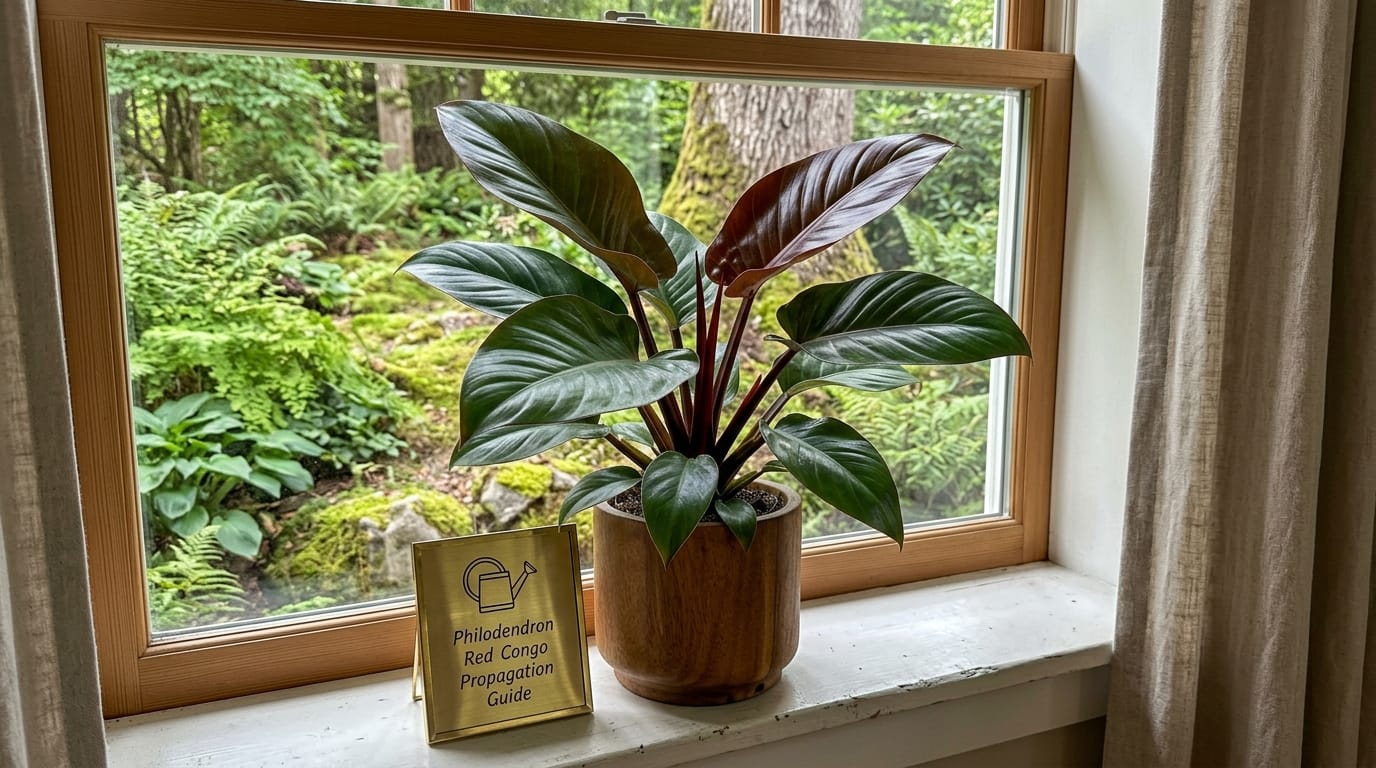
Here is something many plant blogs skip over entirely: propagating the Rojo Congo is genuinely tricky.
Standard water propagation of a simple leaf or single stem cutting almost always fails on this plant.
The reason goes back to its self-heading growth habit.
Vining philodendrons are easy to propagate because each node along their stem can produce roots.
The Rojo Congo grows from a single central head. There are no long trailing stems to cut.
A cutting without roots and a healthy growth point simply has no pathway to regenerate.
The only reliable propagation method for home growers is stem division.
Here’s exactly how to do it:
- Wait until your mature Rojo Congo has developed at least two visible growth heads at the base.
- Remove the entire plant from its pot.
- Gently separate the root mass at the point where the two heads divide.
- Each division must have its own active root system and at least one growing tip.
- Use a clean, sterilized blade to cut through any roots that can’t be separated by hand.
- Dust the cut surfaces lightly with cinnamon powder, which acts as a natural antifungal.
- Pot each division into fresh, chunky, well-draining soil immediately.
- Water lightly and place in a warm spot with bright indirect light.
- Avoid direct sun on a newly divided plant. The root system needs a few weeks to stabilize.
Expect a slow start after division. New growth often pauses for three to six weeks.
Propagation by seed is technically possible but practically unavailable to home growers.
Seeds are rarely produced and virtually impossible to source commercially.
Division remains your best and most reliable option at home.
Common Pests, Diseases, and Solutions
The Rojo Congo’s thick, leathery leaves make it more resistant to common pests than thinner-leaved philodendrons.
But no plant is completely immune. Here is what you might encounter and how to handle it.
Fungus Gnats
Fungus gnats are the most common issue with the Rojo Congo, and they live in the soil, not on the leaves.
They love moist organic soil and are attracted to any consistently wet potting mix.
Prevention: Let the top inch of soil dry out between waterings. This alone discourages gnats significantly.
Treatment: Drench the soil with a diluted hydrogen peroxide solution (1 part 3% H2O2 to 4 parts water).
This kills larvae in the soil without harming the plant’s root system.
Add sticky yellow traps nearby to catch adult gnats flying around the room.
Spider Mites
Spider mites appear most often during dry winter months when indoor humidity drops.
Look for very fine webbing on the undersides of leaves and tiny pale specks on the leaf surface.
Treatment: Wipe affected leaves with a damp cloth, then spray with diluted neem oil or insecticidal soap.
Repeat the spray every five to seven days for at least three consecutive weeks.
Breaking the mite reproduction cycle requires consistent, repeated treatment.
Mealybugs
Mealybugs appear as white, fluffy, cottony clusters in the leaf axils and along the petioles.
Treatment: Dab individual clusters with a cotton swab dipped in 70% isopropyl rubbing alcohol.
For larger infestations, spray the entire plant with neem oil mixed with insecticidal soap.
Inspect every plant nearby. Mealybugs spread quickly across grouped plants.
Root Rot (Pythium and Phytophthora)
Root rot is the most serious threat the Rojo Congo faces indoors. It is almost always self-inflicted.
Overwatering combined with dense, poorly draining soil is the cause nearly every time.
Signs: Widespread yellowing leaves, sudden wilting despite wet soil, foul odor from the pot.
Treatment:
- Remove the plant from its pot immediately.
- Trim all black, mushy, or discolored roots with sterilized scissors.
- Allow the exposed roots to air-dry for thirty minutes.
- Dust lightly with cinnamon powder as a natural antifungal barrier.
- Repot in fresh, well-draining chunky mix in a clean pot with drainage holes.
- Do not water for three to five days after repotting to allow root wounds to callous.
Bacterial or Fungal Leaf Spot
Dark, water-soaked spots on the leaf surface usually indicate a bacterial or fungal infection.
This happens most often when water sits on the leaves for extended periods.
Prevention: Always water at the base of the plant, never overhead. Improve air circulation around the plant.
Treatment: Remove affected leaves. Apply a copper-based fungicide spray for severe cases.
Pricing Guide
The Philodendron Red Congo is one of the most accessible large-statement plants you can buy in the US.
Since its plant patent expired, commercial producers can grow and sell it freely.
This keeps prices low and availability high across the country.
Here is a general price breakdown based on current US market pricing in 2026:
| Plant Size | Approximate Price Range |
|---|---|
| Small (4-inch pot) | $10 to $25 |
| Medium (6 to 8-inch pot) | $25 to $55 |
| Large (10-inch pot) | $55 to $150 |
| Specimen (25+ inches tall) | $150 to $300 |
Prices from big-box stores like Home Depot and Walmart tend to be on the lower end.
However, those plants are often sitting in incorrect nursery soil and may have been stressed during shipping.
Plants from specialty plant shops or reputable online aroid sellers cost more but are typically healthier.
In my experience, spending a bit more at a specialty source is worth it every single time.
You bring home a healthier, better-established plant that adjusts to your home much faster.
Buying Guide
Knowing exactly what to look for prevents you from buying a struggling plant.
Here is my complete inspection checklist for buying a Rojo Congo in person or online.
Check the leaves first. Look for dark green, glossy mature leaves with no widespread brown, crispy edges.
A few yellowing lower leaves are normal and acceptable. Ignore those.
Widespread yellowing across several leaves at different levels is a red flag for root problems.
Check the petioles. Healthy petioles should be firm, thick, and dark purple-brown throughout.
Any mushy or soft collapsing petioles signal severe overwatering or rot. Walk away from that plant.
Check for pests. Flip several leaves over and inspect the undersides for webbing, white powder, or moving specks.
Check the leaf axils where stems meet the main stalk for cottony mealybug clusters.
Check the soil. The soil surface should feel lightly moist or just slightly dry.
A soaking wet, heavy pot that was clearly just watered before sale can mask root rot issues.
Check the roots if possible. Gently slide the root ball out of the pot to peek inside.
White or light cream roots are healthy. Dark brown or black roots indicate rot.
Confirm the plant ID. The Rojo Congo is frequently sold under incorrect names. True identification details:
- Leaves: Thick, broadly ovate, very dark green when mature.
- Petioles: Thick and dark purple-brown.
- Petiole sheaths: Long, red-purple.
- Growth habit: Self-heading, compact, spreading outward.
If petioles look mostly green or brownish-green, you may have an Imperial Red, not a Rojo Congo.
When buying online: Purchase only from sellers with clear, recent photos showing the actual plant being shipped.
Read reviews specifically about packaging and plant condition on arrival.
Ask the seller directly how they ship in cold weather if you’re ordering in fall or winter.
Cold damage during transit is irreversible and often doesn’t show up until days after the plant arrives.
Common Mistakes to Avoid
Eight years of growing philodendrons means eight years of watching both myself and others make the same avoidable errors.
Here are the ones that come up most often with the Rojo Congo specifically.
Watering on a fixed schedule. Your plant does not care what day of the week it is. Always check the soil before watering.
Using unAmended nursery potting soil. Standard potting mix retains too much moisture. Always add perlite and orchid bark to improve drainage.
Placing it too far from a window. Without enough light, new leaves arrive small, the dark green color fades, and the burgundy coloring on new growth weakens.
Misting the leaves. Wet leaves in low-airflow rooms are an open invitation for fungal leaf spot and bacterial rot.
Letting dust build up on the leaves. Large leaves collect household dust fast. Dust blocks light absorption, which slows photosynthesis.
Wipe the leaves with a damp cloth every two to three weeks to keep them clean and efficient.
Repotting too frequently or into a pot that’s too large. The Rojo Congo actually prefers being mildly root-bound. Repot only when roots actively escape the drainage holes.
Fertilizing in fall and winter. The plant is resting. Feeding it during dormancy creates salt buildup in the soil and causes root burn.
Confusing natural leaf cycling with a plant problem. Older lower leaves will always yellow and drop as the plant matures. This is completely normal.
The question to ask is whether new leaves are still forming, not whether old ones are dropping.
Trying to unroll a new leaf. New leaves stay tightly rolled for days while they develop. Never try to help them open.
Forced unrolling tears the delicate internal tissue and leaves permanent damage on the new leaf.
Frequently Asked Questions
How fast does a Philodendron Rojo Congo grow indoors?
Under good conditions, expect one to two new leaves per month during spring and summer.
In fall and winter, growth slows to roughly one leaf every six to eight weeks.
Why is my Rojo Congo not producing any new leaves?
The most common causes are low light, temperature drops, or recent repotting stress.
After repotting, the plant often pauses new leaf production for four to six weeks while its roots settle.
Can I grow a Philodendron Red Congo in water long-term?
No. This plant needs aerated, well-draining soil to thrive and stay healthy long-term.
You can temporarily root divisions in water, but transfer them to chunky soil as soon as roots appear.
Why are my Rojo Congo leaves turning yellow?
Widespread yellowing across multiple leaf levels most commonly indicates overwatering.
Let the soil dry out more thoroughly between waterings and check that drainage holes are not blocked.
If only the oldest, lowest leaves are yellowing, that’s the plant’s normal cycling process.
Why do new leaves come in smaller than the old ones?
Smaller new leaves are almost always a sign of insufficient light.
Move the plant closer to a bright window or add a supplemental grow light.
Is the Philodendron Rojo Congo considered a rare plant?
No. It is widely commercially available across the US and most of the world.
Its original plant patent expired years ago. Commercial growers produce it freely in large quantities.
Can a Rojo Congo and an Imperial Red grow well together in the same space?
Absolutely. They require virtually identical care and look stunning displayed side by side.
The contrast between their slightly different leaf tones creates a very appealing display.
What does a healthy new Rojo Congo leaf look like when it first appears?
It emerges as a tightly rolled cylindrical shape in deep brownish-red or burgundy tones.
It slowly unfurls over seven to fourteen days, gradually darkening to the characteristic deep green.
Does the Rojo Congo bloom indoors?
Rarely, but it can. According to the original patent data, plants typically form inflorescences after about sixteen months.
Indoor blooms are uncommon and small. The plant doesn’t divert significant energy toward blooming the way some aroids do.
Conclusion
The Philodendron Red Congo earns a permanent spot in almost any indoor plant collection.
It’s bold, dramatic, and honestly one of the more forgiving large-leaved tropicals you can own.
It doesn’t need a moss pole, doesn’t demand a greenhouse, and doesn’t throw a fit if you skip one watering.
That combination of low drama and high visual impact is genuinely rare in the plant world.
I’ve had mine for years now. Every new burgundy leaf that unfurls still stops me in my tracks.
The transition from deep red to dark green never gets old.
Give this plant bright indirect light, well-draining chunky soil, and careful watering habits.
Get those three things right consistently, and the Rojo Congo will absolutely deliver.
For more guides on dramatic philodendron varieties, check out the Philodendron Florida Ghost care guide and the complete Philodendron Brandtianum care guide.
If you’re curious about some of the most rewarding climbing varieties, my guide on the Philodendron Whipple Way is worth a read too.
Thanks for stopping by.
Disclaimer: Jeff Rev is not a certified botanist. All care information is based on eight years of personal hands-on growing experience. Results may vary depending on your specific home environment. For pet emergencies involving plant ingestion, always contact your veterinarian or the ASPCA Animal Poison Control Center immediately.