Philodendron Spiritus Sancti Care: My 8 Years Experienced Guide

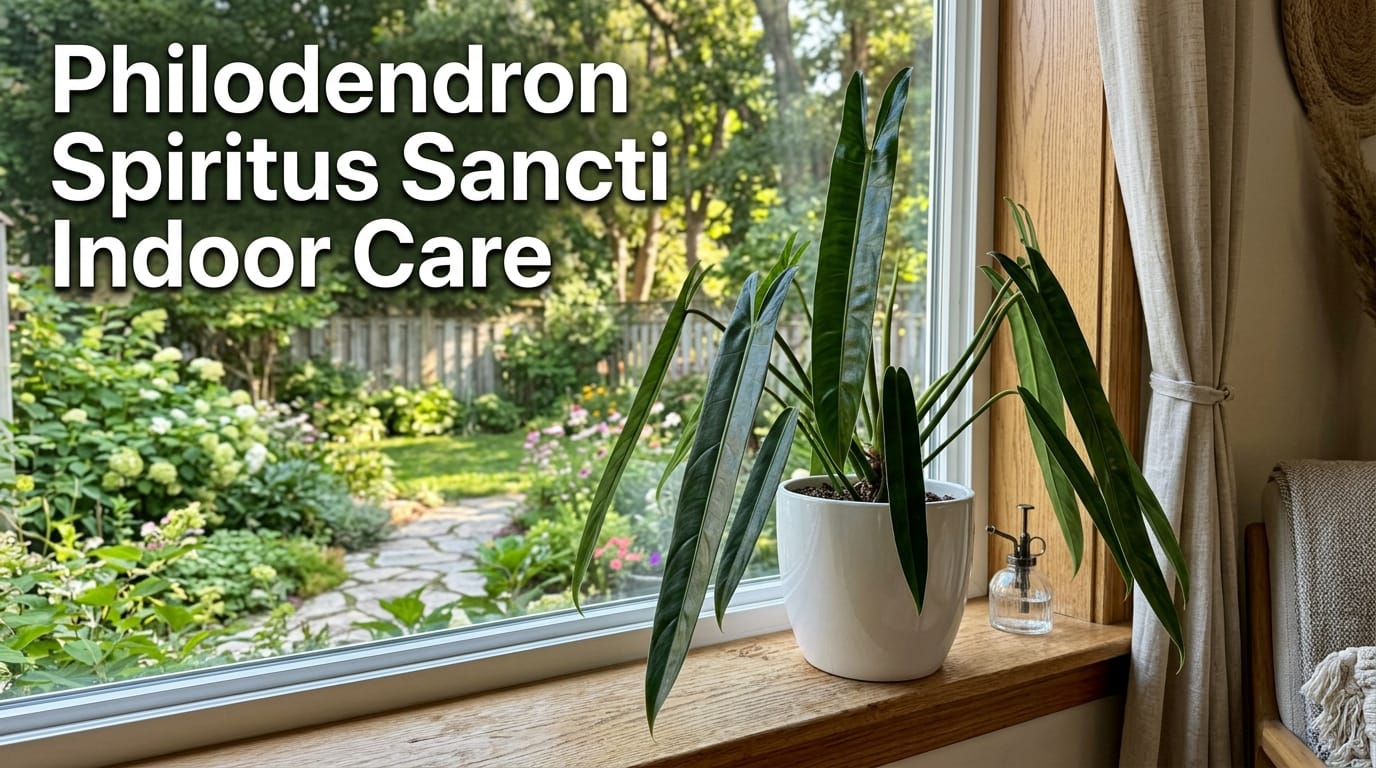
The Philodendron Spiritus Sancti is the kind of plant that earns its reputation the moment you see a mature specimen.
Those long, narrow pendant leaves — sometimes reaching two feet in length on a fully established plant — look like nothing else in the aroid world.
The fact that the species is critically endangered in its native Espírito Santo, Brazil, with more plants existing in private collections than in the wild, makes growing one feel like genuine stewardship rather than just another acquisition.
I have been growing philodendrons for years. Some rare aroids have humbled me badly.
The Spiritus Sancti sits in a particular category: not impossible, but unforgiving on two specific fronts. Watering and drainage.
Get those wrong even once and root rot moves faster than most people expect.
Get them right consistently, and this plant rewards you with some of the most dramatic foliage you can grow indoors.
This guide walks through everything — care, setup, sourcing, pricing, and the mistakes I see growers make most often.
Tissue culture plants have brought the price down significantly since 2024, so this is an increasingly realistic plant for serious collectors without a four-figure budget.
What Is Philodendron Spiritus Sancti?
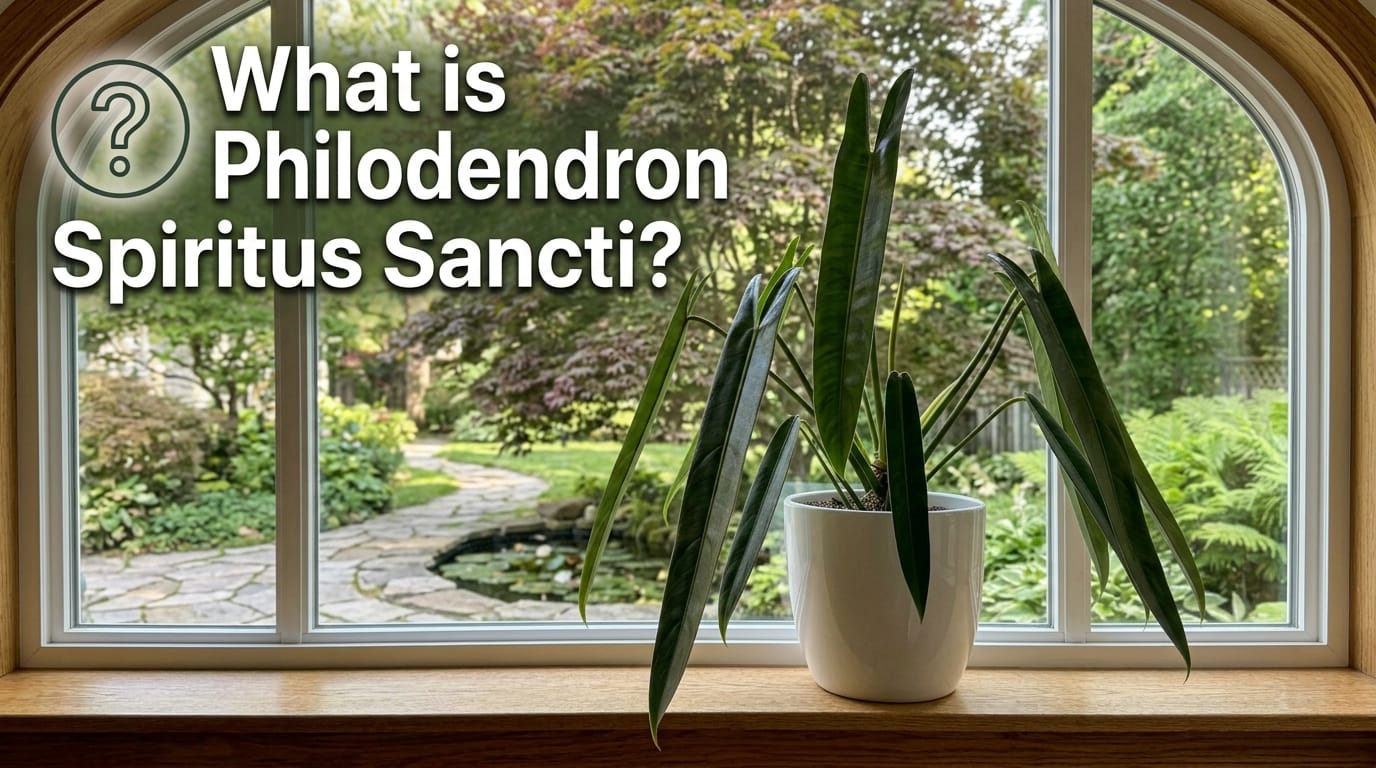
Philodendron Spiritus Sancti is a rare, slow-growing tropical plant from Brazil.
It belongs to the Araceae family, which includes popular houseplants like monsteras, pothos, and anthuriums. Within the philodendron world, very few plants generate the kind of excitement that the Spiritus Sancti does.
The name itself comes from the Brazilian state where it was first found: Espírito Santo, which translates to “Holy Spirit” in Portuguese.
It is a hemiepiphyte. That is a fancy way of saying it can live two ways. It can start as a seed and climb up a tree. Or it can start above ground and grow down until its roots touch the soil. In your home, you will mostly grow it as a climber attached to a moss pole or support.
The leaves are the star of the show. Juvenile leaves are triangular and elongated. As the plant matures, those leaves stretch out dramatically. They grow long and narrow, hanging down like swords from the petioles.
If you have ever seen a mature Spiritus Sancti in person, you know why collectors chase it.
Scientific, Botanical, and Common Names
Here is a quick breakdown of the plant’s names:
Scientific Name: Philodendron spiritus-sancti G.S. Bunting
Family: Araceae
Genus: Philodendron
Section: Macrobelium
Common Names:
- Philodendron Spiritus Sancti
- Philodendron Santa Leopoldina (used by Brazilians)
- Holy Spirit Philodendron
A quick note on the “Santa Leopoldina” name: Brazilians often use this name for the Spiritus Sancti. However, some sellers online also use it for other plants. If you are buying and a seller calls it Santa Leopoldina, do your homework before paying.
Native Habitat and Origin
The Philodendron Spiritus Sancti comes from Brazil.
Specifically, it is native to the state of Espírito Santo, located in southeastern Brazil. The state’s name directly inspired the plant’s scientific name.
For a long time, botanists only knew of one small population. That population was found on private farmland near the town of Domingos Martins. The area sits at around 567 meters above sea level and has a warm, humid tropical climate.
Then in February 2024, something exciting happened. Researchers confirmed a brand-new population of the plant about 128 kilometers from the original location, inside a protected area called Monumento Natural da Serra das Torres. This discovery was made possible because a user posted an observation on iNaturalist, which researchers then went to verify in person.
That second population had at least 50 well-developed adult plants and many seedlings. Some were growing directly on rocky walls, which was a surprise. Scientists had previously thought the plant only grew as a high-canopy hemiepiphyte.
Today, it is believed that more Spiritus Sancti plants exist in private collections worldwide than remain in the wild. That fact highlights both how rare this plant is and why responsible cultivation matters.
Conservation Status: Endangered at the national level. Critically Endangered in the state of Espírito Santo. It has not yet been fully evaluated for the IUCN Red List.
For more on this, see the Wikipedia entry on Philodendron spiritus-sancti.
Characteristics and Features
Let us talk about what makes this plant stand out.
Appearance
The Spiritus Sancti’s leaves are what makes collectors lose sleep over it.
Juvenile plants have shorter, roughly triangular leaves. They look somewhat like other philodendrons at this stage. Nothing too shocking.
But as the plant grows and matures, everything changes.
The leaves become long, narrow, and pendant. A fully mature leaf can reach 57 to 63 centimeters (about 22 to 25 inches) in length. In ideal conditions, with a strong climbing support, some growers have reported leaves reaching 30 inches or more.
The blade color is a deep, dark green. The leaves hang down from long petioles that can range from 12.75 to 23.6 inches. There is a pale green central vein with dark veining that radiates outward.
The overall effect looks dramatic. Like something out of a jungle film set.
There are also three recognized forms of the leaf blade width known in cultivation. Some plants grow narrow leaves. Some grow broader ones. All come from the same species.
Growth Pattern
This plant climbs. That is its natural instinct.
In the wild, it grows up tall trees or, as scientists recently discovered, even along rocky walls. In your home, it needs a vertical support structure to reach its best growth.
Without a climbing structure, the plant will still survive. But the leaves stay smaller. They do not develop the long, dramatic shape that makes the plant famous. If you want the best foliage, give it something to climb.
The Spiritus Sancti is a slow grower. Do not expect rapid progress. Each new leaf can take weeks. Some growers wait a couple of months between leaves. That slow pace is normal for the species.
Dormancy
The Spiritus Sancti does not go fully dormant the way some plants do.
However, growth does slow considerably in winter or in cooler temperatures. If you notice fewer new leaves from October through February, that is normal. The plant is resting. Do not push it with extra fertilizer during this period.
In warmer months, especially spring and summer, growth picks back up.
Benefits
Beyond looking stunning, the Spiritus Sancti offers some real value:
Air purification. Like other philodendrons, it helps filter indoor air. Philodendrons are known to help remove certain indoor pollutants, though no houseplant should replace proper ventilation.
Conservation value. Every healthy plant in a responsible collector’s home represents one fewer specimen that needs to be taken from the wild. Tissue culture plants especially support conservation by reducing pressure on wild populations.
Conversation starter. Few plants generate more genuine reactions from visitors. If that matters to you, this plant delivers every time.
What Real Growers Are Saying
Before we get into care, here is what one grower shared on Reddit’s r/RareHouseplants community. This captures the real experience of growing this plant:
“Mine did absolutely nothing for the first six months after I got it as a TC plant. I almost thought it was dead. Then suddenly it pushed three leaves in two months. The trick was getting the humidity consistently above 65% and giving it a damp moss pole to grip. Once the roots found the moss, it woke up.”
Source: Reddit r/RareHouseplants — https://www.reddit.com/r/RareHouseplants/
This mirrors what many long-term growers report. Patience and consistent humidity are the two biggest factors for success with this plant.
Care Guide
Sunlight
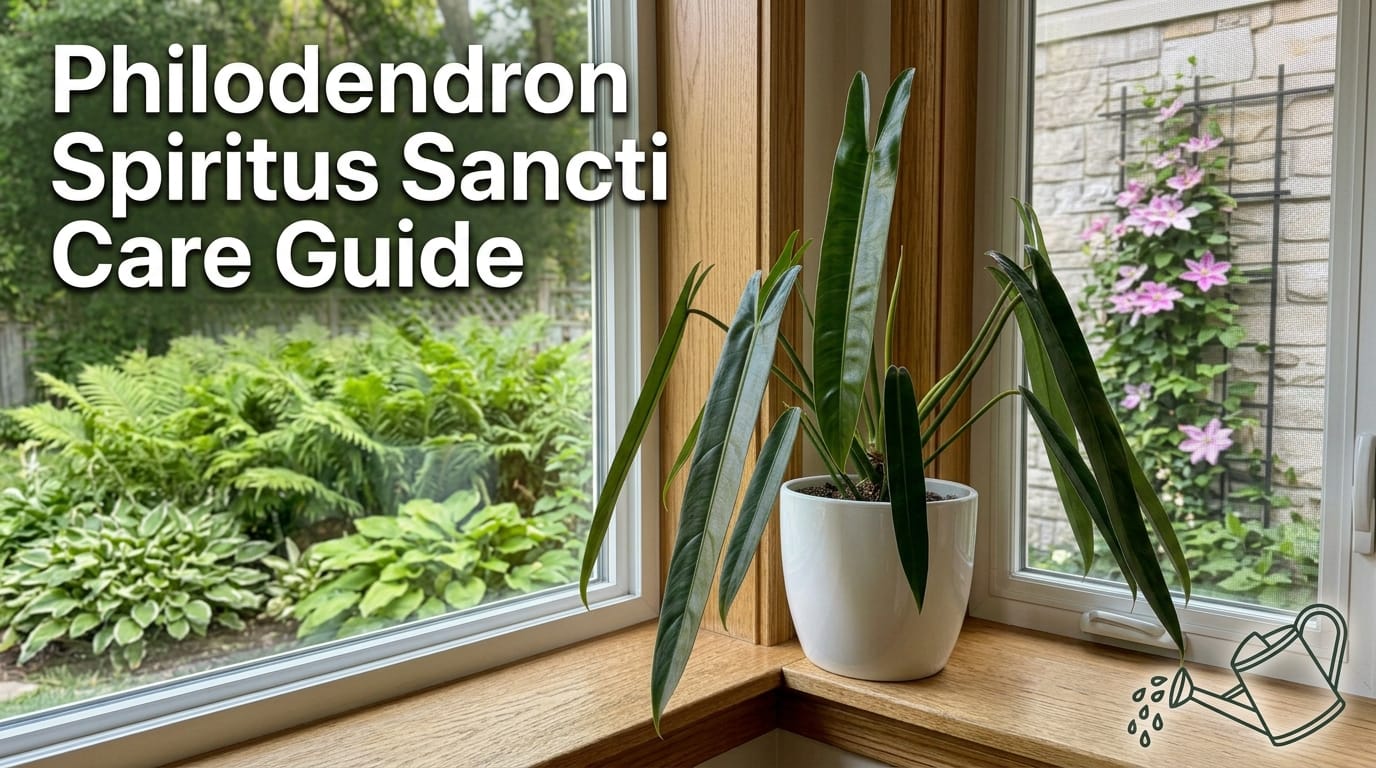
The Spiritus Sancti needs bright indirect light.
Think of light that filters through a sheer curtain. Bright enough to read by comfortably. Not harsh enough to leave shadows with sharp edges.
A few hours of gentle morning sun are fine. East-facing windows work well for this. Avoid harsh afternoon direct sun, especially through south or west-facing glass. Direct midday sun will scorch the leaves and stress the plant.
One practical tip from years of growing aroids: try to position the light source so it comes from above the plant, not from the side. Light from above encourages the plant to grow upward. Light from the side pushes it to lean.
If your home does not get enough natural light, a grow light set to 12 to 14 hours per day works. Keep it at least 12 to 18 inches above the canopy.
Watering
Watering is where most people go wrong with this plant.
The Spiritus Sancti is extremely sensitive to root rot. This is the number one killer. Root rot happens when roots sit in soggy, poorly aerated soil for too long.
Here is the approach that works:
Water thoroughly when the top inch or two of soil feels dry to the touch. Then let excess water drain completely. Never let the pot sit in a saucer full of water.
The soil should feel moist, not wet. There is a difference. Moist means you can feel a slight dampness when you press your finger into the soil. Wet means water comes up around your finger or the soil clumps and stays together in a soggy ball.
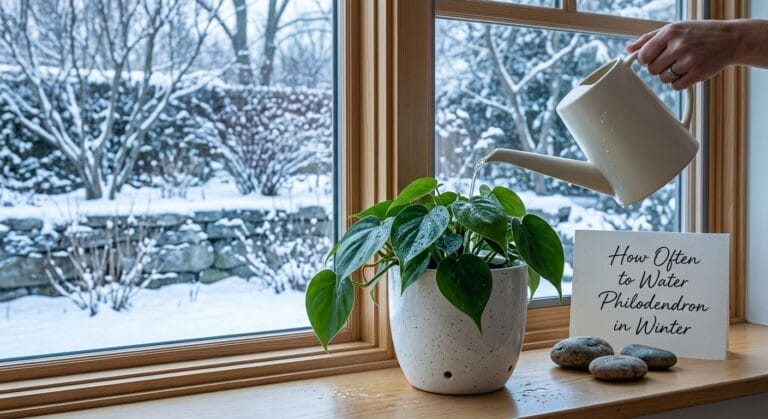
In summer, you may water once a week or so. In winter, cut back significantly. Maybe once every 10 to 14 days, depending on your home’s conditions.
If you want to be precise, invest in a soil moisture meter. They are inexpensive and take the guesswork out of watering. Keep readings in the 3 to 4 range on most meters, not above 5.
Use room-temperature filtered or distilled water when possible. Tap water is fine in many areas, but if yours is heavily chlorinated or fluoride-treated, let it sit out overnight before using it.
Fertilizers
The Spiritus Sancti is not a heavy feeder. In nature, it gets nutrients from fallen leaves, rainwater, and organic matter on the bark it climbs.
During the growing season (spring through summer), fertilize once a month with a balanced liquid fertilizer. Look for an NPK ratio like 10-10-10 or 20-20-20, diluted to half the recommended strength.
Some growers prefer a slightly higher nitrogen formula during spring to push leafy growth. That is a reasonable approach.
Do not fertilize in fall or winter. The plant is not actively growing, and unused fertilizer builds up as salts in the soil. That salt buildup can burn roots over time.
Always fertilize on moist soil, not dry soil. Applying fertilizer to dry roots can cause fertilizer burn.
Soil Mix
This is one of the most important parts of Spiritus Sancti care.
The plant needs a soil mix that is airy, chunky, and fast-draining. It cannot tolerate heavy, dense potting mixes that retain too much moisture.
A good mix that many growers use:
- 40% orchid bark (medium to large chunks)
- 20% perlite
- 20% coco coir or sphagnum moss
- 10% horticultural charcoal
- 10% pumice (optional but helpful)
This mix drains quickly, holds some moisture, allows air pockets around the roots, and resists compaction over time.
Avoid straight potting soil. Even if it says “well-draining” on the bag, it is usually too dense for the Spiritus Sancti.
Some growers in Brazil who grow the plant close to its natural habitat use dried leaves and shredded sphagnum moss with minimal bark. That is another valid approach if you can source quality materials.
Humidity
This plant loves humidity. It comes from a tropical rainforest environment where humidity rarely drops below 60% to 80%.
In most US homes, average indoor humidity sits around 30% to 50%. That is survivable for the Spiritus Sancti but not ideal.
For best growth, aim for 60% to 70% relative humidity. You can achieve this with:
- A humidifier placed near the plant (most effective method)
- Grouping it with other tropical plants
- Placing it on a pebble tray with water (raises humidity locally)
- Growing it in a plant cabinet or greenhouse enclosure if you are serious about rare aroids
Avoid misting the leaves directly. Misting does not meaningfully raise humidity, and it can leave water sitting on leaves, which sometimes leads to fungal issues.
A digital hygrometer near the plant is a great tool. They are cheap and tell you exactly what humidity level your plant is experiencing.
Temperature
The Spiritus Sancti prefers consistent temperatures between 66°F and 80°F (18°C to 27°C).
In its natural habitat in Espírito Santo, temperatures average around 70°F with modest seasonal variation. That steady warmth is what this plant expects.
Keep it away from:
- Air conditioning vents (too cold and drying)
- Heating vents (too hot and also drying)
- Cold drafts near windows in winter
- Temperatures below 50°F (10°C)
Exposure to cold will stunt the plant’s growth significantly. Prolonged cold can damage or kill it. This is not a plant that forgives frost.
If you live in USDA zones 11 to 12, you could grow it outdoors in a shaded, humid spot. Everyone else is keeping it indoors year-round.
Climbing Stake
Give this plant something to climb. Full stop.
Without a climbing support, the Spiritus Sancti will survive, but the leaves stay small and unremarkable. With a good climbing structure, the aerial roots grip in, and the plant starts producing the long, dramatic leaves it is famous for.
The best options:
Moss pole: Pack a PVC pipe with sphagnum moss or use a pre-made coir totem. Keep the moss damp. The aerial roots will grow into the moist moss and grip tightly. This is the closest you can get to mimicking natural tree bark.
Wooden board: A rough-textured wooden plank works similarly. Some collectors use cedar or untreated wood.
Cork bark: Cork rounds or flat bark pieces work well. They are naturalistic and allow good root attachment.
As the plant grows taller, extend the support upward. Stack sections of moss pole as needed.
Keeping the pole itself moist is key. Dry moss poles do not attract aerial root attachment. If your aerial roots are just hanging in the air without gripping the pole, try misting the pole directly once or twice a week.
Toxicity
The Philodendron Spiritus Sancti is toxic to humans and animals.
Like all philodendrons, it contains calcium oxalate crystals. If any part of the plant is chewed or ingested, it causes burning and irritation in the mouth and throat. In larger amounts, it can cause swelling, drooling, vomiting, and difficulty swallowing.
Keep this plant away from:
- Cats
- Dogs
- Small children
- Any curious pets
If ingestion occurs, contact your vet immediately for animals or Poison Control (1-800-222-1222) for people. Most cases are not life-threatening but can be very uncomfortable.
Wear gloves when pruning or repotting to avoid skin irritation from the sap.
Repotting Guide
The Spiritus Sancti grows slowly, so it does not need repotting often.
When to repot: When you see roots coming out of the drainage holes, or when the plant seems to be drying out much faster than usual (a sign the roots have filled the pot).
Most growers repot every two to three years.
How to repot:
- Choose a pot only one to two inches larger in diameter than the current one. Going too big too fast leads to overwatering risk because the extra soil stays wet longer.
- Prepare your airy, well-draining soil mix in advance.
- Gently remove the plant from its current pot. Do not yank it.
- Check the roots. Healthy roots are white or light tan. Brown, mushy, or smelly roots are rotted. Trim any rotted roots with clean scissors.
- Place the plant in the new pot with fresh mix. Do not bury the stem deeper than it was before.
- Water lightly and place the plant back in its spot. Avoid fertilizing for four to six weeks after repotting to let the roots recover.
Pot material matters. Terra cotta pots are excellent for the Spiritus Sancti because they breathe and help soil dry out between waterings. Plastic pots retain moisture longer, which increases root rot risk unless you are very careful with watering.
Some growers drill extra holes in the sides of plastic pots to increase airflow to the roots. That is not a bad idea for this species.
Pruning Guide
The Spiritus Sancti does not need heavy pruning. This is not an aggressive grower.
You mainly prune to:
- Remove dead or damaged leaves
- Remove yellowing leaves that will not recover
- Control the plant’s size if it gets too large for your space
- Take cuttings for propagation
How to prune:
Use clean, sharp scissors or pruning shears. Always sterilize your tools with rubbing alcohol before cutting. This prevents spreading any diseases between plants.
Cut leaves or stems cleanly at the base. Do not leave stubs behind.
Always wear gloves. The sap can irritate skin and eyes.
After pruning, keep the plant in its usual conditions. Do not repot or fertilize immediately after heavy pruning. Let it recover first.
Propagation Guide
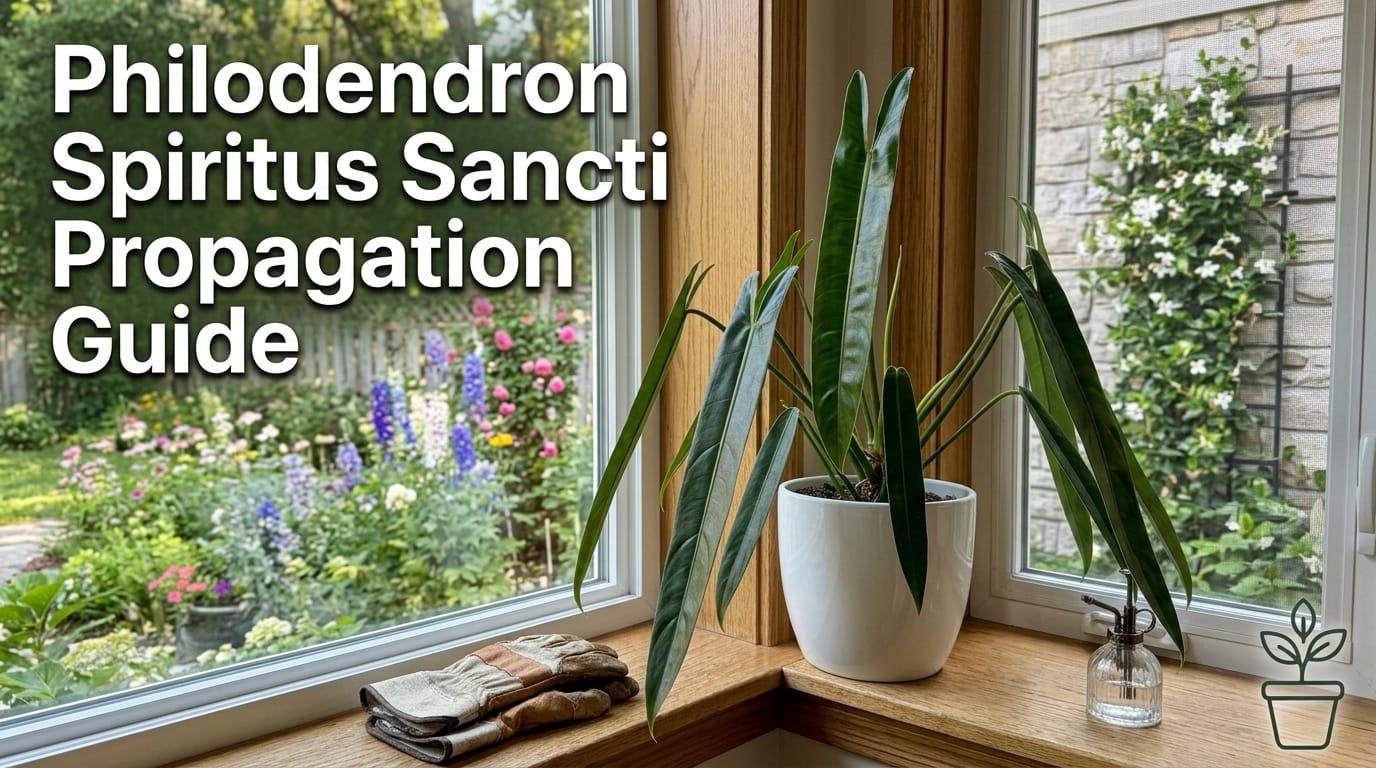
Propagating the Spiritus Sancti is possible. It is just slow and requires patience.
Stem cuttings are the most common method.
- Identify a healthy stem with at least one node (the bump on the stem where roots can grow).
- Cut just below the node with a clean, sharp tool.
- You can root in sphagnum moss, water, or a mix of perlite and coco coir.
- If using water, change it every few days to keep it fresh.
- Keep the cutting in bright indirect light and high humidity. A plastic bag or clear dome over the cutting helps retain moisture.
- Roots may take four to twelve weeks to develop. This plant is slow. Do not panic if nothing happens for a while.
Air layering is actually considered a better method for this species.
With air layering, you do not separate the cutting until it has already developed roots. Here is how:
- Choose a healthy section of stem.
- Make a small wound in the stem just below a node.
- Pack moist sphagnum moss around the wound.
- Wrap it tightly in plastic wrap to hold moisture.
- Wait. Roots will grow into the moss over several weeks.
- Once you see good root development through the plastic, cut the stem below the rooted section.
- Plant it in your prepared mix.
Air layering is slower but produces a stronger, better-rooted new plant. It reduces transplant shock dramatically compared to bare stem cuttings.
Common Pests and Diseases: Problems and Solutions
The Spiritus Sancti is not dramatically pest-prone. But it is not immune either.
Spider Mites
What to look for: Tiny dots on leaves, fine webbing, leaves turning pale or speckled.
Why they appear: Low humidity and dry conditions. Spider mites love dry air.
Solution: Increase humidity. Wipe down leaves with a damp cloth. Apply neem oil or insecticidal soap spray. Repeat every five to seven days for two to three weeks to break the lifecycle.
Mealybugs
What to look for: White fluffy masses in leaf joints and along stems.
Solution: Remove them manually with a cotton swab dipped in 70% isopropyl alcohol. Follow up with neem oil spray. Check weekly.
Scale
What to look for: Brown or tan bumps stuck to stems and leaf undersides. They do not move.
Solution: Scrape off with a soft brush or cloth. Apply isopropyl alcohol directly to stubborn ones. Follow up with horticultural oil spray.
Root Rot
What to look for: Yellowing leaves starting from lower leaves. Mushy, brown roots. Foul smell from the soil.
Why it happens: Overwatering, poor soil drainage, or a pot without adequate drainage holes.
Solution: Remove the plant from its pot. Trim all rotted roots with sterile scissors. Let the roots air dry for an hour. Repot in fresh, dry airy mix. Hold off on watering for a few days. Improve your watering routine going forward.
Prevention is far easier than treatment. Well-draining soil and careful watering prevent most root rot.
Bacterial Leaf Spot
What to look for: Brown or black spots on leaves, often with yellow halos.
Solution: Remove affected leaves. Avoid getting water on the leaves. Improve air circulation around the plant. A copper-based fungicide can help in stubborn cases.
Pricing Guide
The Spiritus Sancti used to be one of the most expensive houseplants in the world. Single cuttings sold for $10,000, $20,000, and sometimes even more at auction during the peak of the rare plant craze in 2021 and 2022.
Those days are gone.
Tissue culture labs, primarily in Thailand and Indonesia, flooded the market starting in 2024, and prices dropped roughly 95%. For a small tissue culture plant today, a fair price is $40 to $130. Mature specimens still carry a premium at $250 to $300.
The average price of Philodendron Spiritus Sancti in the US was around $45 to $46 in mid-2025, with listings ranging from about $35 to $53 depending on the seller and plant size.
What you pay depends on:
- Plant size and maturity: Larger, more established plants cost more.
- TC vs. wild-type: Tissue culture plants are now widely available and affordable. Original or wild-type specimens with documented provenance are still rare and more expensive.
- Seller reputation: Reputable aroid specialists charge fair market prices. Unknown sellers might charge too much or send you something that is not what it claims to be.
Buying Guide
Here is how to buy smart.
Where to buy:
- Reputable online aroid sellers: NSE Tropicals, Rare Foliage Plant Co, Carnivero, Aroid Market. These sellers specialize in rare aroids and sell verified plants.
- Etsy: Many legitimate small growers sell here. Read reviews carefully. Look for sellers with hundreds of positive sales and verified plant photos.
- eBay: Possible, but higher risk. Stick to sellers with established feedback scores above 98%.
- Local aroid collectors and plant swaps: Often the best prices and most trustworthy source.
- Facebook Marketplace and plant group sales: Another viable option, especially the Aroid Sales and Trades groups.
What to look for when buying:
- Clear, current photos of the actual plant (not stock photos)
- Healthy green leaves with no yellowing, spots, or pests
- Visible roots or healthy nodes
- Seller’s return or guarantee policy
- Confirmed tissue culture origin if buying a small starter plant
What to avoid:
- Plants sold as “Spiritus Sancti” for under $20. They are almost certainly misidentified.
- Sellers who cannot or will not show clear photos of the actual plant.
- Plants shipped without proper insulation in cold months.
Always buy from sellers who specialize in aroids or have extensive positive feedback from other plant collectors. The rare plant community is fairly tight-knit, and sellers with bad reputations do not last long.
Common Mistakes to Avoid
Here are the most common mistakes growers make, especially those new to this plant.
1. Overwatering This is the biggest one. The Spiritus Sancti needs moisture, not saturation. When in doubt, wait one more day before watering.
2. Using heavy, dense potting mix Standard potting soil holds too much water. Always use a chunky, airy mix with good drainage components.
3. Not providing a climbing support A plant without something to climb will stay juvenile-looking. Give it a moist moss pole from day one.
4. Placing in low light The Spiritus Sancti is not a low-light plant despite what some listings claim. It needs bright indirect light to grow well and produce its signature leaves.
5. Ignoring humidity Humidity below 50% leads to slow growth and pest issues. If you want this plant to thrive, raise the humidity.
6. Expecting fast growth This is a slow plant. Some growers get frustrated and start changing conditions too often, which stresses the plant even more. Set it up properly once, then let it adjust.
7. Buying misidentified plants Many sellers, especially on general marketplaces, mislabel plants. Know what you are buying. Compare photos to verified images from botanical databases before purchasing.
8. Fertilizing in winter The plant is resting. Extra fertilizer during dormancy causes salt buildup in the soil without benefiting the plant.
Frequently Asked Questions
Is Philodendron Spiritus Sancti hard to care for?
It is not the hardest plant in the world. But it is more demanding than a pothos or heartleaf philodendron. The key challenges are watering carefully and providing high enough humidity. Get those two right, and the rest is manageable.
How fast does Philodendron Spiritus Sancti grow?
Slowly. Expect one new leaf every four to eight weeks on average. In peak growing season with ideal conditions, it might push leaves faster. In winter, growth may stop entirely for a few months.
Can Philodendron Spiritus Sancti grow in water?
It can survive in water temporarily, but long-term water growing is not ideal for this species. It does better in a well-draining soil mix or mounted on a moss pole.
Is Philodendron Spiritus Sancti the same as Santa Leopoldina?
Brazilians often call it Philodendron Santa Leopoldina. However, the same name gets used loosely by some sellers for other plants. Always verify what you are buying with photos and reliable sourcing.
How do I know if my Spiritus Sancti is getting too much or too little water?
Too much water: yellowing lower leaves, mushy stems, soil that stays wet for more than a week. Too little water: drooping, dry or crunchy leaf edges, very dry soil pulling away from the pot sides.
Is it safe to keep around pets?
No. All philodendrons contain calcium oxalate crystals that are toxic to cats, dogs, and humans if ingested. Keep it out of reach of pets and young children.
How big do the leaves get?
In juvenile plants, leaves stay small and triangular. In mature plants with proper support and conditions, leaves can reach 22 to 25 inches long. Some exceptional specimens go even longer.
Does Philodendron Spiritus Sancti flower?
Yes, but it is extremely rare in cultivation. In the wild, it produces a spathe and spadix typical of aroids, similar in structure to a peace lily flower. You are unlikely to see it bloom indoors unless the plant is extremely mature and happy.
Conclusion
The Philodendron Spiritus Sancti is a genuinely special plant.
It is not just its rarity that makes it worth growing. It is the way the leaves transform as the plant matures. It is the drama of those long, pendant blades hanging from a tall moss pole in the corner of a room. It is knowing you are helping preserve a species that barely clings to existence in its native Brazil.
Thanks to tissue culture, this plant is no longer out of reach for most collectors. Prices have come down dramatically. You can now own a piece of living history for under $100.
But owning it is one thing. Keeping it healthy and watching it thrive is another. That takes the right setup. Bright indirect light. Excellent drainage. High humidity. A solid climbing support. Patient, careful watering.
Give it those things, and the Spiritus Sancti will reward you with some of the most dramatic foliage you will ever grow.
If you found this guide helpful, check out our other philodendron care guides at Jefrev.com. We cover everything from common varieties to the rarest aroids worth growing.