Philodendron Squamiferum Dropping Leaves: Every Real Cause (And What to Actually Do)

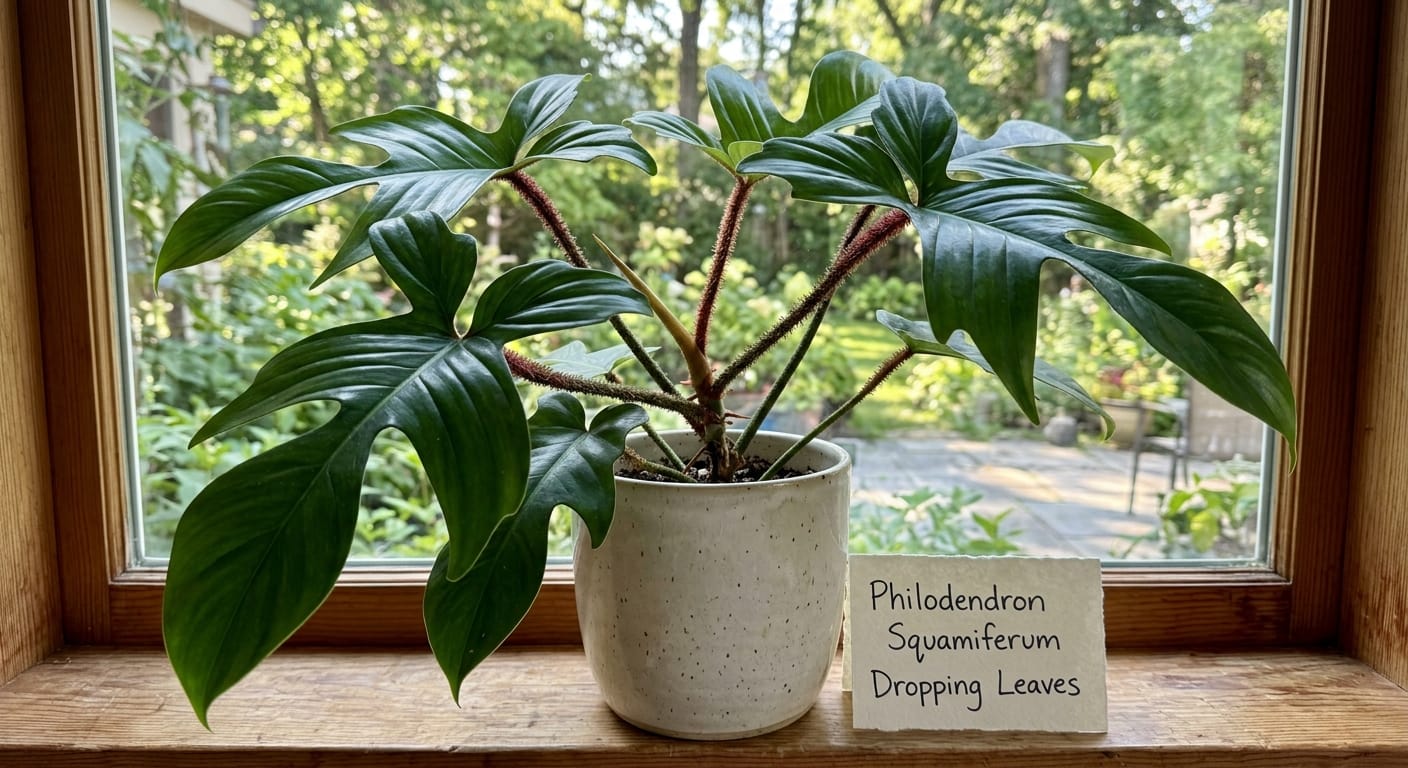
My squamiferum dropped three leaves in four days. I stood there staring at it, completely confused.
This wasn’t some plant I’d just brought home. I’d been growing it for over a year — I knew its watering rhythm, its light position, its usual behavior.
And yet. Three leaves. Four days.
The squamiferum gives almost no early warning. One day it looks fine. The next, a leaf just falls.
This post covers every real cause I’ve found for squamiferum leaf drop, and exactly what I did to fix each one.
Why the Squamiferum Is Not Like Other Philodendrons
Before you diagnose anything, you need to understand what this plant actually is.
The squamiferum is a tropical climbing aroid. It’s native to the rainforests of French Guiana, Suriname, and northern Brazil.
In the wild, it doesn’t grow in the ground. It climbs up tree trunks, anchoring itself with aerial roots.
Its roots are exposed to moving air. They never sit in heavy, waterlogged soil.
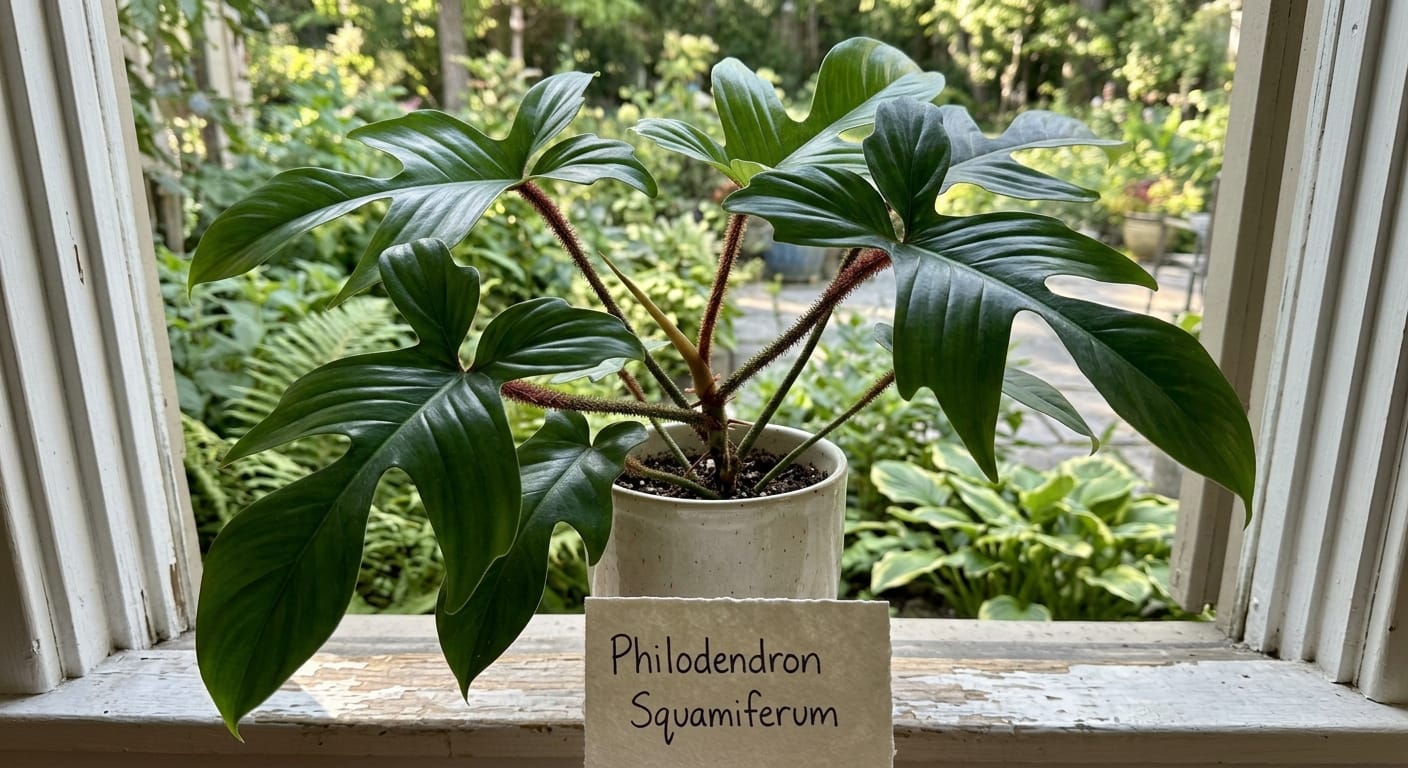
Costa Farms notes that it’s a showstopping climbing vine, with large lobed leaves that can reach 18 inches long on a mature plant.
That bright-red fuzzy fuzz on the petioles isn’t just decoration. It’s called trichomes, and it helps protect the plant in its native environment.
Why does all this matter for leaf drop? Because every time your squamiferum drops a leaf, it’s reacting to a mismatch.
Something about your home’s conditions doesn’t match what it evolved to live in.
Once you understand that, diagnosing the problem becomes a lot easier.
Normal Leaf Drop vs. a Real Problem: How to Tell the Difference
This is the question I get asked the most, and for good reason.
Not every dropped leaf is a crisis.
As the squamiferum grows taller, it sheds its oldest, lowest leaves. This is totally normal.
Those older leaves turn yellow gradually, then fall. The plant is simply redirecting energy toward newer growth.
Here’s the simple rule I use every single time:
Green leaf drops suddenly = almost always shock or stress from a sudden change.
Leaf turns yellow first, then drops = usually a watering issue, nutrient problem, or natural aging.
Multiple leaves dropping at once = something is seriously wrong. Stop and diagnose now.
One older leaf at the base of the plant every few months? Don’t panic.
Three leaves dropping in a week, including newer ones? Keep reading every word below.
1 Transplant Shock and Location Changes
This one surprises even experienced growers.
You repot your squamiferum into a fresh new pot. Then three days later, a leaf falls.
Or you move it from one room to another for better light. Then another leaf follows.
This happened to me directly. I moved my squamiferum to a brighter south-facing spot, and it dropped two leaves within a week.
Here’s what’s actually happening inside the plant:
When its environment suddenly changes, the squamiferum detects the shift in light, temperature, or humidity.
It sheds leaves on purpose. This reduces the amount of foliage it needs to support while it adjusts.
This is not a mistake. It’s a survival strategy built into the plant’s biology.
What to Do
Stop moving it. Pick one spot and stay there.
Keep the watering routine exactly the same as before.
Wait four to six weeks before deciding if there’s still a problem.
New leaf growth appearing is the clearest sign the plant has settled back in.
2 Overwatering and Root Rot (The Number One Killer)
I’ll be fully honest here. Overwatering ended several of my philodendrons during year two of collecting.
I thought more water meant more love. I set a strict weekly schedule and followed it no matter what.
That mistake cost me some beautiful plants.
The squamiferum is actually more sensitive to overwatering than many other philodendrons in the genus.
Joy Us Garden’s care guide for the squamiferum specifically points out this plant doesn’t want constantly moist soil and needs the top few inches to dry out between waterings.
When you overwater, the roots drown. They can’t absorb oxygen.
Fungi move in. The roots start rotting. They turn dark brown or black.
Once roots rot, they can no longer push water or nutrients up to the leaves.
The plant’s only option is to drop those leaves.
Signs You’re Overwatering
- Leaves go soft or mushy before dropping
- Soil feels wet or heavy more than ten days after watering
- A musty, sour smell is coming from the pot
- Fungus gnats flying around the top of the soil
- Older leaves turning yellow and falling before newer ones
How to Check for Root Rot Right Now
Gently pull the plant from its pot.
Look at the roots carefully. Healthy roots are firm, white, or tan.
Rotten roots are dark brown or black. They smell. They turn mushy when you squeeze them.
If you see rot, act immediately. Every hour you wait gives the rot more territory.
How to Save It
Trim every rotted root with clean, sharp scissors.
Clean your scissors between each cut. This stops the rot from spreading to the healthy roots.
Let the trimmed root ball air dry for two or three hours.
Repot into completely fresh, dry soil.
Do not water for the first five to seven days. Let the plant stabilize first.
The Soil Fix That Changed Everything for Me
After my root rot disasters, I stopped using standard potting mix by itself.
Now I mix potting soil with orchid bark and perlite in roughly equal thirds.
That chunky mix drains fast and gives roots the air they need.
My root rot problems completely disappeared after I made this switch.
Remember: The squamiferum evolved on tree trunks, not in swampy ground. Its roots expect air and fast drainage. Give them that, and they stay healthy.
3 Underwatering
Less common than overwatering, but it does happen.
If you’re letting the squamiferum go bone dry for two or three weeks at a stretch, it will react.
The leaves will droop first. Then the edges go crispy. Then they drop.
The tricky part is that underwatering and overwatering can look similar from the outside.
Both cause drooping. Both cause leaves to look dull and lifeless.
The soil and roots tell you the truth.
How to Fix Underwatering
Don’t dump a huge amount of water on a dry root ball all at once.
Dry roots are fragile. A sudden deluge can actually crack them.
Instead, water a little each day for about a week. Let the roots slowly rehydrate.
Going forward, use the finger test every time before watering.
Stick your finger two inches into the soil. Water only when that layer feels dry.
4 Not Enough Light
A huge number of people make this mistake with the squamiferum.
They assume tropical plants love shade because they come from rainforests.
This is partly true, but the squamiferum is a climber. It grows toward the canopy.
According to Gardenia.net, the squamiferum is found in the forest understory climbing trees, actively seeking light and space to expand.
Put it in a dim corner and two bad things happen.
First, it slows down. It stops pushing out new leaves.
Second, and this is the sneaky part: low light means slow photosynthesis. Slow photosynthesis means the soil stays wet much longer than it should.
That wet soil then sets off the root rot chain reaction from Cause 2 above.
So low light doesn’t just cause slow growth. It indirectly causes leaf drop through root problems.
What Good Light Actually Looks Like
Bright indirect light is the target.
Think: light bright enough to read a book comfortably, but no direct sun patches hitting the leaves.
An east-facing window is often ideal in US homes.
A sheer curtain on a south-facing window can work beautifully too.
Avoid placing it directly in front of a west window in the afternoon. The direct rays will scorch the leaves within days.
If your space truly lacks natural light, a basic LED grow bulb in a regular floor lamp can bridge the gap during winter months.
5 Temperature Stress and Cold Drafts
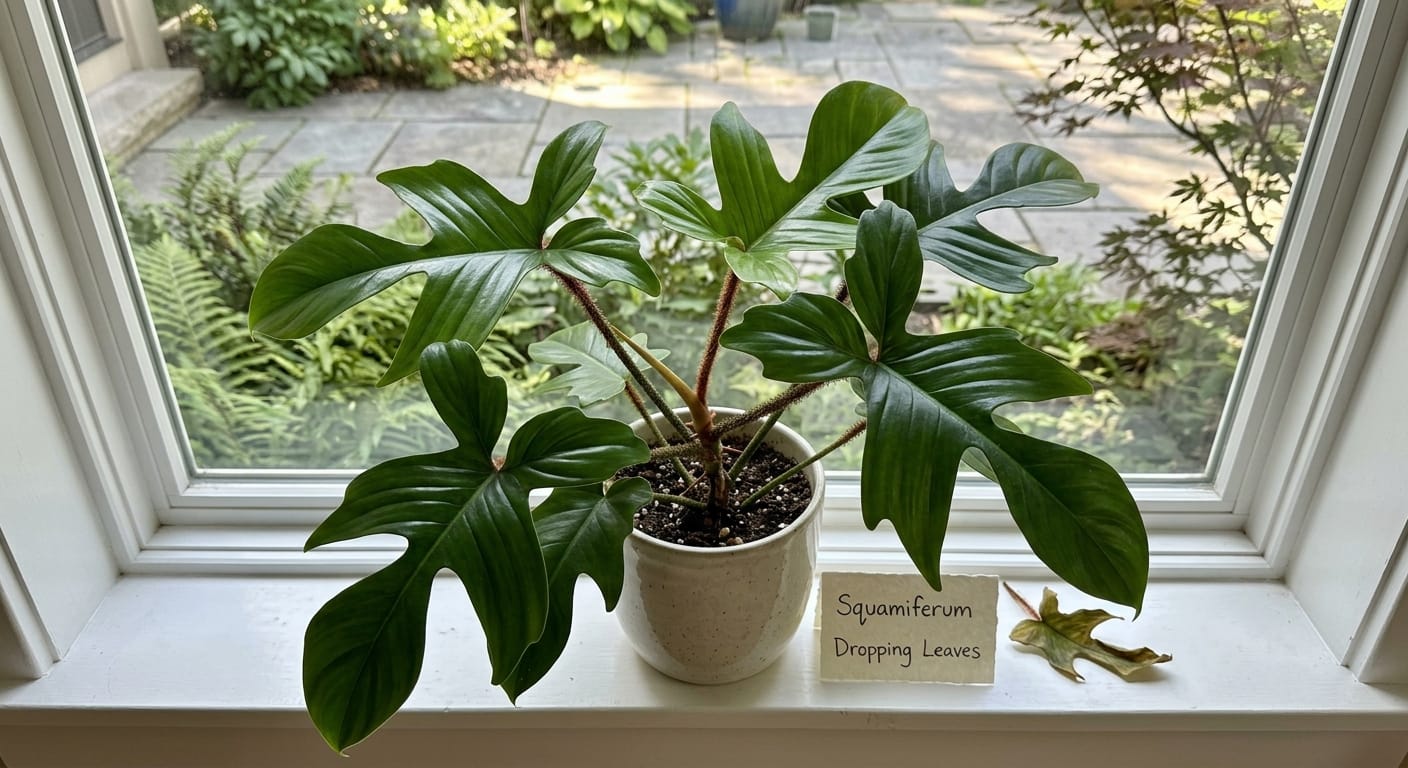
The squamiferum evolved in warm, humid tropical rainforests. It has essentially zero cold tolerance.
Its comfort zone is roughly 65°F to 80°F (18°C to 27°C).
Let it drop below 55°F even for a few hours and leaf drop can follow quickly.
In my own home, I see this most during winter. I have plants near windows, and those windows get cold at night.
One winter I left a window cracked open on a cold night in December. My squamiferum sat eight inches from that window.
By the next afternoon, two leaves had fallen.
The Cold Sources Most Growers Overlook
- Air conditioning vents blowing directly on the plant during summer
- Windows with poor insulation in northern US states during fall and winter
- Sliding glass doors that let cold air seep through the frame
- Placement on a stone tile or concrete floor where cold radiates upward
- Outdoor porches and patios when nighttime temps dip below 60°F
Important: The squamiferum is also sensitive to cold water. Watering with very cold tap water during winter can shock the roots. Let tap water sit for an hour before using it, especially in colder months.
What to Do
Get a cheap digital thermometer with a min/max function.
Place it near your plant for 48 hours. The night minimum will often surprise you.
Move the plant at least three feet from any drafty window or AC vent.
6 Low Humidity
Humidity rarely causes dramatic leaf drop on its own.
But it acts like a multiplier. When your squamiferum is already stressed from another cause, low humidity pushes it over the edge.
The rainforests this plant comes from regularly run above 70% relative humidity.
Most US homes sit between 30% and 50%. Central heating in winter can push that even lower.
The first sign is usually brown, crispy leaf tips. If that goes ignored for long enough, full leaf drop can follow.
What Actually Helps (And What Wastes Your Time)
I’ve been through every humidity trick over eight years. Let me be direct.
Misting your squamiferum does almost nothing lasting. The moisture evaporates within minutes.
Pebble trays with water help a little, but the impact is small and limited to the immediate area.
The two things that genuinely work for me are grouping plants together and using a small humidifier.
When you group multiple plants in the same area, they release moisture into the air around each other as they breathe and grow.
A budget ultrasonic humidifier running a few hours per day near your squamiferum during winter makes a measurable difference.
You don’t need an expensive model. A basic one from any home goods store handles the job fine.
7 Pest Infestations
Nobody likes this topic. But skipping it would leave this guide incomplete.
Pests are a sneaky cause of leaf drop because the damage builds slowly and quietly.
By the time leaves are actually falling, the infestation has often been going on for weeks.
The two pests I see most commonly on squamiferums are spider mites and thrips.
Spider Mites
Spider mites love dry, warm conditions. A heated indoor room in winter is their perfect home.
They live on the undersides of leaves and drain the cells dry, one tiny puncture at a time.
The leaves start looking dull, dusty, or stippled. Fine webbing appears under the leaves.
Eventually those damaged leaves yellow and drop.
Thrips
Thrips are thin, fast-moving insects that also hide on leaf undersides.
They leave silver streaking, brown scarring, or a deformed texture on the leaf surface.
Affected leaves stop functioning properly and eventually drop.
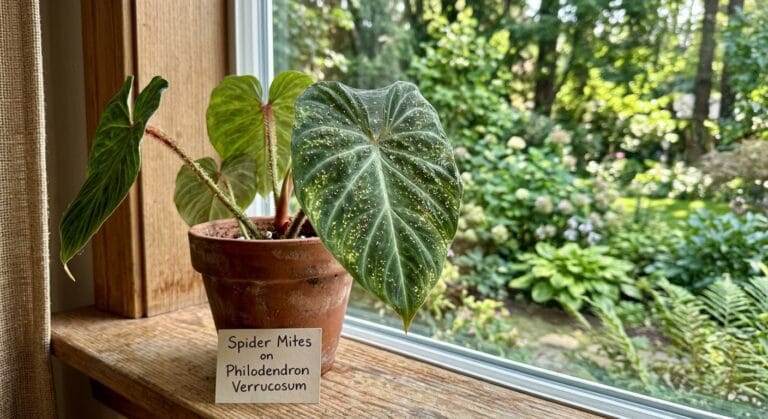
I wrote a detailed guide about handling spider mites on philodendrons in my post on spider mites on Philodendron verrucosum. The treatment steps are the same for squamiferum.
How to Check for Pests Right Now
Take your plant to the brightest light source you have.
Flip every single leaf. Look closely at the underside.
Spider mites look like tiny, barely visible moving dots. Webbing is a sure sign.
Thrips are slender, slightly larger, and move quickly when disturbed.
Treatment That Actually Works
For light infestations, diluted neem oil spray applied every five to seven days for three full weeks.
For anything heavier, I use commercial insecticidal soap or a pyrethrin-based spray.
The most important rule: don’t skip a treatment round.
Pests lay eggs that hatch even after you kill the adults. Missing one round lets the population rebuild completely.
8 Nutrient Deficiency
This one won’t cause dramatic sudden leaf drop. But it contributes, especially in older plants.
If your squamiferum has been sitting in the same soil for more than a year, that soil is depleted.
The plant pulls nutrients from its older leaves to feed the newer growth. Those older leaves then yellow and fall.
Heavy soil compaction can also block root access to nutrients even when they’re technically present.
What to Do
Feed with a balanced liquid fertilizer (something like 20-20-20) during the growing season.
Spring through early fall is when the squamiferum is actively growing and needs the most nutrition.
I dilute mine to half the recommended strength. I apply it every two to three weeks.
Stop fertilizing entirely in winter. The plant slows way down and doesn’t need it.
Don’t over-fertilize. Too much fertilizer causes salt buildup in the soil. That buildup damages roots and can itself cause leaf drop. When in doubt, use less.
Diagnose Your Plant in Under 10 Minutes
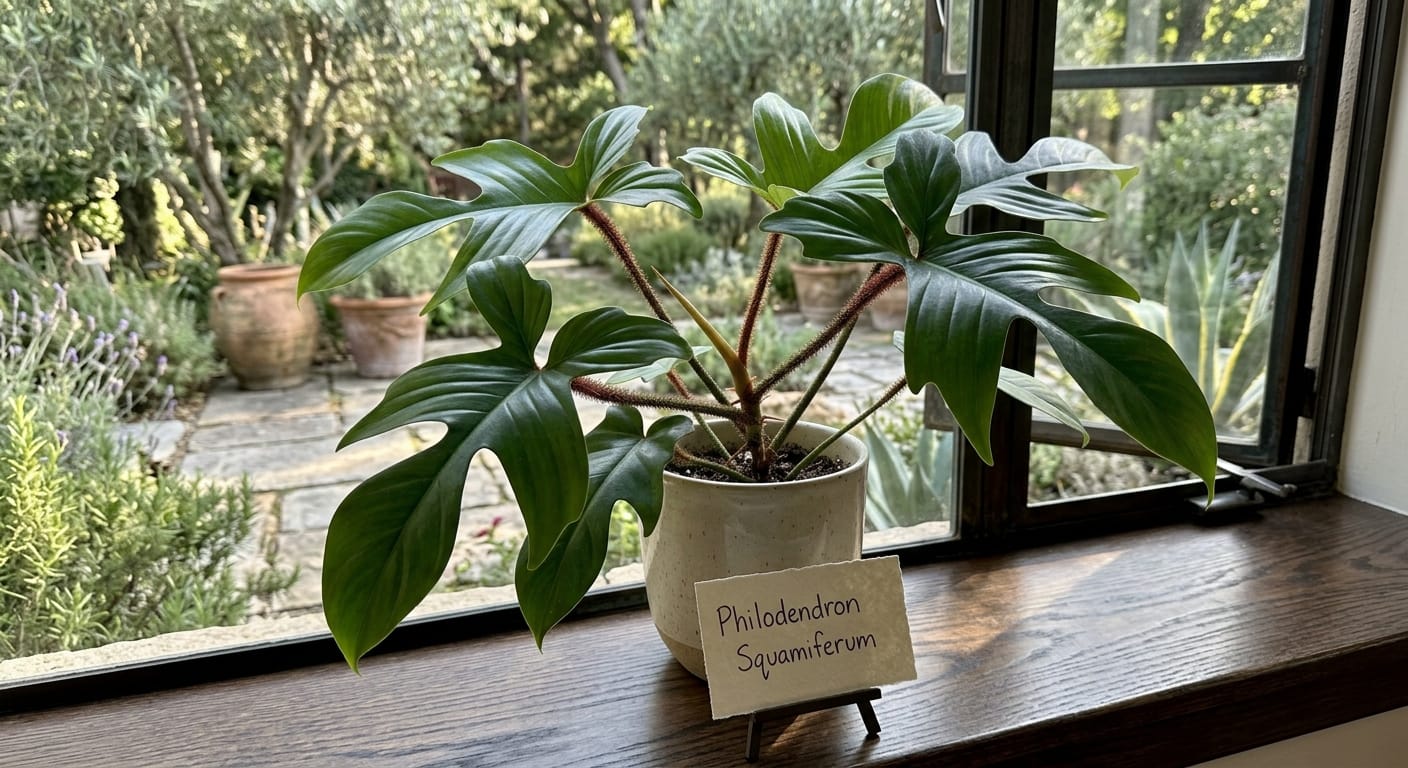
Not sure which cause applies to your plant? Work through this in order.
Step 1: Look at the Leaves That Dropped
Were they green when they fell? That points to shock or stress.
Did they turn yellow first? That points to a watering or nutrition issue.
Step 2: Check the Soil
Push your finger two inches into the soil.
Wet and heavy more than a week after last watering: you’re overwatering.
Bone dry with the soil pulling away from the pot edges: you’re underwatering.
Step 3: Pull the Plant and Check the Roots
Gently remove the plant from its pot.
White or tan and firm: healthy. Dark and mushy: root rot from overwatering.
Dry and shriveled: underwatering damage.
Step 4: Inspect for Pests
Flip every leaf under bright light. Webbing or moving dots: spider mites.
Silver streaks and fast-moving slivers: thrips.
Step 5: Evaluate the Location
Is there a cold draft within four feet of the plant?
Is it getting bright indirect light, or sitting in a dim spot?
Is a heating or cooling vent blowing directly on it?
Once you pin the cause, go back to that section above and apply the fix.
Related Problems on Other Philodendrons
Many of the same root causes show up across the whole genus.
If you’re also dealing with problems on other philodendrons in your collection, these guides cover very similar ground:
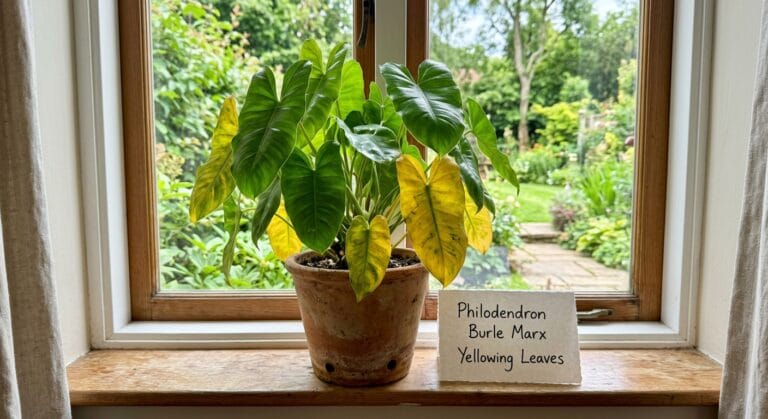
- Philodendron Burle Marx Yellowing Leaves: Every Real Cause and Fix
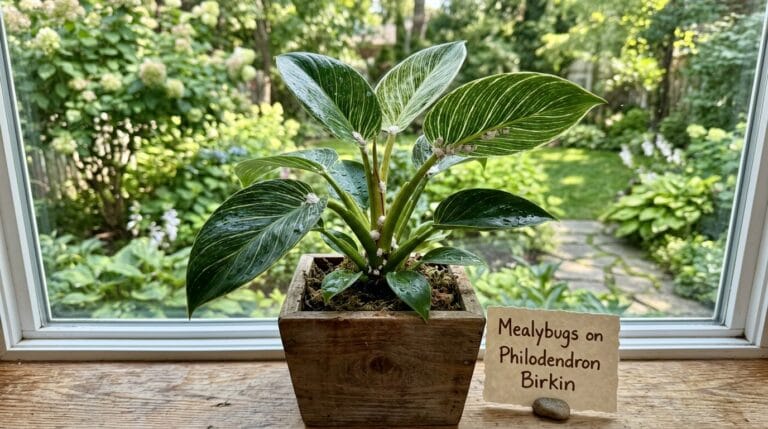
- Why Is My Philodendron Birkin’s Leaves Curling and Drooping?
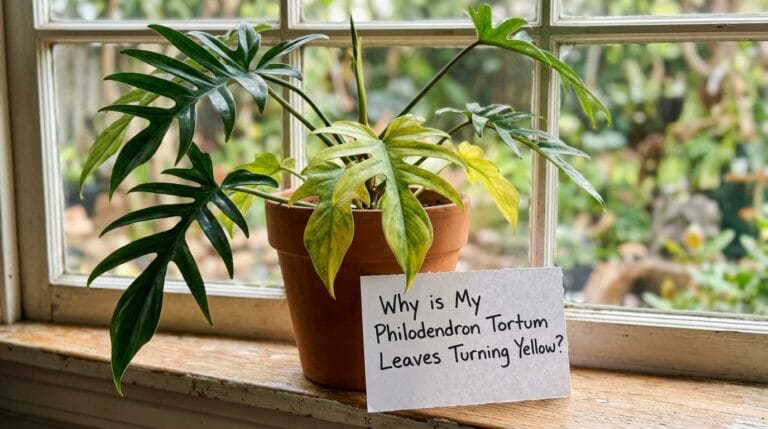
- Why Is My Philodendron Tortum Turning Yellow?
One Last Thing: Give It Time After the Fix
After you identify and fix the problem, the squamiferum doesn’t bounce back the next morning.
Give it three to four weeks before you judge whether your fix worked.
The clearest sign of recovery is a new leaf starting to unfurl at the top of the stem.
That new leaf tells you the root system is functioning again and the plant is pushing forward.
Do not keep adjusting things during this recovery window. Stability is what the plant needs most right now.
Plants that are recovering from stress need consistent conditions more than they need anything else.
Pick your fix, apply it, and then let the plant do its thing.
The Bottom Line
Philodendron squamiferum dropping leaves is frustrating, but it’s almost always fixable.
The most common cause by a wide margin is overwatering in soil that doesn’t drain properly.
After that, transplant shock and cold drafts are the next most likely culprits in US homes.
I learned most of this the hard way. I lost plants early on because I was guessing instead of diagnosing.
Now I check the roots first. Always. Every single time. And it saves plants that might otherwise be lost.
The squamiferum is tough when you meet its basic needs. Chunky draining soil, bright indirect light, stable warm temperatures, and consistent watering.
Get those four things right, and this plant will reward you with some of the most striking foliage you’ve ever grown indoors.