How to Propagate Philodendron Ring of Fire (My Step-by-Step Method)

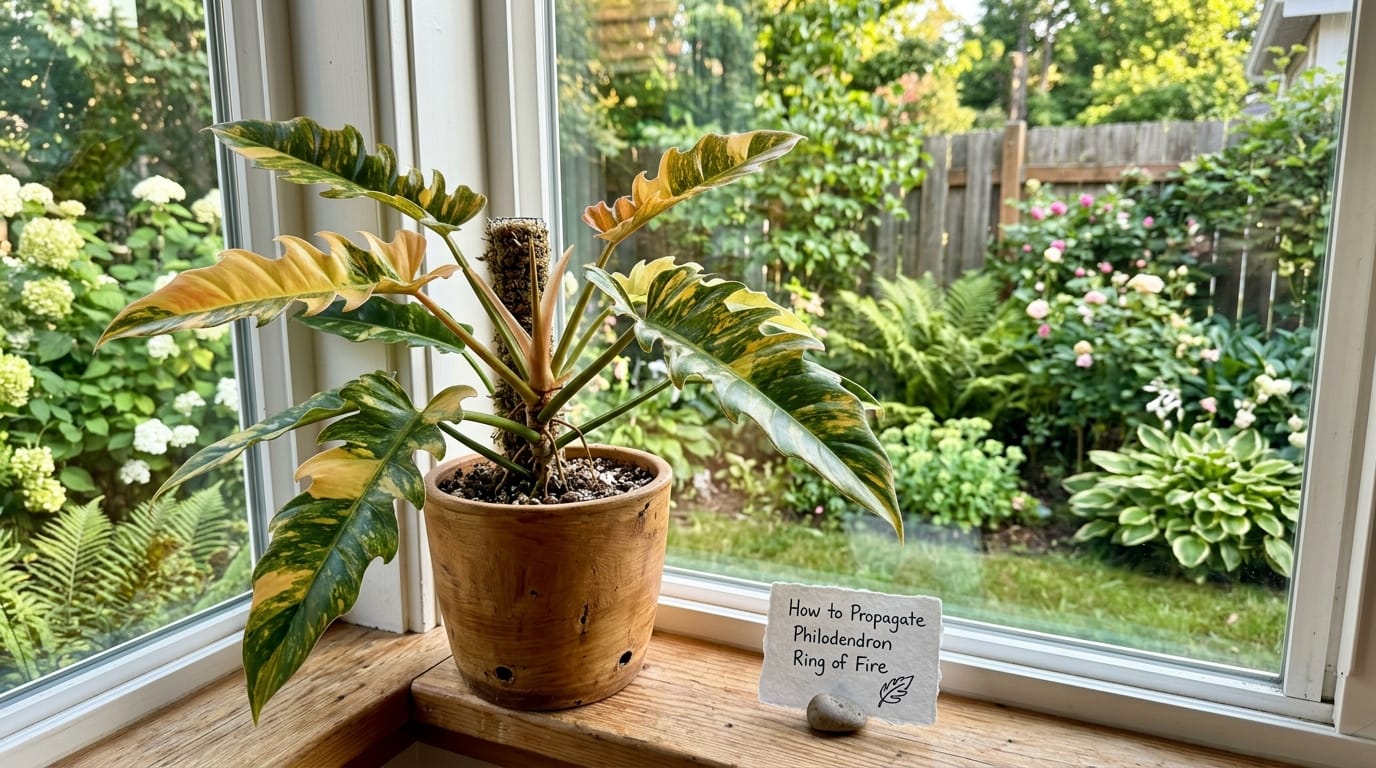
My first Ring of Fire cost me $85 at a plant swap in 2021. I stood at that table for a solid ten minutes before committing — the plant had six leaves and no two were the same color.
Fiery orange, pale cream, deep green, all on the same stem at the same time. The price was high enough that losing it would have genuinely stung, which pushed me to understand propagation for this specific plant before anything went wrong.
That one plant eventually became four.
This guide covers the exact method I use, why sphagnum moss outperforms water for Ring of Fire specifically, and the variegation question that trips up almost everyone doing this for the first time.
Quick Answer
You propagate Philodendron Ring of Fire through stem cuttings or air layering.
A cutting needs at least one healthy node to form roots.
Sphagnum moss gives better results than plain water for this particular plant.
Rooting takes 4 to 8 weeks because this is a naturally slow-growing hybrid.
Before You Cut: Understand What Ring of Fire Actually Is
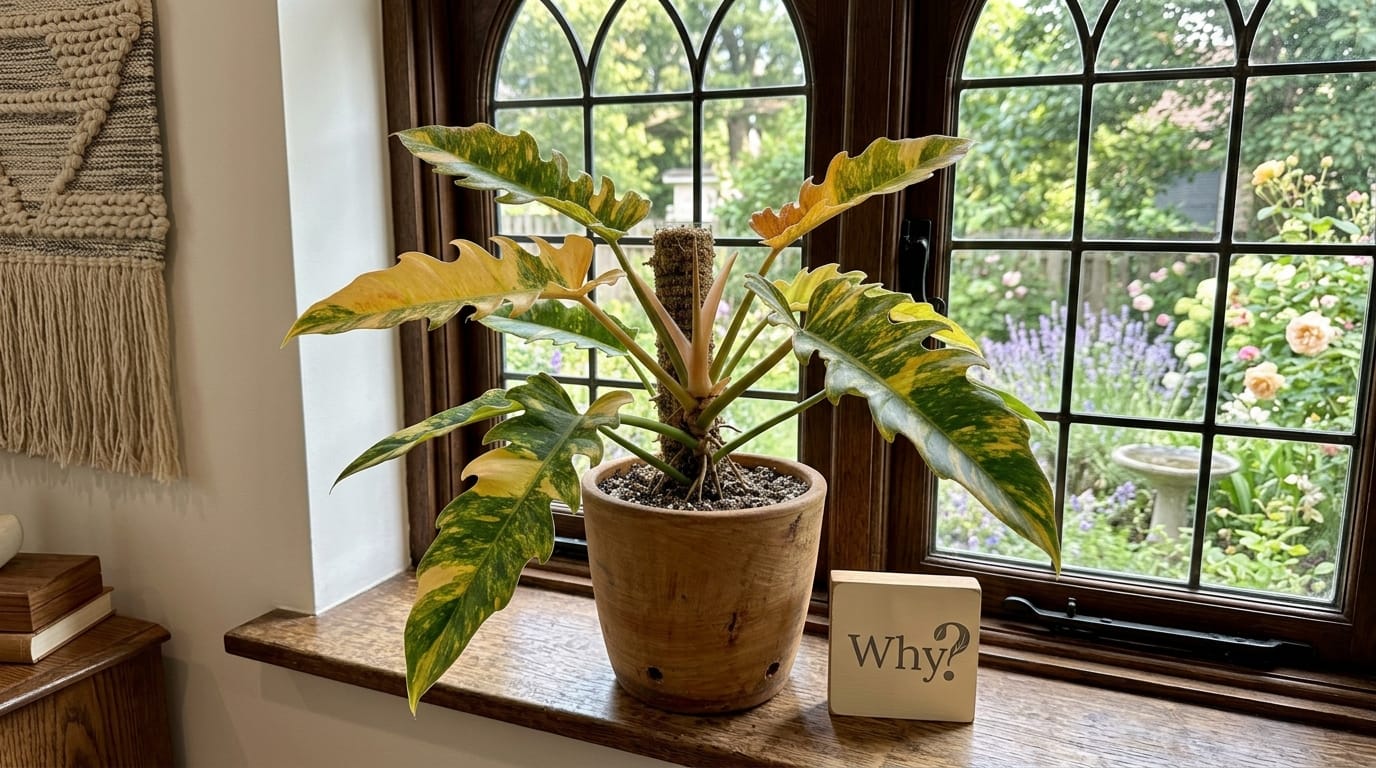
Before cutting anything, there is one thing about this plant’s biology that directly affects how you propagate it — and how you read the results afterward.
Ring of Fire is a hybrid between Philodendron tortum and Philodendron wendlandii.
Both parent species are native to the tropical rainforests of Central and South America.
According to Healthy Houseplants, its variegation is chimeral, meaning the color pattern comes from genetically unstable tissue layers.
That is a big deal for propagation.
It means the child plant may not show identical colors to the mother plant at first.
New leaves on a cutting often emerge plain green before the variegation kicks in.
This is completely normal. Do not panic and throw the cutting away.
Give it time, bright indirect light, and the colors will develop as the plant matures.
This is something I wish someone had told me before my first propagation attempt.
I almost dumped a perfectly healthy cutting because the first two leaves were solid green.
I am glad I waited.
Ring of Fire Is NOT a Vining Philodendron
This matters when you choose where to cut.
Most vining philodendrons, like my Philodendron Pink Princess, produce long trailing stems.
Ring of Fire is a self-heading plant.
It grows upright from a central base, not along sprawling vines.
Mature plants develop a thick, woody central stem over time.
Your cutting must come from a side shoot or the upper portion of that central stem.
You cannot just snip a random trailing vine like you would with a Heartleaf.
Look for the point where a leaf petiole meets the main stem.
That junction, with its node, is your target.
When Is the Best Time to Propagate?
Spring is the window I always use. Early spring is even better.
The plant is waking up from its slower winter phase.
New growth is just starting to push out.
Rooting hormone and fresh energy in the plant combine to speed root development.
Avoid propagating in late fall or winter.
The slow natural growth rate of Ring of Fire makes cold months even harder for cuttings.
I have tried winter propagation twice. Both cuttings took nearly four months to show any roots.
My spring cuttings showed roots in five weeks under the same conditions.
What You’ll Need
Keep this simple. You do not need expensive equipment.
- Sharp pruning shears or a clean scalpel blade
- Rubbing alcohol (to sterilize your tool)
- Sphagnum moss (long-fiber, not compressed peat)
- A clear plastic container or a 4-inch nursery pot
- Rooting hormone powder or gel (optional but genuinely helpful)
- A clear plastic bag or humidity dome
- A heat mat (optional but speeds rooting significantly)
Method 1: Sphagnum Moss Propagation (My Recommended Method)
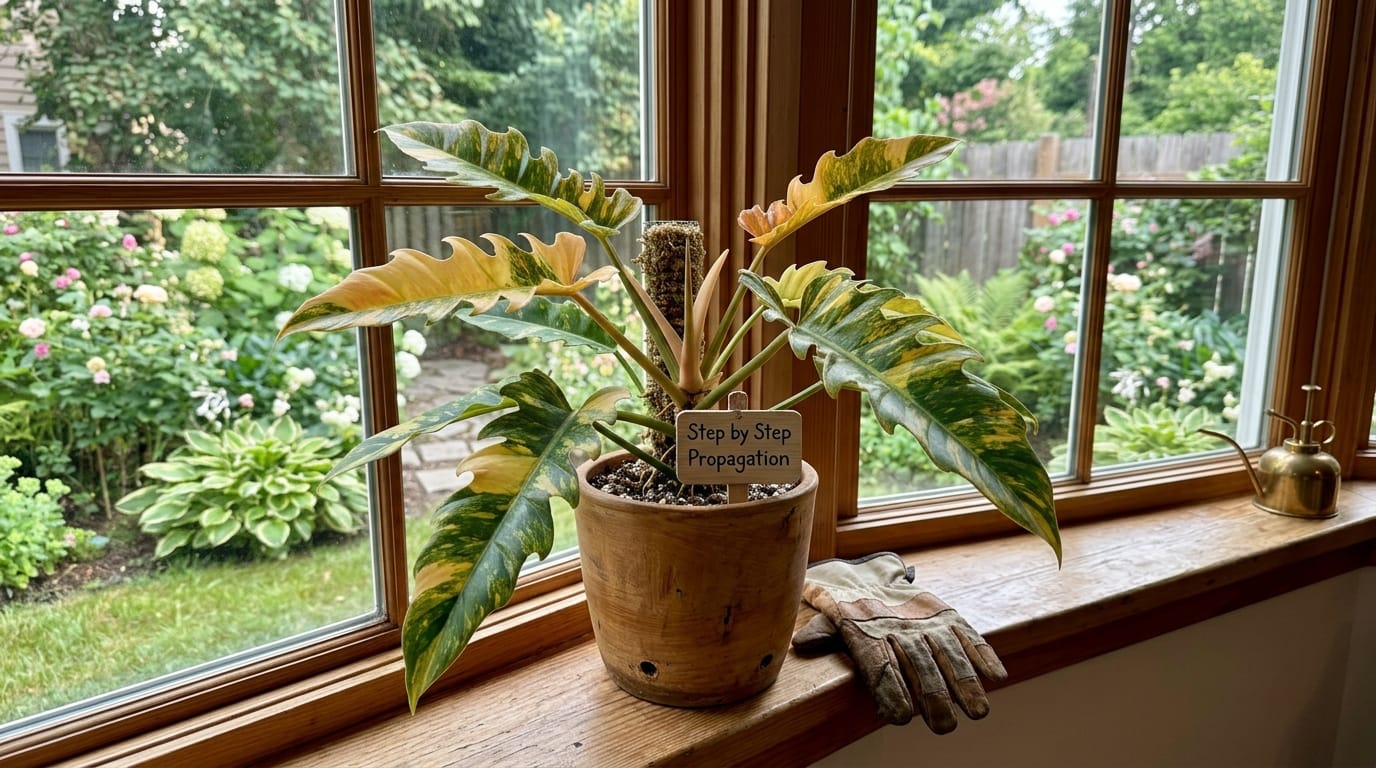
This is the method I use for Ring of Fire above all others.
The reason is simple: the transition from moss to soil is much smoother than from water to soil.
Ring of Fire roots that form in water are brittle and water-adapted.
Moving them to soil stresses the plant hard, and a slow-growing plant handles stress poorly.
Moss-grown roots are already semi-adapted to a solid medium.
The Regular Plant Co. confirms that sphagnum moss reduces transplant shock and promotes smoother adaptation for Ring of Fire cuttings.
Here is my exact process:
Step 1: Sterilize your tool. Wipe your blade with rubbing alcohol and let it dry for 30 seconds.
A dirty blade can introduce bacteria directly into the fresh wound on your plant.
I lost a Gloriosum cutting this way early on. I do not skip this step anymore.
Step 2: Find a healthy node with an aerial root nub if possible. Look at the stem carefully near the base of each leaf.
You will see a slight bump or a short brown root already emerging from the stem.
That is an aerial root. Cuttings with an existing aerial root nub root significantly faster.
I have compared both side by side. The aerial root cutting rooted in 18 days.
The clean node cutting took 34 days under the same conditions.
Step 3: Make your cut below the node. Cut 1 to 2 inches below the node at a clean 45-degree angle.
Your cutting should be 4 to 6 inches long.
Leave one or two leaves at the top. Remove any leaves near the cut end.
Step 4: Let the cut end callus for 24 hours. Place the cutting in a shaded spot and leave it alone.
The cut end will seal slightly, which reduces the risk of rot when it meets moisture.
Most guides skip this step entirely. Do not skip it.
Step 5: Apply rooting hormone. Dip the cut end into rooting hormone gel or dust powder on the node.
Rooting hormone is optional, but for a slow grower like Ring of Fire, I always use it.
It can shave weeks off your rooting time.
Step 6: Nestle the cutting into damp sphagnum moss. Moisten your sphagnum moss until it feels like a wrung-out sponge. Not soggy. Not dry.
Pack the moss around the node while leaving the leaves fully exposed.
Place the container inside a clear plastic bag or under a humidity dome.
Step 7: Set up your environment. Place the setup in bright, indirect light. No direct sun on the cutting.
Aim for a temperature between 75°F and 80°F around the cutting.
A heat mat under the container makes a real difference.
At 75°F to 80°F, cellular activity that triggers root production increases measurably.
NC State Extension’s plant database confirms that the parent species of Ring of Fire thrives in warm, humid conditions and does not tolerate temperature drops below 60°F.
Step 8: Check and mist every 3 to 4 days. Peek at the moss. If it feels dry, mist it lightly.
Do not pour water in. Oversaturation causes stem rot.
Crack the bag or dome for 30 minutes every few days to allow air circulation.
Step 9: Wait for roots that are 1 to 2 inches long. Check gently by lifting the cutting from the moss.
Do not yank it. Do not check every day.
Once roots are clearly 1 to 2 inches long, the cutting is ready to pot up.
Method 2: Water Propagation
Water propagation works. I have done it successfully.
But I use it less frequently for Ring of Fire than for vining plants.
If you choose water, use filtered or distilled water whenever possible.
Chlorine in tap water can slow root development on sensitive cuttings.
Change the water every 3 to 4 days to prevent bacterial buildup.
Place the jar in bright, indirect light and keep the environment warm.
Roots should appear in 4 to 6 weeks.
The important transition step: When roots hit 1.5 to 2 inches, pot the cutting immediately.
Waiting longer produces roots that are too fragile to adapt to soil without dying back.
When you do pot it, use a chunky, well-draining mix.
I use two parts potting soil, one part orchid bark, and one part perlite.
Method 3: Air Layering (For the Very Nervous Grower)
Air layering is the safest method. The cutting never separates from the mother plant until roots form.
This removes almost all risk of the cutting dying before it roots.
I recommend this method if your Ring of Fire is your only one.
You cannot afford to lose the cutting.
Here is how I do it:
Find a healthy section of stem with a visible node.
Wound the stem very lightly by scraping away a thin layer of the outer surface just above the node.
Pack a golf-ball-sized clump of damp sphagnum moss around the node.
Wrap the entire moss clump tightly with clear plastic wrap.
Seal both ends with twist ties or electrical tape so moisture cannot escape.
Check it through the plastic every week or two.
In 4 to 8 weeks, you will see white roots threading through the moss.
Once roots are clearly visible and at least 1 inch long, cut the stem just below the rooted node.
Pot the rooted section immediately into your soil mix.
The Gloriosum rhizome propagation method I covered here on Jefrev works on a similar principle: keep the plant attached until roots form.
The Big Variegation Question
People ask this all the time: will my cutting have the same colors as the mother plant?
The honest answer is: probably yes, but not right away.
Because Ring of Fire has chimeral variegation, the pattern is carried in the tissue layers of the stem.
A stem cutting preserves those same tissue layers.
So the genetic potential for variegation IS in your cutting.
However, the first one or two leaves may unfurl mostly green.
This is the plant redirecting energy into survival and root production, not leaf color.
Once the cutting establishes and roots stabilize, the fiery variegation pattern returns.
Keep it in bright indirect light consistently. Low light will suppress color expression.
According to Gardenia.net’s Ring of Fire profile, variegation patterns are highly variable and can range from subtle streaks to bold splashes.
Light intensity is the main lever you control.
What to Do After Potting
The cutting is now in soil. Here is what comes next.
Week 1 to 2: Keep soil barely moist. Do not fertilize yet.
The roots are brand new and fragile. Fertilizer on newborn roots causes chemical burn.
Week 3 to 4: The plant should begin pushing a new leaf node.
This is your signal that the roots have established enough to support new growth.
Week 6 onward: Begin a diluted fertilizer routine.
I use a balanced liquid fertilizer at half strength every three to four weeks during the growing season.
Continue providing bright, indirect light. Avoid air conditioning vents blowing directly on the plant.
For more on caring for a Prince of Orange, which shares similar light and humidity preferences, see my Philodendron Prince of Orange care guide.
Common Problems During Propagation
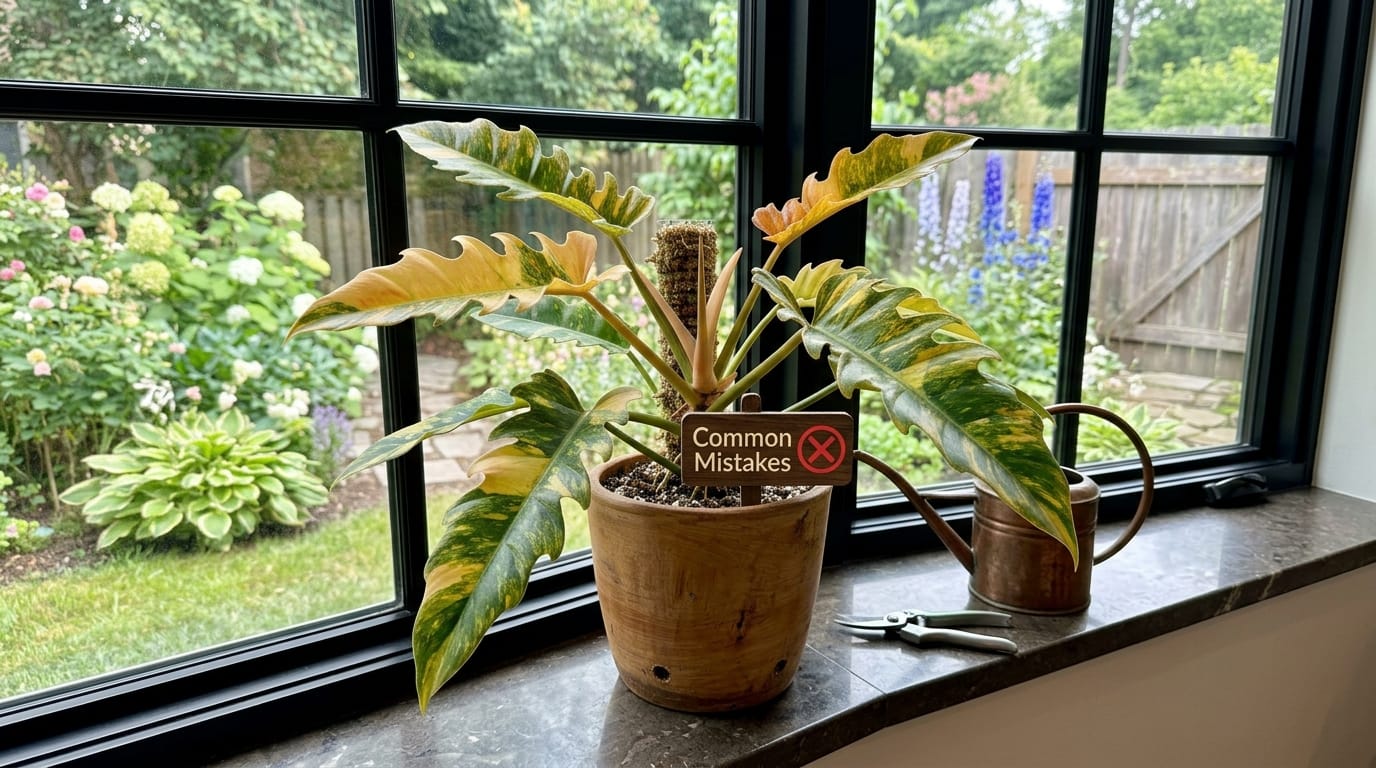
The cutting is turning mushy at the base. This is stem rot caused by too much moisture at the cut end.
Remove the rotten section with a clean blade until you reach firm green tissue.
Let it callus again for 24 hours and start fresh.
No roots after 8 weeks. Check your temperature first. A cold room slows or stops root production entirely.
Also check your light. Cuttings in low light struggle to generate the energy needed for rooting.
Move the setup somewhere warmer and brighter. Give it two more weeks before giving up.
Leaves turning yellow on the cutting. One or two yellowing lower leaves is completely normal.
The cutting is shedding leaves it can no longer support without roots.
Remove yellow leaves cleanly. Do not compost the whole cutting just because of two yellow leaves.
New growth is all green with zero variegation. Wait. Do not throw it away.
Move it to brighter indirect light.
Variegation on chimeral plants responds directly to light levels.
Frequently Asked Questions
Can I propagate Ring of Fire from just a leaf?
No. A leaf with no node or stem attached cannot produce roots.
It will sit there looking alive for a few weeks, then slowly die.
You need a node on the stem for any philodendron propagation to work.
Should I propagate during repotting?
Yes, repotting season is a great opportunity.
While the plant is out of its pot, you can see the root ball clearly.
Side shoots with their own roots can sometimes be separated gently and potted directly.
How many nodes does a cutting need?
One healthy node is the minimum.
Two nodes are better because they give you backup if one fails to root.
Can I propagate Ring of Fire variegated in water during winter?
You can try, but I do not recommend it.
Use a heat mat to keep the water around 75°F if you attempt this.
Cold water and cold air will stall rooting for months.
Final Thoughts
Propagating Ring of Fire taught me patience in a way nothing else in this hobby has.
This is not a plant that moves fast.
Ring of Fire is not a quick propagation project. A Heartleaf or a Brasil will give you roots in under two weeks in plain water.
This plant operates on a different timeline entirely.
But that slow pace makes every new root and every new fiery leaf feel like a real win.
Follow these steps, keep your environment warm, keep your light consistent, and you will get there.
If you have questions, drop them in the comments below.
I check regularly and I am always glad to help troubleshoot.